Hawaii is simultaneously the best and the most misleading place to learn to snorkel. Best, because it has more calm, protected, fish-rich beginner water than anywhere in the United States. Misleading, because the same islands also have exposed coasts where beginners get into real trouble — and the two can sit twenty minutes apart. This guide separates them properly.
Every beginner-friendly spot, filtered
What actually makes a spot beginner-friendly
Four things, in order: calm water (protection from swell — a reef, a cove, a crater wall); easy entry (walk in over sand, not scramble over lava); shallow options (standing depth nearby is a confidence machine); and a lifeguard. Fish quantity comes fifth — and conveniently, protected calm water is exactly where fish congregate anyway.
The best beginner spot on each island
Big Island: Kahalu’u Beach Park
Shallow, lifeguarded, minutes from Kailua-Kona, and full of reef fish so used to snorkelers they barely yield the right of way. Turtle sightings are close to routine. The one catch is parking — the small lot fills by mid-morning. Details on the Big Island hub.
Oahu: Hanauma Bay (inner reef)
The single most forgiving snorkel in Hawaii: a volcanic bay with a reef-protected lagoon, lifeguards, rental gear and instruction on site. It requires reservations two days ahead and a $25 fee — worth both for a first-timer.
Maui: Kapalua Bay
A crescent bay sheltered by lava points at both ends, which keeps it calm when neighboring beaches aren’t. Sandy entry, turtles along the rocks, kid-friendly. Black Rock at Ka’anapali is the step up once you’re comfortable. More on the Maui hub.
Kauai: Poipu Beach
Lifeguards, a reef-protected keiki pond for small children, turtles, and — unlike Kauai’s famous north shore — it works every month of the year. The Kauai hub explains the island’s seasonal switch.
Gear: what you need and what you don’t
You need three things that fit: a mask that seals to your face (test: press it on without the strap and inhale gently through your nose — it should hold), a snorkel, and fins. Rent for about $25/day at major beaches, or buy a basic set at any ABC Store for the price of two rentals. A flotation vest or belt is smart for the first sessions and nothing to be embarrassed about — tour crews hand them out routinely. On full-face masks: beginners like them, but they’re harder to clear if water gets in, they can trap CO2 on cheap models, and several Hawaii tour operators don’t allow them; a well-fitting conventional mask is the safer learning tool. And Hawaii law requires reef-safe sunscreen — the oxybenzone/octinoxate ban is statewide, and a rash guard beats sunscreen on your back anyway.
The five mistakes first-timers make
1. Snorkeling the wrong coast in the wrong season. North-facing shores (Oahu’s North Shore, Kauai’s north, Honolua on Maui) are summer-only; in winter they’re surf breaks. 2. Going out alone. Buddy up, always — most Hawaii snorkeling incidents involve solo swimmers. 3. Standing on coral. It’s alive, it’s protected, and it cuts. If you need to rest, float on your back or head for sand. 4. Overestimating range. Currents drift you farther than you notice while your face is down; look up and check your position every few minutes. 5. Ignoring the lifeguard and the signs. High-surf advisories and box jellyfish warnings (Oahu, 8–10 days after each full moon) exist because people didn’t.
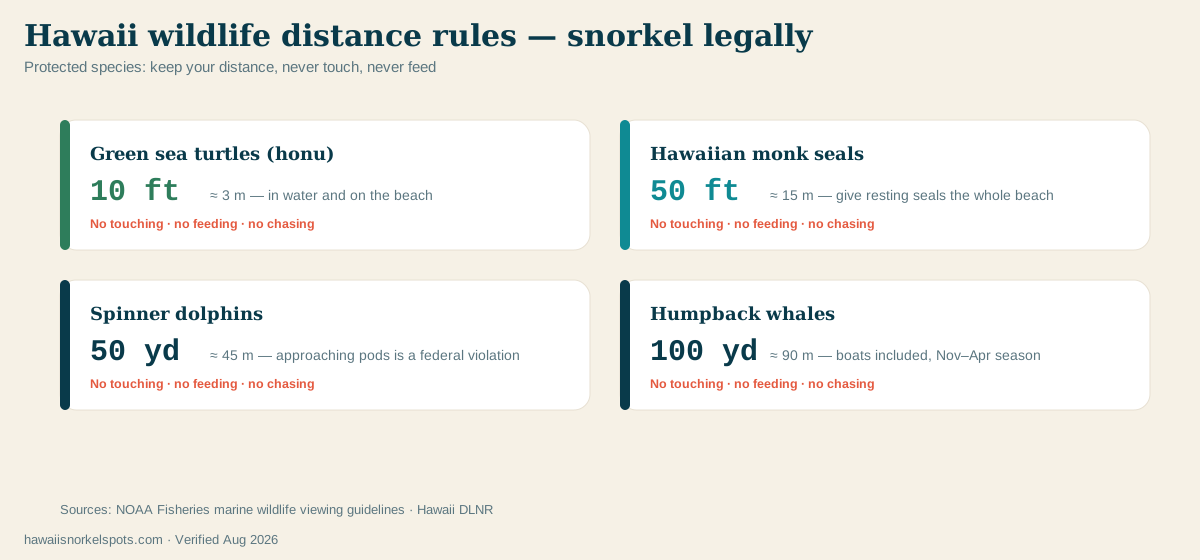
Touching nothing is the whole etiquette
Ten feet from sea turtles, fifty from monk seals, no touching or feeding anything, no standing on reef. These aren’t suggestions — turtle and seal rules are state and federal law, and the fish-feeding ban at places like Hanauma is enforced. The good news: the rules describe exactly how to have the best experience anyway — animals behave naturally around snorkelers who keep still and keep distance.
Your first session, scripted
Pick a calm, lifeguarded spot from the list above. Go in the morning. Put fins on at the water’s edge, walk backward or shuffle in, and spend your first five minutes floating face-down in standing depth, just breathing through the snorkel until it feels boring. Then follow the fish. When your legs tire or the wind picks up, get out — the reef will be there tomorrow. That’s the entire curriculum.
Sources behind this guide
- Spot data: our verified Hawaii spot database — every calm-water rating cross-checked against firsthand trip reports.
- Wildlife distance rules: NOAA Fisheries marine wildlife viewing guidelines and Hawaii DLNR.
- Sunscreen law: Hawaii’s statewide oxybenzone/octinoxate ban (Act 104).
FAQ
Do I need to be a strong swimmer to snorkel in Hawaii?
No — at the right spots. Kahalu’u, Poipu and Hanauma’s inner reef all have standing-depth water, lifeguards and calm conditions. A flotation vest closes the rest of the gap. What you shouldn’t do as a weak swimmer is attempt spots rated intermediate — the rating is about exactly this.
Which island is best for a first-time snorkeler?
Any of them, honestly — each has proper beginner water. If snorkeling is the main point of the trip, the Big Island edges it: Kahalu’u to learn, then the manta night snorkel as the graduation ceremony, since it’s beginner-safe despite sounding advanced.
Should my first snorkel be a boat tour or a beach?
Beach first — one calm session over sand makes every subsequent boat tour (Molokini, Kealakekua) dramatically more enjoyable, because deep clear water stops being scary and starts being the point.
When is the best time of year for a beginner?
May–September: every coast open, warmest water (79–80°F late summer), gentlest conditions. But south- and west-shore beginner spots work fine year-round.