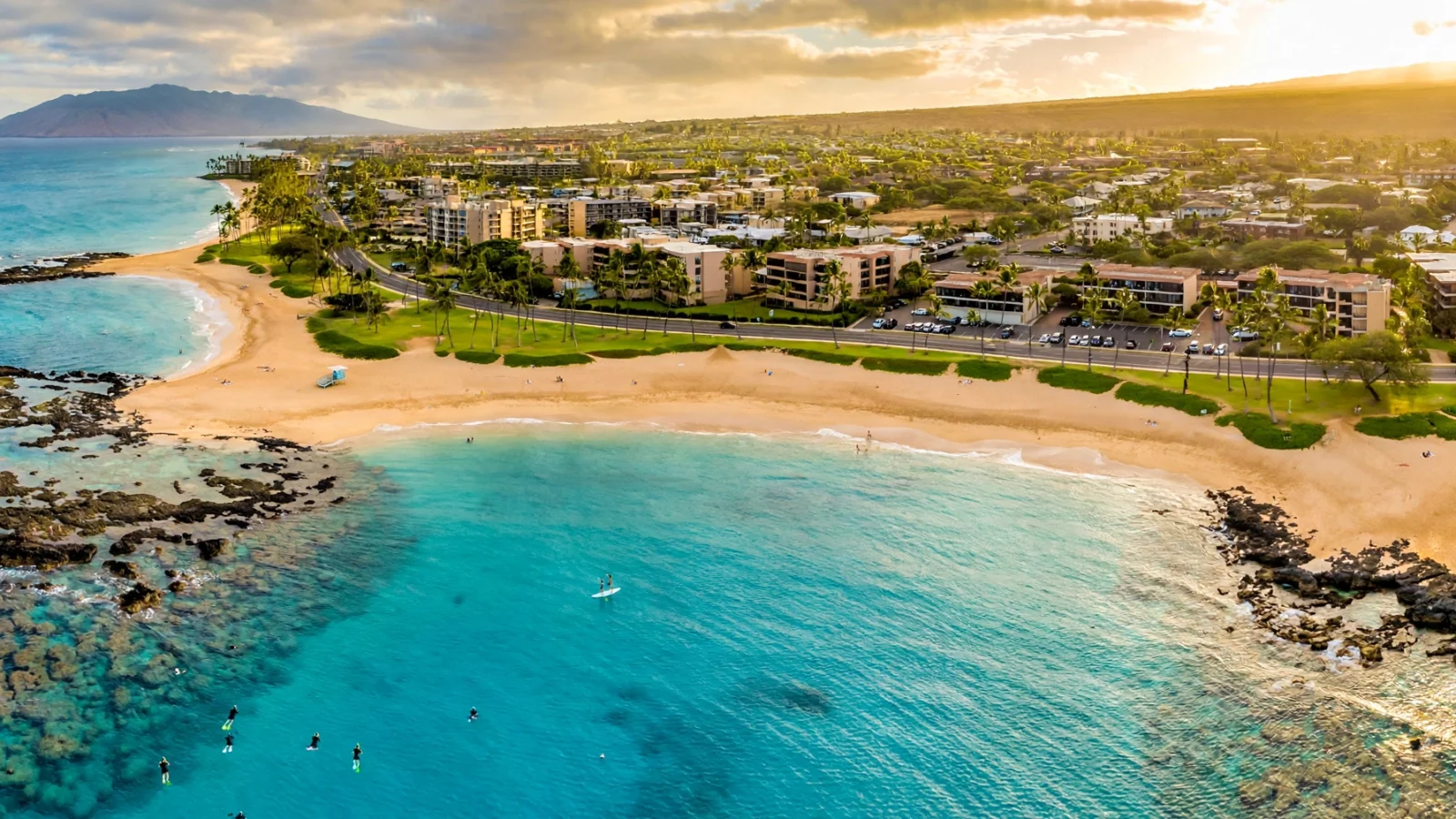
Kihei is where most of Maui actually stays. Six miles of condos, casual restaurants and sunset-facing sand along South Kihei Road, with the island’s easiest walk-in snorkeling right outside the front door. It is not the Maui of glossy resort brochures — that is Wailea, ten minutes south — and it is not the historic town Lahaina is rebuilding into. Kihei is the practical, sunny, budget-friendly base: lifeguarded beaches, rental shops across the street, food trucks instead of tasting menus, and whales breaching offshore in winter.
This guide covers the 15 best things to do in Kihei right now, in November 2026: where to snorkel (the part most guides skip over in a sentence), when the whales are here, where to eat, what is free, what works with kids, and the parking rules that catch visitors out. If snorkeling is your priority, start with our Kihei snorkeling guide — this page is the wider town guide. For the island-wide picture, see our things to do in Maui guide and our best things to do in Maui list.
The 15 best things to do in Kihei
Ranked for a first visit: the experiences that are most Kihei, most worth your time, and actually available now. Snorkeling leads the list because that is what this site is for — and because Kihei’s shore snorkeling is the part of town most guides skip entirely.
1. Snorkel Kamaole Beach Park I, II and III
The single best thing to do in Kihei if you snorkel — and the highest-volume topic in this guide’s cluster, with “kamaole beach park” searched about 1,900 times a month. The three Kamaole Beach Parks run in a chain down South Kihei Road, and the pattern is the same at all of them: a wide, sandy, swimmable middle with almost nothing to see, and reef at the rocky ends where there genuinely is. All three parks have lifeguards, restrooms and outdoor showers.
Kamaole I is the snorkeler’s park, because its north end is Charley Young (see below). Kamaole II is the wide, friendly middle beach, directly across from the shops and restaurants of central Kihei — the best first-ever snorkel, with a soft sandy entry and a gentle slope, though the reef at its ends is modest. Kamaole III is the park Kihei families actually use: the biggest lawn, a playground, volleyball and picnic pavilions — and, at its far right-hand end, lava rocks holding the second-best reef of the three parks. Full per-beach detail, entries and conditions are in our Kamaole Beach snorkeling guide.
2. Snorkel Charley Young Beach
Charley Young is not really a separate beach — it is the northern end of Kamaole Beach Park I, reached from the small parking area off Kaiau Place — and it is where Kihei’s snorkeling reputation lives. Enter over soft, gently sloped sand, swim right toward the rocky point at the north end, and you are over reef in roughly 5–15 feet of water: lava rock and coral heads, reef fish throughout, and green sea turtles feeding along the rocks and resting in the shallows. Work the rock line slowly southward and you can connect Charley Young into the Kam I shoreline in one long, easy swim. Go early — before 10–11am — when the water is calmest and clearest. One honest exception: the Charley Young end has porta-potties rather than the park restroom building, so plan accordingly. Our Kihei snorkeling guide covers the route in full.
3. Snorkel Keawakapu Beach
Keawakapu is the long, roughly 0.7-mile golden beach where Kihei runs out and Wailea begins — and the quietest snorkel in town. Both ends work: reef and rock run along the shore at the north end in front of the Mana Kai, and at the south end the rocks at the end of South Kihei Road hold fish and turtles in a much quieter setting. The long middle is sand — lovely for a walk or a swim, empty for a snorkeler. There is no lifeguard here, so it suits confident swimmers with a buddy, not first-timers. Parking is the bargain of South Maui: three free public lots, and from Keawakapu you are a beach-path walk from Ulua Beach and the rest of Wailea. Our Keawakapu Beach snorkeling guide has the two ends mapped.
4. Take a Molokini Crater boat trip
Molokini is the 77-acre crescent-shaped crater rising out of the ocean off South Maui, and it is the one boat trip worth leaving Kihei for. The crater’s sheltered inner reef is the clearest water most visitors will ever snorkel in Hawaii, and the ride is short — about 15 minutes from Ma’alaea Harbor, roughly 15 minutes north of Kihei. Most boats leave from Ma’alaea, not from Kihei itself, so check the departure point when you book. The earliest tours usually leave around 7am, which is also when the water is calmest. Small power-raft tours run about two hours with roughly an hour and a half of snorkeling time; longer five-hour tours reach the crater’s back wall and add a Turtle Town stop. Combo tours that pair Molokini with Turtle Town are listed from about $228 per person. If you only take one boat trip on Maui, this is it — full detail is in our Molokini Crater snorkeling guide and our Hawaii snorkeling tours guide.
5. Snorkel Turtle Town (Maluaka Beach)
Fifteen minutes south of Kihei, off Maluaka Beach, sits the reef everyone calls Turtle Town — a roughly 1,000-foot coral reef offshore, between Kamaole III and the Kihei Boat Ramp, where green sea turtles gather at cleaning stations while small reef fish pick them clean. It is a different class of snorkel from the Kamaole parks: deeper water, more turtles, more coral. You can reach it from shore at Maluaka, or by boat — several Molokini tours stop here on the way back, and kayak-snorkel tours launch along the Kihei–Wailea–Makena shore. Keep the legal distance from turtles (at least 10 feet) and let them come to you; our snorkeling with turtles guide covers the etiquette. Full detail is in our Turtle Town guide.
6. Watch whales (December to April)
From December through April, more than 12,000 humpback whales migrate from Alaska to Maui to breed and give birth — and Kihei is one of the easiest places on the island to see them. In peak months (January to March) you can watch them breaching from the sand at Kamaole III or Keawakapu without paying a cent; on a calm morning you can even hear them singing underwater while you snorkel. Boat tours run from Ma’alaea Harbor in season and get you closer, with naturalist narration. The Humpback Whale National Marine Sanctuary visitor center in Kihei runs free 40-minute whale talks on Mondays, Wednesdays and Fridays in season. If you are visiting in winter, build your mornings around the whales — the water is calmest then, and the south shore is Maui’s calm side while the north and west shores take the winter swells.
7. Snorkel ‘Ahihi-Kinau Natural Area Reserve
Past Makena, at the end of the road, ‘Ahihi-Kinau is the wildest shore snorkel in South Maui — and the most strictly protected. This is a Natural Area Reserve, not a beach park: no collecting, no fishing, no motorized vessels, and the reserve extends roughly 2,000–3,000 feet offshore. The payoff is some of the healthiest studied reef on Maui, in water that stays clear because almost nobody is allowed to touch it. Day-use parking costs $10 per vehicle, card only, and the reserve is open 5:30am to 7:30pm daily. Arrive before 10am — the small lot fills and the early water is the clearest. There is no lifeguard and only portable toilets, so this one is for confident snorkelers. Our Ahihi-Kinau snorkeling guide covers the reserve and nearby La Perouse Bay.
8. Watch the sunset at Kamaole III or Keawakapu
Kihei faces west, and every evening the sun drops into the Pacific with Lanai on the horizon — the free show the whole town gathers for. Kamaole III is the classic sunset beach (grassy lawn, parking lot, families already there), and Keawakapu is the quieter pick if you want space. Sunset in Kihei falls around 5:45pm in December and around 7:10pm at the summer peak, so check the day’s time and arrive 30 minutes early for the color. Winter sunsets come with whales on the horizon; summer sunsets come with the longest, warmest evenings. Bring a towel, not a reservation.
9. Eat your way around South Maui Gardens
South Maui Gardens is Kihei’s food-truck park: a six-acre garden with more than 500 plant species and a dozen-plus food trucks, live music on the second Saturday of the month, a Thursday artisan market, free movie nights, and hula on Wednesdays, Fridays and Sundays (reservations advised for the hula nights). It is the most Kihei way to eat dinner — no dress code, no waitlist, food from a dozen different kitchens in one garden. Come hungry, come early for parking, and treat it as an evening out rather than a quick stop.
10. Browse the Kihei Farmers Market
The Kihei Farmers Market is the town’s Saturday-morning institution — family-run for around 20 years, and the stop locals actually shop at rather than photograph. Expect island fruit, apple banana bread, and Grandpa Wayne’s guacamole (the stall everyone mentions by name). Go early for the best selection, bring cash, and pair it with a beach morning: the market is a short drive from the Kamaole parks, and the produce is the cheapest souvenir in town that you will actually use.
11. Learn to surf at Cove Park
Cove Park, at the north end of Kihei, is where Maui’s beginner surf lessons happen. The waves are small, the bottom is soft, and the surf schools — Maui Wave Riders is the long-running local operator — run group and private lessons from the park. Kids under 10 generally need a private or semi-private lesson. There is no lifeguard at Cove Park, and it is a surf beach first: snorkelers should go elsewhere. If you have never stood on a board, this is the cheapest, lowest-stakes place on Maui to try. Our Cove Park guide covers the cove itself.
12. Visit the Humpback Whale National Marine Sanctuary
The sanctuary’s Kihei visitor center is the free, air-conditioned whale education stop most visitors walk past — and the best place in town to learn what you are actually looking at when a humpback breaches off Kamaole. Exhibits explain the migration, the science and the protection rules; in season (roughly November to April) the free 40-minute whale talks run on Mondays, Wednesdays and Fridays. It is a short, genuinely informative stop that makes the whale watching on this list ten times better, especially with kids.
13. Walk the Wailea Coastal Trail
From Keawakapu’s south end, the beach path continues into Wailea as the Wailea Coastal Trail — a flat, paved oceanfront walk past Ulua Beach, Wailea Beach and the resort crescent, with snorkeling pull-offs the whole way. Walk it in the early morning before the trade winds build, when the water is glassy and the light is soft; the full trail is an easy out-and-back, or walk one way and catch a ride back. It is also the best way to see Wailea’s beaches without paying Wailea prices. Our Wailea Beach snorkeling guide and Ulua Beach guide cover the reefs along the trail.
14. Kayak the Kihei–Wailea shore
Kayak-snorkel tours launch along the Kihei–Wailea–Makena shore and are the middle ground between a shore snorkel and a boat trip: you paddle out to reefs you cannot reach from the beach, then snorkel from the kayak with a guide watching the water. Morning launches are calmest; afternoon trade winds make the return paddle a workout. It is the best option for confident swimmers who want Turtle Town-style reef without a boat ticket, and for nervous beginners who relax with a crew in the water. Book the morning slot.
15. Eat, drink and shop along South Kihei Road
Kihei’s main street is a six-mile strip of condos, casual restaurants and shops, and an evening stroll along it is a thing to do in itself. Kalama Village — the cluster of 15 bars, restaurants and cafes plus 26 shops around South Kihei Road — is the town’s walkable center, and its Fourth Friday street party (6–9pm every fourth Friday at Azeka Mauka, with a Keiki Zone for kids) is the town’s monthly gathering. For food: Ululani’s Shave Ice for the classic after-beach treat, Paia Fish Market for fish tacos (under $5 each, lunch plates around $11) and Nalu’s for brunch. For beer: Maui Brewing Co. runs VIP tours on Saturdays and Sundays (kids 10 and over) with a tasting flight of four flagship beers. Most Kihei restaurants close between 8 and 10pm, so eat earlier than you would at home.
Quick picks: which Kihei activity fits your day
| If you want… | Do this | When |
|---|---|---|
| The best shore snorkel | Charley Young Beach, north end of Kamaole I | Early morning, before 10–11am |
| A quiet snorkel with turtles | Keawakapu Beach, either end | Calm morning; confident swimmers only |
| The clearest water on Maui | Molokini Crater boat trip from Ma’alaea | Earliest tour, around 7am |
| Whales without a ticket | Watch from Kamaole III or Keawakapu | December–April, January–March peak |
| The best sunset | Kamaole III or Keawakapu | 30 minutes before sunset |
| A free evening out | South Maui Gardens food trucks | Hula nights Wed/Fri/Sun |
| A family beach day | Kamaole III (playground, lawn, lifeguard) | Morning, before the wind builds |
| The wildest reef | ‘Ahihi-Kinau Natural Area Reserve | Before 10am, card-only $10 parking |
Kamaole Beach Park: which of the three to pick
The three Kamaole parks look similar from the road and snorkel very differently. Here is the honest comparison, from our Kamaole Beach snorkeling guide:
| Kamaole I (+ Charley Young) | Kamaole II | Kamaole III | |
|---|---|---|---|
| Best snorkeling | Charley Young reef, north end — best in Kihei | Either rocky end — modest | Far-right lava rocks — second best of the Kams |
| Entry | Soft sand at Charley Young | Soft sand | Sand channel beside rocks at the north end |
| Lifeguard | Yes | Yes | Yes |
| Parking | Paved Park Maui lot + gravel lot across the road | Mostly South Kihei Road street parking | 84-space Park Maui lot + south gravel shoulder |
| Park Maui paid parking | Yes — paved lot | Not in the first rollout | Yes — paved lot |
| Facilities | Restrooms, showers (porta-potties at Charley Young end) | Restrooms, showers, drinking fountains, ADA ramps | Restrooms, showers, playground, big lawn, pavilions |
| Best for | Snorkelers | First-timers, swimmers, families mid-Kihei | Families who also want one good reef |
Parking in Kihei: the 2026 rules
This is the section most Kihei guides get wrong or leave out, because the rules are new. Since July 15, 2026, Maui County’s Park Maui program charges non-residents to park in the paved lots at Kamaole Beach Parks I and III: $10 per day, $50 per week or $150 per month, paid by license plate in the Park Maui app or at the pay station. Weekly and monthly passes are sold through the app only. Hawaii residents park free with a valid Hawaii driver’s license or state ID — but you still start a session in the app or at a pay station so your plate is registered.
On weekends and county holidays, the paved lots at Kam I and III are reserved for residents before 10am — the single most common way visitors get caught out. The beaches themselves stay open to everyone; it is only the paved lots that are held. Visitors snorkeling early on a weekend should use the gravel and street options, or walk in. Keawakapu’s three lots remain free, and Kamaole II’s parking is mostly street parking along South Kihei Road. Rules and enforcement at beach lots change faster than guidebooks do: read the sign at the lot when you arrive — it wins over anything written online, including this paragraph.
Best time to visit Kihei
Kihei runs on a daily clock more than a seasonal one. On almost every day of the year, go early: from sunrise to about 10–11am the water is at its calmest and clearest, the points are glassy, and the turtles are active along the rocks. By late morning the trade winds build, the surface chops up, and visibility at every Kihei spot drops.
Seasonally, winter (roughly November–April) is Kihei’s secret season: while the north and west shores take the big winter swells, the south shore stays comparatively calm, and the Kamaole chain is often the most snorkelable water on Maui. Winter is also whale season. Summer brings the occasional south swell, which wraps into Kihei, stirs the sand at the points and can make the Kam III rock entry unsafe for a day or two — on a south-swell day, Charley Young’s more sheltered north end is usually the last Kihei spot to give up. After heavy rain, runoff can brown out the Kihei shore for a day; skip the snorkel until the water clears. Our best time to snorkel in Hawaii guide has the island-wide seasonal picture.
Free things to do in Kihei
Kihei is one of the cheapest towns on Maui to enjoy, and the free list is the best list: snorkel Charley Young or the Kamaole parks (free walk-in shore snorkels, gear rental aside), watch the sunset from Kamaole III or Keawakapu, watch whales from the sand in winter, walk the Wailea Coastal Trail, browse the Thursday artisan market at South Maui Gardens, take the free Maui Walking Tour on Mondays and Wednesdays at 5pm, and join the Fourth Friday street party at Azeka Mauka. The Humpback Whale Sanctuary visitor center and its in-season whale talks are free too. The only things on this page that cost real money are the boat trips, the ‘Ahihi-Kinau parking fee and the food — everything else is a beach, a walk or a sunset.
Things to do in Kihei with kids
Kihei is arguably the best family base on Maui, for three structural reasons: the entries are sand, the best beaches are lifeguarded, and you are minutes from where you sleep instead of driving an hour to a remote bay. Kamaole III is the family beach: the biggest lawn, a playground, volleyball, picnic pavilions and a lifeguard. Kamaole II is the best first-ever snorkel for kids who can swim — sandy entry, lifeguard, gentle slope — kept in the lifeguarded shallows until confidence builds. Cove Park surf lessons take kids (under-10s need a private or semi-private lesson), the sanctuary’s whale talks work well with children, and the Fourth Friday street party has a Keiki Zone. The honest rule: children who are not confident swimmers should not be snorkeling the rocky points at all — keep them in the lifeguarded shallows, or take a guided tour where a crew watches the water. Our beginners’ guide to snorkeling in Hawaii and our snorkeling safety guide cover the full preparation, and our gear checklist is worth a read before you rent.
Things to do near Kihei
Kihei sits in the middle of South Maui, so the day trips are short. Wailea is ten minutes south — resort beaches, the Shops at Wailea (70-plus shops, free parking) and the coastal trail. Makena is just past Wailea: Big Beach (Makena Beach State Park, $10 parking, strong currents and a steep drop-off — not kid-friendly) and Makena Landing, one of Maui’s best shore snorkels. La Perouse Bay and the ‘Ahihi-Kinau reserve are at the end of the road past Makena. Ma’alaea Harbor, 15 minutes north, is where the Molokini and whale-watching boats leave from. Lahaina is about 35 minutes north, Paia about 25 minutes north, and the Road to Hana and Haleakala are full-day trips — start them before dawn. Our things to do in Wailea guide, Makena Beach guide and Lahaina snorkeling guide cover the neighbors.
A perfect day in Kihei
Start at Charley Young before 9am, when the water is glassy and the turtles are out — an hour of snorkeling, then coffee and a farmers-market wander if it is a Saturday. Late morning, walk the Wailea Coastal Trail from Keawakapu while the light is still soft. Spend the hot, windy afternoon in the shade: the sanctuary visitor center, a shave ice, a nap. At 4pm, head to South Maui Gardens for an early dinner from the food trucks. Finish on the sand at Kamaole III with a towel and nothing scheduled, watching the sun drop behind Lanai. That is Kihei at its best: a beach morning, a garden evening, and a sunset that costs nothing.
Getting to Kihei and getting around
Kihei is about 30 minutes’ drive from Kahului Airport (OGG) down the Piilani Highway. The town itself stretches about 10 miles along South Kihei Road, and most visitors stay in a condo and walk or drive short hops between beaches — the Kamaole parks are minutes apart by car and walkable from most condos in central Kihei. Parking is the practical constraint: use the Park Maui app for the Kam I and III lots, expect street parking at Kam II, and use Keawakapu’s free lots when you can. If you are staying in Kihei without a car, the bus runs along South Kihei Road, but a rental car is worth it for Makena, Ma’alaea and the day trips. Our where to stay in Hawaii for snorkeling guide compares Kihei with the island’s other bases.
FAQ
Is Kihei worth visiting?
Yes — especially if you snorkel or travel with kids. Kihei is Maui’s most practical base: lifeguarded beaches, walk-in snorkeling, the calmest winter water on the island, whale watching from the sand, and prices well below Wailea or Kaanapali. It is not a luxury resort town and it does not pretend to be; it is a sunny beach town where the best things are free.
Where is Kamaole Beach Park?
Kamaole Beach Park is three parks — Kamaole I, II and III — in a chain along South Kihei Road in Kihei, on Maui’s south shore, about 30 minutes from Kahului Airport. Kamaole I is at the north end of the chain (its north end is Charley Young Beach), Kamaole II is in the middle across from central Kihei’s shops, and Kamaole III is at the south end. All three have lifeguards, restrooms and showers.
Is there good snorkeling in Kihei?
Yes — with the right expectations. Kihei’s snorkeling is at the rocky ends of its beaches, not the sandy middles: Charley Young (the north end of Kamaole I) and the far-right rocks at Kamaole III hold genuine reef, reef fish and reliable turtles, and Keawakapu adds a quieter option at both ends. It is neighborhood reef rather than a showcase bay like Honolua or Ahihi-Kinau, but it is lifeguarded, walk-in and consistent — especially in winter, when the south shore is Maui’s calm side. Full detail is in our Kihei snorkeling guide.
When is whale watching season in Kihei?
December through April, with January through March the peak. Humpback whales migrate from Alaska to Hawaii to breed and give birth, and in peak months you can watch them breaching from the sand at Kamaole III or Keawakapu. Boat tours run from Ma’alaea Harbor in season, and the sanctuary in Kihei runs free whale talks on Mondays, Wednesdays and Fridays.
What time is sunset in Kihei?
Sunset in Kihei falls around 5:45pm in December and around 7:10pm at the summer peak (spring is about 6:40pm, fall about 6:10pm). The sun sets over the ocean with Lanai on the horizon, so Kamaole III and Keawakapu are the classic viewing beaches. Arrive 30 minutes early for the color, and check the day’s exact time before you head out.
Is Kihei walkable?
Partly. Central Kihei — the Kamaole parks, Kalama Village, the shops and restaurants along South Kihei Road — is walkable if your condo is in that stretch. But the town is about 10 miles long end to end, the beaches are spread out, and the day trips (Makena, Ma’alaea, Lahaina) all need a car. Most visitors rent one.
Kihei will never top a “best of Maui” list, and that is the point. It puts a decent, safe, lifeguarded reef at the end of your street, whales on the horizon in winter, food trucks instead of tasting menus, and a sunset that costs nothing — every calm morning of your trip. Come for the snorkeling, stay for the sunset, and let the town be what it is: the easy, sunny base that makes the rest of Maui simple.