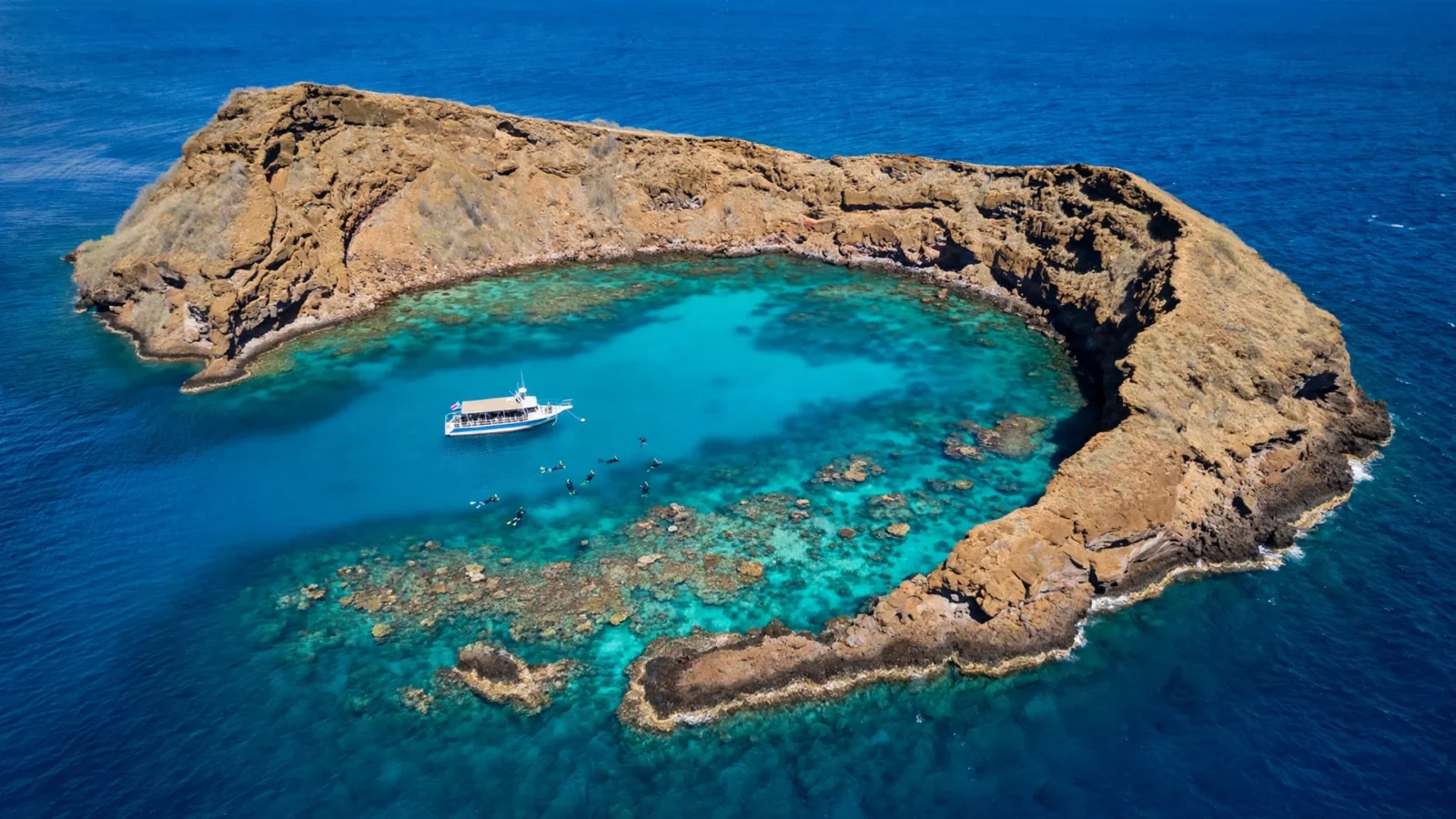
Maui rewards the traveler who picks five or six great days instead of trying to finish a list. This is that shortlist: the best things to do in Maui, ranked by what actually delivers — with the snorkeling detail most guides skip, because that is where Maui beats every other Hawaiian island. Use it to choose your five or six, then let the ocean decide the rest. For the full island plan, see our things to do in Maui guide and the Maui snorkeling hub.
One rule runs through the whole ranking: do the ocean in the morning. Trade winds usually build after lunch, so snorkel boats, shore snorkeling and exposed hikes all belong before noon. Check the morning marine forecast before you get in the water, every day.
The 15 best things to do in Maui at a glance
| Rank | Activity | Best for | Cost |
|---|---|---|---|
| 1 | Snorkel Molokini Crater by boat | First-timers, best visibility | $$ |
| 2 | Snorkel Honolua Bay from shore | Summer reef, turtles | Free |
| 3 | Snorkel Kapalua Bay | Families, calm water | Free |
| 4 | Snorkel Black Rock at Ka’anapali | Easy reef + turtles | Free |
| 5 | Drive the Road to Hana | Waterfalls, rainforest | Free* |
| 6 | Sunrise — or sunset — at Haleakala | Bucket list, views | $ |
| 7 | Whale watching (December to April) | Winter visitors | $$ |
| 8 | Snorkel Turtle Town at Maluaka Beach | Turtles from shore | Free |
| 9 | Beach morning at Wailea Beach | Calm water, resorts | Free |
| 10 | Hike Pipiwai Trail to Waimoku Falls | Hikers, bamboo forest | $ |
| 11 | Walk into ‘Iao Valley | Culture, easy walk | $ |
| 12 | Attend the right luau | Culture, one big night | $$$ |
| 13 | Explore Upcountry Maui | Farms, cool air, views | Free–$ |
| 14 | Meet the reef at Maui Ocean Center | Kids, rainy days | $$ |
| 15 | North Shore morning: Paia, Ho’okipa, Baldwin | Surf watching, turtles | Free |
*Road to Hana itself is free to drive; Wai’anapanapa State Park needs a reservation for non-residents, and Haleakala National Park charges entry.
1. Snorkel Molokini Crater by boat
Molokini is the single best snorkeling experience in Maui: a half-sunken volcanic crescent a few miles off South Maui, with some of the clearest water in Hawaii and reef fish in every direction. The crater wall shelters the lagoon, so visibility is routinely far better than any shore spot — on a good morning it feels like swimming in an aquarium. Boats leave from Ma’alaea Harbor and Kihei, and the early departure is the one to book: it beats both the afternoon wind and the crowds.
Expect a half-day trip, typically around $150–200 per adult in 2026, with gear included. If you only do one paid ocean activity on Maui, make it this one. Our full Molokini Crater snorkeling guide covers what you will see, which boats to pick, and when to go.
Skip if: boats make you miserable or the marine forecast is poor — shore snorkeling at Kapalua or Black Rock is the better day.
2. Snorkel Honolua Bay from shore
Honolua Bay is a marine life conservation district on Maui’s northwest shore, and in summer it turns glassy and clear — one of the best shore snorkels on the island. Enter from the rocky beach, swim out along the right-hand reef, and you are over coral heads with reef fish and the occasional turtle within minutes. There are no facilities and no lifeguard, so bring everything you need and go early, before the wind picks up.
Honolua flips with the seasons: summer is for snorkeling, winter is for surf — when the north swell is up, the bay becomes a world-class point break and snorkeling is out of the question. Our Honolua Bay snorkeling guide has the entry, the reef route and the seasonal call.
Skip if: it is winter or a north swell is running; come back in summer, or snorkel Kapalua instead.
3. Snorkel Kapalua Bay
Kapalua Bay is the calmest, most forgiving snorkel on West Maui — a protected crescent cove with a sandy entry, gentle water and turtles grazing over the reef on most calm mornings. It is the spot we recommend to first-time snorkelers, families and anyone who wants a relaxed reef day without a boat. Arrive early: the small beach fills up, and the water is at its clearest before the midday wind.
Stay left along the rocks for the best coral and fish, keep clear of the deeper channel, and respect the turtles — watch from a distance and never chase them. Full detail in our Kapalua Bay snorkeling guide.
Skip if: a west or northwest swell is up; the cove loses its calm fast.
4. Snorkel Black Rock at Ka’anapali
Black Rock sits at the north end of Ka’anapali Beach, and it is the easiest great snorkel on Maui: walk in off the sand, swim around the lava point, and you are over a healthy reef with turtles, reef fish and clear water. It is busy — Ka’anapali is the island’s biggest resort beach — but the reef is genuinely good, and an early start gets you the clear water before the crowds arrive.
Pair it with a beach morning: Ka’anapali’s long sand, calm summer water and sunset views make it the best first-day landing spot on the island. See our Black Rock snorkeling guide and Ka’anapali Beach guide.
Skip if: the water is brown after rain or the shorebreak is up; try another beach rather than forcing it.
5. Drive the Road to Hana
The Road to Hana is the drive itself: 64 miles of tight curves and more than 50 single-lane bridges threading past waterfalls, sea cliffs and coastal pullouts from Paia to Hana town. Pick four to six meaningful stops — Twin Falls, the Ke’anae Peninsula, Wai’anapanapa State Park’s black sand beach, and the ‘Ohe’o Gulch pools past Hana — and let the rest go. Leave early, drive slowly, and respect the bridges: pull over for local traffic.
Reserve Wai’anapanapa State Park ahead of time (non-residents need a reservation), and consider staying a night in Hana rather than racing back the same day. Our Hana snorkeling guide and Wai’anapanapa guide cover the east-side water.
Skip if: the trip is very short, someone gets motion sick, or a flood watch is on — the road is not worth a miserable day.
6. Watch sunrise — or sunset — at Haleakala
Standing at 10,023 feet above the clouds while the sun comes up over Haleakala’s crater is the morning people remember for years. Sunrise entry requires an advance reservation, and reservations open 60 days ahead, so book it before you fly. Bring a real jacket either way — it feels near-freezing at the summit even in summer, and the wind is real.
Sunset is the easier version of the same view, with no 2–3 a.m. departure and no reservation stress, and a midmorning visit gives you the crater hikes without the crowds. Do not do sunrise just because a checklist says so — if the early start would wreck your family’s next two days, choose sunset.
Skip if: altitude, pregnancy or health limits make the drive and the elevation a poor fit.
7. Go whale watching in season (December to April)
From December to April, the Ma’alaea channel between Maui, Lanai and Kaho’olawe becomes one of Hawaii’s strongest humpback viewing areas, with January through March the peak. You will spot spouts from shore on a calm morning, but getting out on the water is another level entirely — a two-hour boat trip from Lahaina or Ma’alaea puts you beside breaching whales, and many Molokini snorkel boats add whale watching free in season.
Book the morning departure: the channel is calmest early, and the light is better for photos. Combine it with a Molokini trip and you have the two best ocean days in one booking.
Skip if: you are very prone to seasickness — watch from shore at Papawai Point or McGregor Point instead.
8. Snorkel Turtle Town at Maluaka Beach
Turtle Town is the local name for the reef off Maluaka Beach in Makena, and it earns it: green sea turtles (honu) graze over the reef on most calm mornings, close enough to watch properly from the surface. The entry is an easy sandy walk-in, the reef starts in waist-deep water, and it is one of the most reliable turtle encounters in Hawaii without a boat.
Go early, before the wind, and give the turtles space — watch from a few metres away and never touch or chase them. Our Turtle Town snorkeling guide has the entry point, the reef route and the conditions to wait for. More on turtles generally: snorkeling with turtles in Hawaii.
Skip if: a south swell is up; the reef gets surgey and the turtles move off.
9. Spend a beach morning at Wailea Beach
Wailea Beach is the calm-water beach Maui is known for: a wide crescent of sand between the Grand Wailea and the Four Seasons, with gentle water, good snorkeling off the rocks at either end, and the paved beach path running behind it. It is the best slow morning on the island — swim, snorkel, walk the path, then lunch at the Shops at Wailea.
Every Wailea beach is public, but the public lots are small, so arrive before about 8:30 a.m. if you want to park near the sand. None of the Wailea beaches has a lifeguard, so swim within your ability. Our Wailea Beach snorkeling guide and Ulua Beach guide cover the reef and the entries.
Skip if: you want a wild, empty beach — Wailea is polished resort Maui, and that is the point.
10. Hike Pipiwai Trail to Waimoku Falls
Past Hana, in the Kipahulu district of Haleakala National Park, the Pipiwai Trail climbs about 4 miles round trip through a bamboo forest so dense it creaks and hums in the wind, then ends at 400-foot Waimoku Falls. It is the best half-day hike on Maui, and the bamboo tunnel alone is worth the drive out.
Start early — the trail is far better before the Hana-day crowds arrive — and do not attempt it after heavy rain, when stream crossings get risky. Pair it with the ‘Ohe’o Gulch pools at the trailhead for a full Kipahulu morning.
Skip if: heavy rain has raised the streams, or a late Hana start has you arriving after midday.
11. Walk into ‘Iao Valley
The mossy green spire of the ‘Iao Needle rises out of a valley that is both stunning and deeply sacred to Native Hawaiians. A short paved walk gets you the view without asking much of you — this is the easiest cultural stop on the island, twenty minutes from Kahului, and a good first stop on the way to the North Shore or Upcountry.
Treat it as the place of reverence it is: stay on the paths, keep voices down, and do not climb on the rocks or into the stream. It is a short visit by design — pair it with Paia or Makawao the same morning.
Skip if: you expect a long hike; the valley is a viewpoint and a short walk, not a trail day.
12. Attend the right luau
If you do one cultural evening on Maui, make it a luau — the food, the hula and the story of the place in one sitting. Choose by region and group, not by price alone: the Feast at Mokapu at the Andaz in Wailea suits couples and smaller groups, Te Au Moana at the Wailea Beach Resort is the strong family pick in South Maui, and the Grand Wailea Luau is the big-production family show. Expect roughly $300 per adult at the big resort luaus in 2026, and book before you fly — the best ones sell out well ahead in peak season.
Skip if: the cultural program does not interest your group, or the price would crowd out an ocean experience everyone wants more.
13. Explore Upcountry Maui
Most visitors never leave the coast, but the ranch land and gardens up the slopes of Haleakala are a different Maui altogether — cooler, quieter, scented with eucalyptus and lavender. Combine Makawao’s paniolo (cowboy) town, Kula’s farms and gardens, and the open views across the whole isthmus for a slow afternoon when you need a break from the beach.
Farm visits are the heart of it: lavender gardens, coffee farms, pineapple and cacao tours. Book the farm you actually want rather than driving up on spec, and go on a clear day — low cloud erases the views that make Upcountry worth the drive.
Skip if: low cloud and heavy rain have erased the views and the farm you want is closed.
14. Meet the reef at Maui Ocean Center
The Maui Ocean Center in Ma’alaea is the best aquarium in Hawaii, and it is all Hawaiian marine life — reef sharks, rays and honu gliding overhead in a walk-through tunnel. It is the island’s best substantial indoor attraction, and it works especially well with children and non-snorkelers, or on a rainy afternoon when the ocean is not cooperating.
Give it two hours, and pair it with a Ma’alaea harbor whale watch in season — the two share a parking lot, and together they make the best bad-weather day on Maui.
Skip if: you have limited time, perfect ocean conditions and no interest in aquariums; make it a choice, not an obligation.
15. Spend a North Shore morning: Paia, Ho’okipa, Baldwin
Maui’s North Shore is the island at its most local: Paia’s old plantation surf town for coffee and browsing, Ho’okipa Beach Park for windsurfing and turtles hauled out on the sand, and Baldwin Beach for a long walk. It is the best fifteen minutes of browsing on Maui, and the last real coffee, gas and food before the Hana road — slow down on the way back instead of blowing through at 7 a.m.
Come to watch, not to swim: the North Shore is often for watching in winter surf, and the turtles at Ho’okipa are best seen from the overlook with binoculars. Our Hana side of the island starts just past Paia.
Skip if: you expect calm resort swimming; this coast is for watching, walking and eating.
How to plan your Maui days
Do not try to finish this list. Pick five or six, then fill the other days based on the ocean conditions each morning. The formula that works: one big day, then a softer day. Road to Hana, Haleakala sunrise and Molokini can each drain a travel day — pair them with easy wins like Kapalua Bay, the Wailea Beach Path or an Upcountry farm afternoon so the trip feels full without feeling overbooked.
Where to stay: most Maui trips run out of three hubs — Ka’anapali and Lahaina on the west side, Wailea and Kihei in South Maui, and Paia on the North Shore. Waikiki-style hotel pickup is not universal here; the island is too spread out, so check pickup zones before you book a tour. South Maui is usually sunnier, West Maui has the best sunset beaches, and Upcountry is cooler when the coast gets hot.
How many days: five nights is the sweet spot — enough for Hana, Haleakala, one boat day and two beach days. Three nights means picking two of the big three. A week lets you add Upcountry, the North Shore and a second snorkel day without rushing.
Best free things to do in Maui
Maui’s best experiences are mostly free. Every beach in Hawaii is public, and the free list is strong: an early morning at Keawakapu Beach in Kihei — walk the whole shoreline, swim while the water is calm, snorkel if the visibility is good — is the free experience that beats most paid tours. Add the Wailea Beach Path (a 1.5-mile paved walk past five beaches and eight resorts) and the Kapalua Coastal Trail, sunset from any west-facing beach, turtle watching at Ho’okipa, and the short walk in ‘Iao Valley. Our Keawakapu guide and Kamaole Beach guide cover the best free snorkeling entries.
Best things to do in Maui with kids
Keep the formula simple with kids: beach, pool, and one big experience a day. The best family picks are Kapalua Bay for calm snorkeling, the Maui Ocean Center for a rainy afternoon, Wailea Beach for gentle water and the beach path, and Napili Bay for a sheltered sandy swim — see our Napili Bay guide. Kamaole Beach Parks in Kihei are the easy local favorite: gentle entries, shade, and parking right by the sand. Save the Road to Hana and Haleakala sunrise for kids old enough to enjoy a long day in the car or a pre-dawn start.
Three popular Maui plans we’d skip
1. Haleakala sunrise just because a checklist calls it mandatory. Choose sunset or a morning summit visit when the 2–3 a.m. departure would wreck the family’s next two days.
2. The 15-stop Road to Hana day. Counting stops instead of time leads to rushed swimming, illegal parking and reaching Hana after the useful part of the day has gone. Pick four to six stops.
3. The back roads as shortcuts. Neither the backside of Hana nor the northern West Maui loop is a casual rental-car adventure. Follow closures, local-access restrictions and your rental agreement — the paved road back is the plan.
Best time to visit Maui
Whale season (December to April, peaking January to March) is the best time for the ocean; summer is the calmest for north-shore snorkeling at Honolua Bay; and the shoulder seasons, April to May and September to October, give you warm water, thinner crowds and easier reservations. Whatever the month, the morning rule holds: trade winds build after lunch, so schedule snorkel boats, surf lessons and exposed hikes for the morning, and keep afternoons for beaches, pools and Upcountry. For the island-by-island picture, see our best beaches in Maui guide and the Maui snorkeling map.
A note on Lahaina: Lahaina is still rebuilding after the August 2023 fires, and the town is welcoming visitors back. Be thoughtful around West Maui: keep Lahaina’s recovery in mind, avoid treating affected areas as sightseeing stops, and route your beach, luau, snorkel and dinner plans through the open communities that are actively welcoming visitors. See our Lahaina snorkeling guide for what is open on the water.
Frequently asked questions
What are the best things to do on Maui?
An unhurried beach morning, one ocean excursion (Molokini by boat or shore snorkeling at Honolua, Kapalua or Black Rock), Haleakala at sunrise or sunset, the Road to Hana if the drive suits your group, and the right luau. Choose five or six and let the ocean decide the rest.
What should you not miss on Maui?
A beach morning with no end time, one boat or ocean trip, and Haleakala at whatever time suits you. Add the Road to Hana if your trip is five nights or longer and the group wants the drive.
What is the best snorkeling in Maui?
Molokini Crater by boat for the clearest water, and Honolua Bay, Kapalua Bay and Black Rock from shore for the best reef without a ticket. Turtle Town at Maluaka Beach is the most reliable turtle encounter. All four are covered in depth in our Maui snorkeling map and the individual guides linked above.
What are the best things to do in Maui with kids?
Kapalua Bay for calm snorkeling, the Maui Ocean Center for a rainy afternoon, Wailea Beach and the beach path, and Napili Bay or Kamaole Beach Parks for easy sandy swimming. One big experience a day is the right pace.
What is the best thing to do in Maui in winter?
Whale watching, December to April with a January-to-March peak — the Ma’alaea channel is one of Hawaii’s best humpback areas. Winter is also the calm season for South Maui snorkeling at Wailea, Ulua and Turtle Town; save Honolua Bay for summer, when the north swell drops.
How many days do you need in Maui?
Five nights is the sweet spot: Hana, Haleakala, one boat day and two beach days. Three nights means picking two of the big three. A week lets you add Upcountry, the North Shore and a second snorkel day without rushing.