The honest risk picture
Ocean incidents involving visitors are a real, documented problem in Hawaii, and snorkeling features heavily in the statistics — not because the activity is dangerous, but because it puts unacclimated people in open ocean feeling deceptively relaxed. The pattern behind most serious incidents is consistent: an older or unacclimated swimmer, alone, at an exposed spot or in conditions above their level, often overexerting early in the trip. Every element of that pattern is avoidable, which is what this page is for.
The five real risks, ranked
1. Snorkeling alone. The common thread in worst-case incidents. A buddy notices trouble in seconds; nobody notices a solo snorkeler face-down. 2. Wrong coast, wrong season. North-facing shores (Oahu’s North Shore, Kauai’s north, Honolua) run lethal surf October–April — our seasonal guide maps the whole calendar. High-surf advisories apply to you, not just surfers. 3. Currents. Rips near channels and bay mouths, drift you don’t notice face-down. Countermeasures: check position every few minutes, and if caught in a rip, swim across it (parallel to shore), never against it. 4. Overexertion and breath-holding. Snorkel within your fitness, especially days one and two of the trip — and never hyperventilate before duck-diving; rapid breathing before breath-holds can cause blackout without warning, and it’s implicated in experienced-swimmer incidents. Surface snorkeling, breathed normally, carries none of this risk. 5. Sun and dehydration. An hour face-down in Hawaiian sun burns the unprotected side of you thoroughly — rash guard, reef-safe sunscreen, water before and after.
Box jellyfish: Oahu’s calendar risk
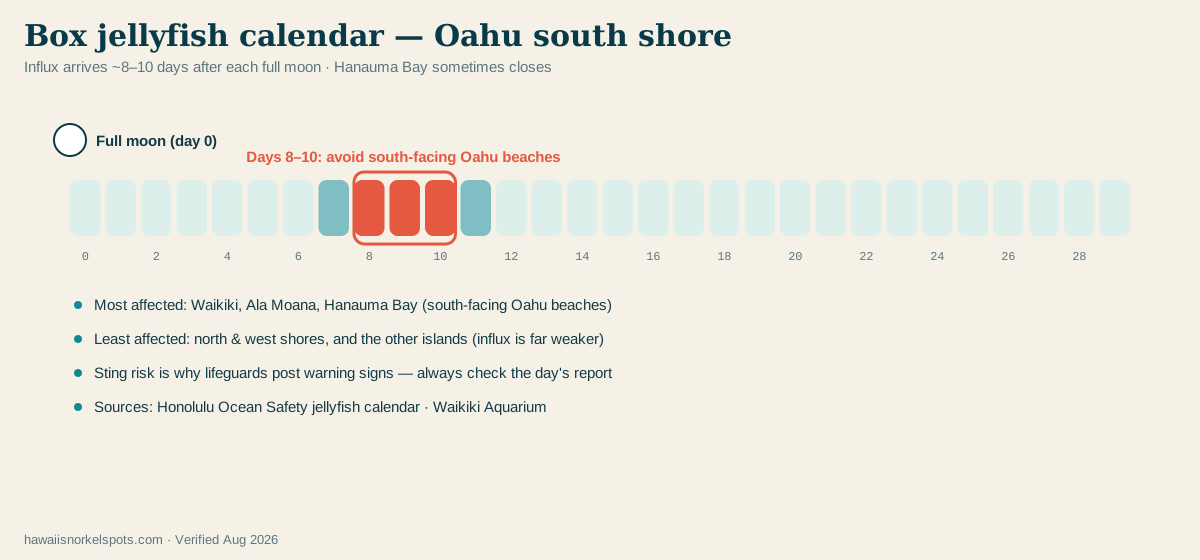
Roughly 8–10 days after each full moon, box jellyfish drift onto Oahu’s south-facing beaches — Waikiki, Ala Moana, and Hanauma Bay, which sometimes closes for it. Lifeguards post warnings and Honolulu Ocean Safety publishes the calendar; the other islands see far less of the phenomenon. On influx days, the move is simple: snorkel a different coast, or a different island’s worth of Oahu — the west side usually carries on fine.
The fears that don’t rank
Sharks: incidents involving snorkelers are genuinely rare — a handful of encounters statewide per year across millions of ocean users, mostly involving murky water or river mouths (which you shouldn’t snorkel anyway, for visibility reasons alone). Standard sense: clear water, daylight, no murky river outflows. Eels and urchins: hazards only to hands and feet that go where they shouldn’t — the no-touching rule is also the no-injury rule. The reef itself: coral cuts infect readily; the snorkelers who get them are the ones standing on reef, which is illegal, harmful and painful in one efficient package.
The pre-snorkel checklist
Lifeguarded spot matched to your level (the Spot Finder filters for it) · buddy confirmed · conditions checked (surf report + your own 60-second look — rhythmic waves over the entry means no) · someone on shore knows your plan · flotation if distances are new · morning slot. Six lines that remove essentially all of the pattern behind the statistics.
Sources
- Jellyfish calendar: Honolulu Ocean Safety.
- Rip current guidance: NOAA / National Weather Service surf-zone safety.
- Breath-holding risk: standard shallow-water blackout guidance (never hyperventilate before breath-hold diving).
FAQ
Is it safe to snorkel in Hawaii with kids?
At the right spots, among the safest family activities in the state: lifeguarded, contained water at Poipu’s keiki pond, Lydgate’s walled lagoons, Kahalu’u and Hanauma’s inner reef. Our beginners guide lists them all.
What months are most dangerous?
No month is dangerous; coasts are. October–April is dangerous on north shores and fine on leeward ones. The mistake is bringing summer assumptions to a winter north shore.
Should I wear a flotation device?
If distances or open water are new to you — yes, without embarrassment. Tour crews hand out flotation to everyone for a reason, and a belt or vest costs nothing in experience.