Where turtles are reliable — ranked by odds
| Spot | Island | Access | Turtle odds | Why they’re there |
|---|---|---|---|---|
| Turtle Town (Maluaka) | Maui | Free, shore | Very likely | Resident population + cleaning stations on the lava reef |
| Black Rock | Maui | Free, shore | Very likely | Algae grazing along a fixed rock face |
| Kahalu’u Beach Park | Big Island | Free, shore | Very likely | Daily grazing in a protected, shallow bay |
| Richardson Ocean Park | Big Island | Free, shore | Very likely | Resident turtles on the Hilo side’s quiet lagoons |
| Turtle Canyon | Oahu | Boat, ~$85–160 | Very likely | A dedicated cleaning station — some tours offer no-turtle re-rides |
| Electric Beach | Oahu | Free, shore (intermediate) | Often | Warm outflow draws the food chain, turtles included |
| Poipu Beach & Tunnels | Kauai | Free, shore | Often | Grazing rocks at Poipu’s point; seaweed ledges at Tunnels (summer) |
Why “resident population” is the phrase that matters
Hawaiian green sea turtles (honu) are creatures of habit: they graze fixed algae patches, rest at fixed ledges, and visit fixed cleaning stations where reef fish groom their shells. A beach with resident turtles delivers day after day; a beach where “turtles are sometimes seen” delivers marketing. Every spot in the table above is the first kind — which is also why no one in Hawaii needs to pay for a “turtle guarantee” on an island where the guarantee swims free off a public beach.
The rules — and why they get you better encounters
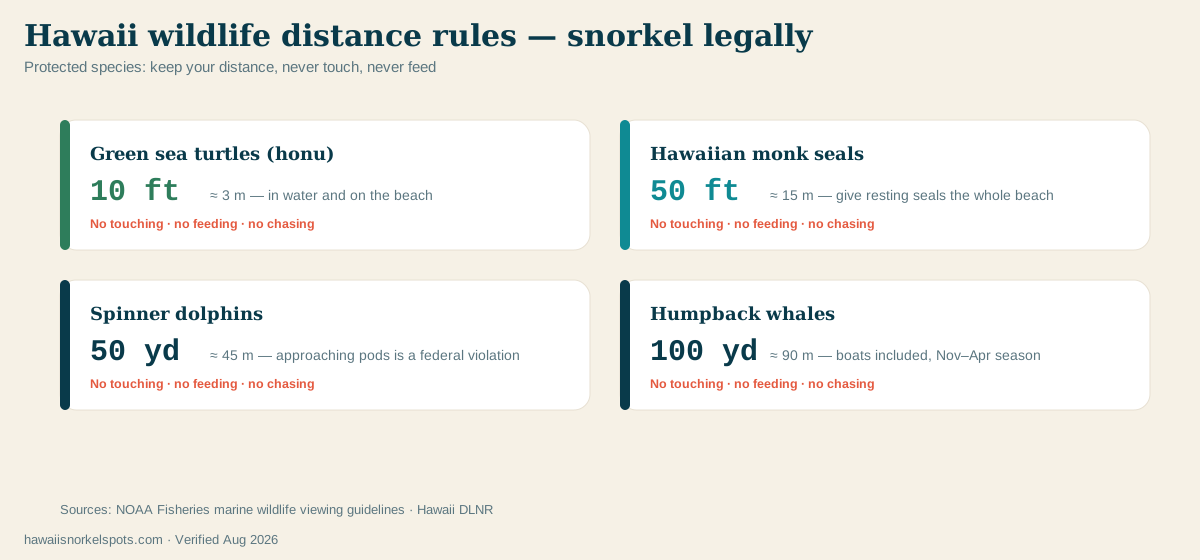
Hawaiian green sea turtles are protected by state and federal law: 10 feet of distance, no touching, no feeding, no chasing — and critically, never position yourself above or between a turtle and the surface, because they rise to breathe and a hovering snorkeler is an obstruction. Here’s the part the rules don’t advertise: they describe the optimal strategy anyway. A turtle that doesn’t perceive pursuit carries on grazing, and grazing turtles drift — frequently closer to a still snorkeler than that snorkeler could ever legally approach. Float, wait, and let the encounter come to you. It works at every spot on this page.
Timing your turtle
Morning wins, as everywhere in Hawaii — calm water, clear visibility, turtles actively grazing before boat traffic builds. At Turtle Town specifically, 7:30–9:30 a.m. also beats the Molokini fleet’s second-stop arrival. Basking turtles on the sand (common at Richardson and Poipu) are resting, not stranded: same 10 feet, from dry land too.
Boat or beach?
Our standing rule from the tours guide: pay for the boat when it buys access (Turtle Canyon’s offshore station, from a car-free Waikiki base) — not when the same turtles graze free at a beach you can drive to. On Maui and the Big Island, the beach wins every time.
Sources
- Rules: NOAA Fisheries marine wildlife viewing guidelines and Hawaii DLNR (honu are protected under state law and the Endangered Species Act).
- Spot reliability: firsthand reports per spot, cited on each linked guide, per our methodology.
FAQ
What happens if a turtle swims up to me?
Nothing illegal — the 10-foot rule governs your approach, not theirs. Stay still, keep your hands to yourself, and enjoy the best-case scenario.
What’s the best month to see turtles in Hawaii?
All of them — honu are residents, not migrants. Season matters only through surf: winter closes some north-shore spots, so pick from the year-round list above.
Can I see turtles without getting in the water?
Yes — basking turtles haul out regularly at Richardson (Hilo) and Poipu Beach, and Laniakea on Oahu’s North Shore is famous for it. The 10-foot rule applies on sand exactly as in water.