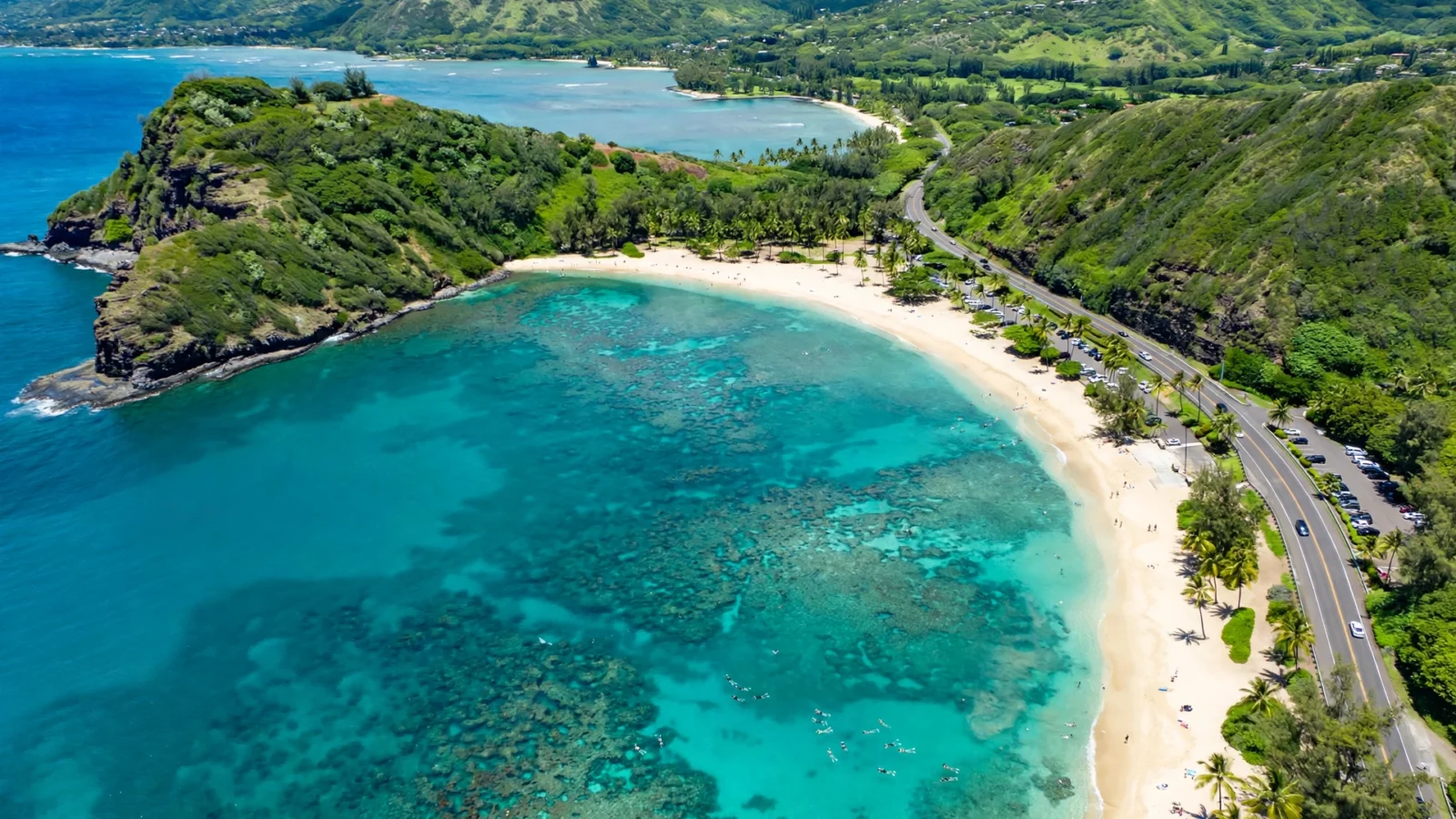
Oahu’s North Shore is the island’s other half: a 35-plus-mile stretch of coast from Punalu’u to Ka’ena Point where the pace drops, the surf gets serious, and the best days are built around the ocean, not a schedule. It is famous for the surf, but the same coastline also holds the island’s best summer snorkeling, a historic surf town, the best food trucks on Oahu, and waterfall hikes. This guide ranks the 17 best things to do in North Shore Oahu, snorkeling first, with the season rule, parking, and the practical detail the listicles skip. For the whole island, see our things to do in Oahu guide, and for the water specifically, our North Shore snorkeling guide.
The short version: come in summer to snorkel and swim, come in winter to watch the surf. The same beach that is glassy and swimmable in July is a big-wave arena in January, and the guide below is built around that split — every item says which season it belongs to, so you never plan a snorkel day on a surf day.
| # | Thing to do | Best for | Best season |
|---|---|---|---|
| 1 | Snorkel Shark’s Cove | Best marine life | Summer mornings |
| 2 | Snorkel Three Tables | Beginners, families | Summer |
| 3 | Watch surfers at Banzai Pipeline | Surf culture | Winter |
| 4 | Waimea Bay beach day | Swimming / surf show | Summer swim, winter watch |
| 5 | Sunset Beach sunset | Golden hour | Year-round |
| 6 | Turtles at Laniakea Beach | Wildlife, photos | Year-round, midday |
| 7 | Wander Haleiwa Town | Shopping, food, history | Year-round |
| 8 | Eat at the shrimp trucks | Iconic lunch | Year-round |
| 9 | Shave ice at Matsumoto’s | Classic treat | Year-round |
| 10 | Hike Waimea Valley to the waterfall | Easy hike + swim | Year-round |
| 11 | Hike the Ehukai Pillbox Trail | Views, short hike | Year-round |
| 12 | Take a surf lesson | First-timers | Summer |
| 13 | Dive with sharks | Bucket list | Year-round |
| 14 | Watch whales in winter | Wildlife | Dec–Apr |
| 15 | Hike to Kaena Point | Wild coast, seabirds | Year-round |
| 16 | Polynesian Cultural Center | Culture, families | Year-round |
| 17 | Eat and drink beyond the trucks | Acai, coffee, burgers | Year-round |
The North Shore season rule — read this first
The North Shore faces the North Pacific, and that one fact decides what you can do on any given day. From roughly May through September the ocean is typically calm and snorkelable — the core window most locals trust — with October as a shoulder month that needs a daily surf check. From roughly November through March or April, winter storms send large north swell into the exact reefs you would snorkel in summer, and Waimea Bay, Pipeline, Sunset Beach and the coves between them become surf spots. This is not a “morning is calmer” situation in winter: the swell direction is wrong for weeks at a time. The practical rule is simple — snorkel the North Shore in summer, and snorkel the south and west sides in winter: Hanauma Bay and Turtle Canyon stay calm when the North Shore is rough. Our best time to snorkel in Hawaii guide has the full month-by-month picture.
Before any North Shore entry, check the day’s surf forecast and the signage at the beach, and if the surf is up, do not get in. Plan your trip around the season you are visiting, not the season you wish you were visiting.
1. Snorkel Shark’s Cove (Pupukea Beach Park)
Shark’s Cove is the North Shore’s signature snorkel spot and the single best reason to visit in summer. A lava-rock cove of channels, caves and tide pools, it holds the densest marine life on this coast: reef fish in the channels, turtles on the outer edge, and visibility that makes the whole cove feel like an aquarium on a good morning.
Go in summer, and go in the morning, when the water is calmest and the light is best in the cove. The entries are rocky, there is no lifeguard stationed at the cove itself, and the channels have surge even on calm days, so this is a spot for confident snorkelers rather than absolute beginners. Wear reef booties, enter where the rock is flat, and stay inside the cove rather than swimming out past the point. Parking is the constraint: a small lot plus roadside parking that fills by mid-morning in summer, so arrive before 9am. In winter, do not get in at all — the cove becomes a surf break. Our full Shark’s Cove snorkeling guide maps the entry, the reef layout and what you will see.
2. Snorkel Three Tables — the beginner pick
Three Tables sits right next to Shark’s Cove and is the better first snorkel on the North Shore. Three flat reef “tables” sit just offshore with easy sandy entries and calmer water than the cove on most summer days, which makes it the best North Shore pick for beginners and families in season. The reef is shallow, the fish are plentiful, and you can stand on sand between swims — a very different feel from the cove’s rock entries next door. Bring reef booties if you have them; see our Hawaii snorkeling gear checklist for what to pack.
It shares the Shark’s Cove parking area, so the same arrive-early rule applies, and the same summer-only rule: May through September, mornings first. Pair it with the cove in one stop — tables first, then the cove. Our Three Tables snorkeling guide covers the entry points and the reef route in detail.
3. Watch the surfers at Banzai Pipeline
Banzai Pipeline is the most famous surf break in the world, and watching it is free. In winter the waves here are the measuring stick for the whole sport: the surf can run 20 feet and more on a big day, and the crowd on the sand is part of the show. The Vans Pipe Masters runs in mid-December; on contest days the beach is packed from dawn, so come on a non-contest swell day for the same waves with room to breathe.
The practical details matter. Leave Honolulu by 8am to beat the traffic and get a parking spot: the lot is tiny, across from Sunset Elementary School, with no signpost to help you find it. Watch from the sand and never from the water — Pipeline breaks over a shallow reef, and even strong swimmers stay out of the impact zone in winter. In summer the same beach is calm enough to snorkel, and the reef patches off the sand hold fish on the calmest days; see our Ehukai Beach snorkeling guide for the summer picture.
4. Waimea Bay — summer beach day, winter surf show
Waimea Bay is the single best illustration of the North Shore season rule, and that is why it tops most visitors’ lists. In summer it is a wide, sandy, swimmable bay with reef along its edges for morning snorkeling. In winter it is a legendary big-wave spot, with surf that can reach 25 feet and more, and the whole bay becomes a spectator arena.
In summer, snorkel the reef along the edges and leave the middle of the bay to swimmers; the beach park lot fills fast, so arrive early. In winter, watch from the sand and stay well back from the waterline. The rock at the bay’s edge is the famous jump rock, used for cliff jumping only in calm summer conditions. Our Waimea Bay snorkeling guide covers the summer reef in detail.
5. Sunset Beach — the sunset itself
Sunset Beach is named honestly: it is the North Shore’s best sunset spot, year-round, and the one place where the day’s last light is an event in itself. In winter it is also one of the great big-wave arenas — surf here can reach 35 to 50 feet on the biggest swells — and the beach is fully exposed, which is why the snorkeling only works on the calmest summer days, along the reef patches off the sand. In summer it is a long, beautiful, uncrowded beach; in winter it is a front-row seat to the surf.
Come for the last hour of daylight, bring something to sit on, and stay until the sun is fully down — on the clearest evenings you can catch the green flash as the sun drops into the ocean. Turtle Bay, at the resort end of the coast, is the quieter alternative: the sun drops past the point there, the beach empties, and the whole bay goes gold. Parking is roadside plus a beach lot, and fills on big winter swell days. Our Sunset Beach snorkeling guide covers the summer reef.
6. See the turtles at Laniakea Beach
Laniakea Beach — Turtle Beach — is where green sea turtles (honu) haul out to rest on the sand, and it is the easiest wildlife encounter on the North Shore. The turtles come ashore most reliably around midday, and volunteers are often on the beach to watch over them and answer questions; some of the regulars are known by name. It costs nothing, it takes twenty minutes, and it is the stop that turns a drive into a memory.
Keep at least 10 feet from any turtle on the sand, as NOAA recommends, and never touch one — the animals are protected, and the distance rule is the law-backed guidance, not a suggestion. Do not swim here expecting a snorkel spot: Laniakea is a turtle beach, not a reef, and the shorebreak can be strong. The parking area is small and the highway shoulder fills fast, so stop early in the day or late in the afternoon. Our Laniakea Beach guide has the full picture.
7. Wander Haleiwa Town
Haleiwa is the North Shore’s town, and it is the part of the trip that is not about the ocean at all. A historic surf town of low wooden storefronts, galleries, surf shops and cafes, it is where you eat, rent gear, and slow down for an hour or two. The town’s main street runs a few blocks and is best done on foot: park once, walk, and let the day find you.
Walk the main street through the surf shops and art galleries, then loop back along the river side for the food trucks and shave ice. Haleiwa also has the North Shore’s snorkel rental shops: better fit and prices than a beach-side rental, and staff who will tell you which spots are calm that day. See our snorkel gear rental guide for what to expect. Our Haleiwa Beach Park guide covers the town beach — easy parking, facilities, and gentle summer snorkeling near the reef edges — which makes a good low-stress first North Shore snorkel before lunch in town.
8. Eat at the shrimp trucks
The shrimp truck is the North Shore’s signature meal, and Giovanni’s Shrimp Truck is the famous one: garlic shrimp, scampi and hot-and-spicy plates served from a white truck, eaten at picnic tables in the sun. It is worth the queue once. But the honest version is that the shrimp truck is a category, not a single truck — Romy’s Kahuku Prawns and Shrimp is the other name regulars give, and the trucks along Kamehameha Highway each have their own following.
Order the garlic shrimp plate, expect to eat with your hands, and bring cash as a backup even where cards are taken. Most trucks wind down in the late afternoon, so plan this as a midday stop. If you are driving the coast, the trucks cluster around Haleiwa and Kahuku, and the drive between them is part of the experience. Prices change with the season and the catch, so check the board at the truck rather than trusting any single figure you read online.
9. Shave ice at Matsumoto’s
Matsumoto’s Shave Ice in Haleiwa is an institution: fine, snow-like ice, syrup flavors layered through the whole cup, and a line that moves faster than it looks. It has been the North Shore’s shave ice benchmark for decades, and the shop’s wall of flavors is part of the ritual — pick three, add condensed milk if you want the classic finish, and eat it before the sun does.
The local alternative is the Aloha General Store, a short walk away, which regulars swear by and which usually has the shorter line. Go to Matsumoto’s for the name, try the general store for the comparison, and decide for yourself.
10. Hike Waimea Valley to the waterfall
Waimea Valley is the North Shore’s easiest real hike and its most rewarding one: a paved, mostly flat path through a botanical garden to a waterfall you can swim under. The valley covers 1,875 acres and has been a sacred place for more than 700 years, and the walk itself — about half an hour each way through gardens — is the point as much as the waterfall at the end.
Life jackets are required for the waterfall swim and are provided at the falls, and the swim is only open when the water is safe. The paved path suits strollers and younger kids, which makes this the best North Shore hike for families. There is an entry fee: come in the morning before the tour buses, swim at the falls, and be back in Haleiwa for lunch.
11. Hike the Ehukai Pillbox Trail
The Ehukai Pillbox Trail is the North Shore’s best short hike: a steep climb through ironwood trees to a pair of old concrete pillboxes with a sweeping view over Pipeline, Sunset Beach and the whole Seven Mile Miracle. It is short and steep rather than long — most hikers are up and back in well under two hours — and the payoff-to-effort ratio is the best on the coast.
Go in the morning before the heat, wear shoes with grip (the trail is muddy and slippery after rain), and bring water — there is none on the trail. Do not hike it in heavy rain or when flash-flood warnings are out: the trail crosses steep ground, and the same weather that makes the surf big makes the trails dangerous. The trailhead is at Ehukai Beach Park, so pair it with a beach stop in summer.
12. Take a surf lesson
The North Shore is where surfing was born, and it is also where beginners should learn — in summer, on the small days, with an instructor. The south-facing town beaches and the sheltered spots around Haleiwa and Turtle Bay are the learning grounds: small, clean waves around 2 to 3 feet are ideal, and the local surf schools run lessons all summer. Winter is not the time to learn here — the same beaches that are gentle in July are powerful in January, and no reputable school will put a beginner in winter surf.
Book a morning lesson, when the wind is lightest and the water is calmest, and book early in your trip so a rough day can be moved rather than lost. Lessons include the board and the safety briefing; the briefing matters more than the board, because the North Shore’s ocean commands respect even on a small day.
13. Dive with sharks (cage-free)
The shark dive off Haleiwa is the North Shore’s bucket-list item: a boat trip a few miles offshore to swim with sharks in open water, no cage. The operators run cageless dives with Galapagos and sandbar sharks, and tiger sharks show up roughly once a month — the guides will tell you so honestly before you book, because the whole point is that the ocean is wild and the encounter is real.
Expect to pay around $150 per person at the time of writing, and check the current price when you book — it moves with the season. Book the dive at the start of your trip, not the end: if the trip is cancelled for weather, you need a buffer day to rebook. Morning departures are the glassiest and the least likely to leave you seasick.
14. Watch whales in winter
From December through April, humpback whales are in Hawaiian waters, and the North Shore is one of the best places on Oahu to watch them from land. The whales come close to shore along this coast, and on a calm winter morning you can watch them breach and slap their tails from the beach at Waimea Bay, Sunset Beach or the headlands between — no boat needed, no ticket, just patience and a pair of eyes on the horizon.
Winter is the trade: you lose the snorkeling, and you gain the whales and the surf. The best whale watching is in the morning, when the wind is down and the sea is flattest, and the peak months are January through March. If you want to get closer, whale-watching boat tours run out of Haleiwa in season. Watch for the spout first, then the back, then the breach.
15. Hike to Kaena Point
Kaena Point is the wild end of the North Shore: the westernmost tip of Oahu, where the road ends and the coast turns to raw volcanic rock, seabird colonies and open ocean. The trail from the Mokuleia end is roughly 2.5 miles each way along the coast — flat, exposed, and beautiful — to a point where the island simply stops.
There is no shade, no water and no facilities on the trail, so go early, carry more water than you think you need, and wear a hat and reef-safe sunscreen. Stay on the trail and keep your distance from nesting areas. In winter the waves crash over the rocks at the point itself — spectacular from a safe distance, dangerous up close. This is the hike for the visitor who has already done the beaches and wants to see what Oahu looks like without any of it: no town, no trucks, no crowds, just coast.
16. Visit the Polynesian Cultural Center (nearby)
The Polynesian Cultural Center sits in Laie, about a 25-minute drive east of Haleiwa along Kamehameha Highway, and it is the one big-ticket attraction close enough to the North Shore to fold into a day here. It is a full-day cultural village — six island nations, demonstrations, canoe rides, and an evening show — and the best family day on this side of the island when the ocean is too rough to swim.
Plan it as a full day, not a stop: arrive when it opens, work through the villages, and stay for the evening show if you can. Book ahead, because the popular packages sell out. For more island-wide ideas, see our things to do in Hawaii guide. It is the natural rainy-day or winter-day answer on the North Shore.
17. Eat and drink beyond the trucks
The shrimp trucks get the fame, but the North Shore’s food scene is wider than one plate. Acai bowls are the morning staple — the Waialua Bakery and Haleiwa Bowls are the names to know, and the bakery is closed on Sundays, so plan around that. The Sunrise Shack is the coffee stop, famous for its bullet coffee and its bright yellow shack on the highway. For burgers, KuaAina in Haleiwa and Teddy’s Bigger Burgers are the local picks, and Ted’s Bakery near Sunset Beach is the breakfast stop — expect a queue of around 20 minutes at 8:30am.
The Sunday rule is worth repeating: several North Shore favorites close on Sundays, including the Waialua Bakery and Seven Brothers Burgers, so if your North Shore day is a Sunday, check hours before you drive. Eat where the locals queue, and keep cash on hand for the smallest stands.
Free things to do on the North Shore
Most of the North Shore is free. The beaches are public, the surf watching is free, the turtles are free, the sunsets are free, and the best hikes cost nothing. A no-spend North Shore day is easy: park at Waimea Bay, watch the surf or swim in summer, walk to Laniakea to see the turtles, hike the Ehukai Pillbox Trail, and end at Sunset Beach for the sunset. Only the food, the rentals and the tours cost money — everything the coast itself offers is open to anyone who drives up.
North Shore with kids
The North Shore works for kids if you pick the right spots and the right season. In summer, Three Tables is the family snorkel — sandy entries, calm water, shallow reef — and Kuilima Cove at Turtle Bay is the sheltered alternative, protected by its rock barrier even when the surrounding coast is rough; see our Kuilima Cove guide. Kawela Bay, near Turtle Bay, is the other kid-friendly beach. Haleiwa Beach Park is the easy town beach for younger kids: parking, facilities, and gentle water near the reef edges.
Waimea Valley is the best family hike — paved path, strollers welcome, waterfall swim with life jackets provided. If it is your family’s first snorkel trip, our beginners snorkeling guide covers the basics. In winter, keep kids out of the water entirely on this coast. The rule for kids is the same as for adults, only stricter: if the surf is up, stay on the sand.
Best time to visit the North Shore
For snorkeling and swimming, May through September is the window, with June through August the calmest and most reliable. For surf watching, November through February is the season, with December the peak — the Pipe Masters runs in mid-December. For whales, December through April, peaking January through March. For the best all-round trip, late spring (May) and early autumn (September and October) give you the calmest water with fewer crowds, though October needs a daily surf check.
Time of day matters too: mornings are calmest for snorkeling and surf lessons, midday is best for the turtles at Laniakea, and the last hour of daylight is for the sunset. Leave Honolulu by 8am on a North Shore day to beat the traffic and get parking. For the island-wide picture, see our best time to snorkel in Hawaii guide.
Where to stay on the North Shore
Most visitors day-trip from Waikiki, but staying on the North Shore changes the trip: you get the mornings, when the water is calmest and the beaches are empty, and you skip the long drive back after dark. The options are three: the Ritz-Carlton at Turtle Bay, the resort choice at the quiet eastern end; vacation rentals around Haleiwa and Pupukea, minutes from Shark’s Cove and Waimea Bay; and the hostel in Haleiwa, the budget option within walking distance of the town’s food and shops.
From Waikiki, the North Shore is a full day trip, not a half-day: roughly an hour each way without traffic. Book ahead in winter — surf season fills the North Shore’s small number of rooms fast.
Getting there and getting around
A rental car is the way to do the North Shore. The coast is 35-plus miles long, the stops are spread out, and the bus, while it works, is slow: TheBus runs from Waikiki up the coast, around $3 a journey or $2 with a HOLO card, and the trip takes roughly 2 to 2.5 hours each way.
Drive the coast road, Kamehameha Highway, from Haleiwa east to Turtle Bay and beyond, and do not rush it. The road is two lanes and winding — the drive itself is part of the experience.
Parking on the North Shore
Parking is the North Shore’s quiet constraint, and it shapes the day more than anything else. The famous coves — Shark’s Cove and Three Tables — share a small lot plus roadside parking on Kamehameha Highway that fills by mid-morning in summer: arrive before 9am. Waimea Bay’s beach park lot fills fast on summer weekends. Pipeline’s lot is tiny, across from Sunset Elementary School, with no signpost. Laniakea’s lot is small and the highway shoulder fills quickly.
The rules are simple: arrive early, park only where it is legal — the highway shoulders are ticketed where parking is prohibited, and the tow trucks do patrol — and never leave valuables visible in the car. If a lot is full, drive on to the next beach rather than circling.
The perfect one-day North Shore itinerary
Leave Honolulu by 8am and drive straight to Shark’s Cove. Snorkel the cove and Three Tables while the water is calmest, then drive to Waimea Bay for a late-morning swim and a walk on the sand. Lunch at a shrimp truck, then an afternoon in Haleiwa: shave ice at Matsumoto’s, a wander through the shops, and snorkel gear rental if you need it for the next day. Stop at Laniakea around midday or on the way back for the turtles, then finish at Sunset Beach for the sunset. That is the summer day. Our Oahu snorkeling map plots every spot in this guide if you want to plan the driving order.
The winter day flips: Pipeline first, for the morning surf, then Waimea Bay to watch the big waves, Laniakea for the turtles, Haleiwa for lunch and the shops, and Turtle Bay for the sunset.
Is the North Shore dangerous?
Honestly, yes — in the wrong season, and in the wrong water. Winter surf can reach 20 to 50 feet, shorebreak can knock a standing adult down, and the reefs that make the snorkeling so good in summer are the same reefs that break the surf in winter. The answer is the season: the danger is not the place, it is the swell.
The safety rules are short. Check the surf forecast every morning before you go in the water. Never turn your back on the ocean. Never swim alone. If the surf is up, stay on the sand — and in winter, that means the whole season, not just the big days. Keep 10 feet from turtles, stay on marked trails, and do not hike in heavy rain or flash-flood warnings.
Frequently asked questions
Is North Shore Oahu worth visiting?
Yes. It is the most distinctive part of Oahu: world-famous surf, the island’s best summer snorkeling, a historic surf town, and a food scene built on trucks and shave ice. It is a full day at minimum, and it is the day most visitors remember best.
What is North Shore Oahu known for?
Surf — Banzai Pipeline, Waimea Bay and Sunset Beach are the most famous breaks on earth — plus summer snorkeling at Shark’s Cove, the shrimp trucks, Haleiwa Town, and the turtles at Laniakea Beach. It is known, in short, for being the Hawaii that the postcards come from.
How long should you spend on the North Shore of Oahu?
One full day is the minimum, and two days is better: one for the beaches and snorkeling, one for the hikes, the food and the town.
What is the best time to visit the North Shore of Oahu?
For snorkeling and swimming, May through September. For watching the surf, November through February. For whales, December through April. Late spring and early autumn give you the best balance of calm water and smaller crowds.
Is North Shore better than Waikiki?
Waikiki is the city beach: hotels, restaurants, calm water year-round, everything within walking distance. The North Shore is the country coast: wilder, quieter, better snorkeling in summer and better surf in winter, and you need a car. Most visitors want both — Waikiki as the base, the North Shore as the day trip.
Is it safe to swim in the North Shore Oahu?
In summer, at the sheltered spots, yes — Three Tables, Kuilima Cove and Haleiwa Beach Park are the safest swims, in calm conditions, in the morning. In winter, no: the north swell makes the coast dangerous for swimming, and you should stay on the sand. Always check the day’s surf forecast and the beach signage before getting in.