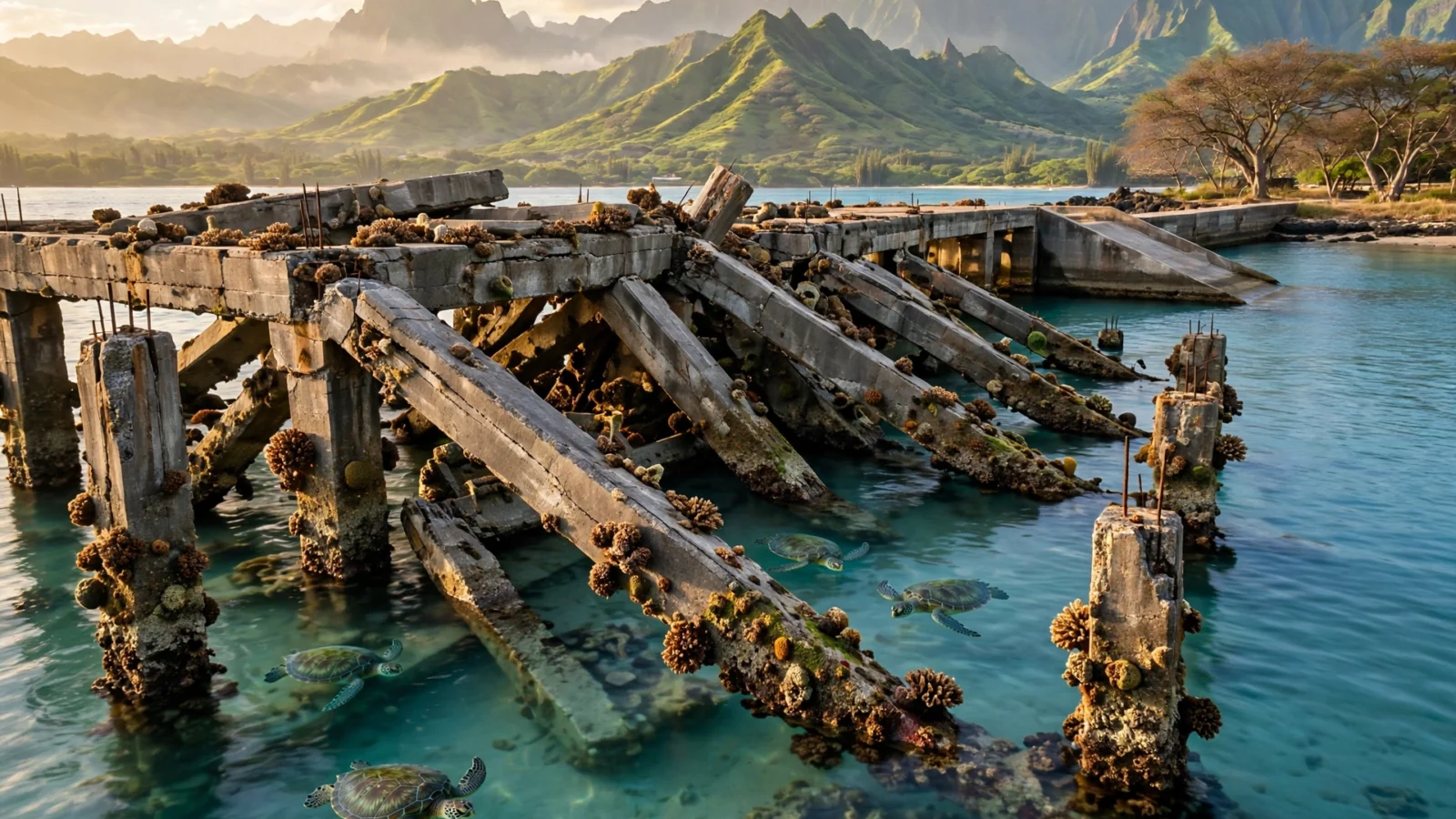
Short answer: Mala Wharf is the most unusual snorkel site in West Maui — a collapsed 1922 shipping pier whose fallen concrete slabs now form an artificial reef crowded with green sea turtles and resting whitetip reef sharks. It is also a snorkel with real conditions attached: a shallow, rocky entry best attempted at high tide, an active boat ramp and channel on one side that you must stay well clear of, no lifeguard, and structure you look into but never duck under. For a confident, intermediate snorkeler on a calm morning, it is one of the most rewarding shore snorkels on Maui. For a first snorkel, it is the wrong beach — and this guide will tell you where to go instead.
Mala Wharf — also called Mala Pier or Mala Harbor — sits at the north end of Lahaina, beside the Mala Boat Ramp, just south of the Lahaina Cannery Mall. It is the only true in-town Lahaina snorkel site, and nothing else on the Maui snorkeling map looks like it: no crescent bay, no golden sand entry, just the bones of an old pier lying in clear water, wrapped in coral and patrolled by turtles. Almost everything written about Mala online is written for scuba divers. This guide is written for snorkelers — what the site actually looks like from the surface, how to get in without shredding your feet or your morning, and the honest limits of the place.
Mala Wharf snorkeling at a glance
| Mala Wharf | |
|---|---|
| Best for | Intermediate+ snorkelers; turtle and shark sightings |
| What it is | Collapsed 1922 pier — concrete slabs and pilings forming an artificial reef |
| Depth over the structure | Roughly 10–30 ft — the wreck is viewed from the surface |
| Entry | Rocky shallows on the beach side of the pier; best at high tide, booties essential |
| Headline life | Dozens of green sea turtles, whitetip reef sharks, frogfish, octopus, eels |
| Facilities | Parking stalls by the ramp; restrooms and showers at the end of the lot |
| Lifeguard | None |
| Watch out for | Boat traffic and the marked channel, rebar and debris in the wreck, urchins and fish hooks in the shallows, low-tide entry |
The wharf’s story: a pier the ocean took back
Mala Wharf was built in 1922, when West Maui’s pineapple and sugar economy moved by sea and Lahaina wanted a proper interisland steamer terminal. The ocean had other plans: currents, swell and surf made the site awkward for large vessels from the start, the wharf never became the major terminal it was drawn up to be, and smaller-boat use faded by about 1950. The structure was condemned and left to deteriorate.
Then, in September 1992, Hurricane Iniki drove roughly 30-foot surf into Lahaina and tore the end off the pier. Concrete slabs, pilings and deck sections dropped into the water — and stayed there. Three decades on, that wreckage is the reef: coral has crusted the concrete, fish school through the gaps, turtles rest and get cleaned in the shelter of the slabs, and whitetip reef sharks spend their days in the shade underneath the biggest pieces. Divers call the light falling through the collapsed structure a “sunken cathedral.” From the surface, on a calm clear morning, you can see why.
Where Mala Wharf is, and parking
From Front Street in Lahaina, turn toward the ocean on Ala Moana Street — just south of the Lahaina Cannery Mall — following the signs for Mala Small Boat Ramp, and stay right toward the ramp. There are parking stalls by the ramp, and restrooms and showers at the end of the parking lot. Two landmarks help you orient in the water: the standing stub of the old pier, and the active boat ramp and harbour channel on the other side of it. Everything in this guide happens on the beach side of the pier, away from the ramp and channel — that distinction is the single most important safety fact at Mala.
Mala sits at Lahaina’s north edge, and the town around it is still in phased recovery from the 2023 fire. The ramp area is active — it hosts working boats and a temporary state harbour office — and recent snorkeler and diver reviews confirm the site is being snorkeled now. But follow current County and DLNR signage on the day, respect any closed areas without exception, and keep the visit low-key: park considerately, keep noise down, and spend locally while you are in town. Conditions and access rules in a recovering town can change; the signs on the day outrank anything on this page.
The entry: the hard part, done honestly
Every Mala review agrees on one thing: getting in is the work. In front of the beach-side entry is a very shallow flat of rock and dead reef. At low tide it is a wade across sharp, uneven ground with barely enough water to float; reviewers describe walking roughly 50 feet — some say up to 50–100 yards depending on where you start — before it drops to swimmable depth. Small waves at low tide will drag you across that inner reef. The rules that make it manageable:
- Time it for high tide. This is the difference between a mildly awkward entry and a miserable one. Plan the snorkel around the tide, not around breakfast.
- Wear reef booties or hard-sole water shoes. Bare feet and thin sandals lose to this flat. Urchins and discarded fish hooks hide in the shallows — watch every step.
- Enter on the beach side of the pier only. Never enter or swim across the boat ramp channel on the other side: it is active boat traffic, and reviewers report that crossing it can draw a Harbor Patrol ticket as well as a propellor risk.
- Walk, don’t rush. Shuffle out until the water is deep enough to put fins on and float — about where it drops toward 10–15 feet — rather than trying to swim through the shallows.
If the tide is low, the wind is already up, or the entry flat looks like a washing machine, the correct Mala decision is no decision at all: come back another morning, or pick a sandy-entry beach from the alternatives table below.
The snorkel route: along the fallen pier
Once you are floating, the site explains itself. Work slowly along the collapsed structure on its beach side, from the standing pier outward toward the fallen end sections. The wreck lies in roughly 10–30 feet of water, which puts it in a sweet spot for surface snorkeling: deep enough to hold real structure and big animals, shallow enough that on a clear morning you can watch turtles resting on the bottom and sharks lying under the slabs without diving down at all.
Peer into the gaps and under the edges of the concrete — from above, at the surface. The dark “coves” inside the wreck are freediving and scuba territory: they contain rebar, debris and fishing line, and a snorkeler ducking under collapsed concrete is in the one genuinely dangerous position this site offers. Look in, never go in. The same rule, honestly applied, is what makes Mala safe enough to recommend: everything worth seeing here is visible from the surface.
Stay on the beach side of the structure for the whole snorkel, give the channel a wide berth on the way out and back, and exit the way you came in — ideally before the tide has dropped far enough to make the shallows worse than they were on entry.
What you will see at Mala Wharf
Green sea turtles are the headline, and at Mala they are not a maybe. Dozens use the wreck — resting under the slabs, cruising the structure, and holding station at cleaning spots where reef fish pick algae from their shells. Reviewer accounts describe mornings with turtles everywhere you look, and noticeably fewer by afternoon, which is one more reason this is a morning snorkel. Turtles are protected: watch from at least 10 feet away, never touch, chase or crowd them, and let them surface freely. Our guide to snorkeling with turtles in Hawaii covers the etiquette in full.
Whitetip reef sharks rest under the biggest concrete pieces toward the pier’s fallen end. Divers report them so reliably that “never not seen one” is a common claim; from the surface you will spot them as pale, still shapes in the shade of the slabs on clear days. Whitetips are docile daytime resters — observe from a respectful distance, do not poke into their shelter, and enjoy what is, for most snorkelers, a first wild shark seen entirely on its own terms.
Around them: frogfish — a genuine prize for fish-watchers, and one Mala is known for — plus octopus, moray and conger eels in the structure, rock fish, and schools of reef fish working the concrete. Spotted eagle rays pass occasionally, and in whale season reviewers report hearing humpback song through the water. Visibility is often reported around 50–70 feet on a good morning — and collapses fast after heavy rain, when runoff from the stream and shoreline clouds the whole site. Brown or murky water is a hard no here, as it is anywhere near a boat harbour.
Best time to snorkel Mala Wharf
Stack three clocks in your favour. Tide: high tide, for the entry. Day: early morning — calmest water, clearest light through the structure, the most turtles, and the site gets busy after about 8–9 a.m. Weather: no recent heavy rain (runoff), light wind (afternoon trade-wind chop works this shoreline over), and no significant swell wrapping into the Lahaina roadstead. Those rules are the Mala version of the pattern in our best time to snorkel in Hawaii guide — here they are not fine-tuning, they are the difference between the site working and not working. If you can only come at low tide on a windy afternoon, Mala will show you its worst side; a sheltered bay will serve you better that day.
Safety at Mala: the full list
Mala concentrates more distinct hazards than a normal Maui beach, so be systematic — the same mindset as our Hawaii snorkeling safety guide, applied to a wreck beside a working ramp:
- Boat traffic is the standing hazard. The ramp and channel are active. Enter, snorkel and exit on the beach side only; never cross the channel; assume every boat has not seen you. A dive flag is the local norm for divers here — snorkelers should stay visibly close to the structure and well out of the channel’s line.
- The wreck itself: rebar, sharp concrete edges, debris and lost fishing line. Look into the structure; never duck under slabs or into the dark coves, and keep hands off the concrete.
- The shallows: urchins and fish hooks underfoot — booties on until you are floating, and again before you stand up on exit.
- No lifeguard. There is no guarded swim zone here. Snorkel with a buddy, tell someone your plan, and be honest about your swimming: this site asks for a comfortable open-water swimmer, not a strong-on-holiday one.
- Conditions calls: murky water after rain, low tide plus any surf, and afternoon chop are each enough to cancel. The turtles will be there tomorrow.
Beginners and kids: the honest verdict
No — not for a first snorkel, and not for young kids. The entry is rocky and tide-dependent, there is no lifeguard, boats work next door, and the best of the site rewards a swimmer who is already comfortable in open water. That is not a flaw in Mala; it is what the place is. Beginners are far better served by the protected, sandy-entry water at Baby Beach in Lahaina, just south along this same coast, or by the bay at Napili — and our beginners’ snorkeling guide lays out the full first-day approach. Confident kids who snorkel regularly, with an adult, at high tide on a glassy morning, are the youngest version of the Mala audience — and even then, the family’s adult should snorkel it once first.
Mala vs the other West Maui shore snorkels
| Mala Wharf | Black Rock (Ka’anapali) | Airport Beach (Kahekili) | |
|---|---|---|---|
| The draw | Wreck reef: turtles in numbers, resting whitetip sharks, frogfish | Cliff-point reef, turtles, easy resort access | Long offshore reef, steady fish life, beach park setting |
| Entry | Rocky shallows — high tide + booties | Sandy beach entry | Sandy entry, reef a short swim out |
| Level | Intermediate+ | Beginner-friendly in calm conditions | Beginner to intermediate |
| Facilities | Parking, restrooms, showers; no lifeguard | Resort beach; paid parking in garages | Beach park with facilities and parking |
| Pick it when | You want the wreck and the sharks, and the tide is right | You want easy access and a classic Ka’anapali morning | You want a long, unhurried reef swim |
Read the full guides before you choose: Black Rock snorkeling and Kahekili (Airport Beach) snorkeling. Further north, Honokowai Beach Park offers an easier reef day, and Honolua Bay is West Maui’s marine-reserve showcase when conditions allow. Pack for a wreck site with our snorkeling gear checklist — booties are the item most Mala first-timers wish they had brought — and use reef-safe sunscreen, as Hawaii law and this reef both require.
Frequently asked questions
Can you snorkel at Mala Wharf from shore?
Yes — it is a shore snorkel, entered from the beach side of the pier beside Mala Boat Ramp. The entry crosses a shallow rocky flat, so it is best at high tide and in booties. Boat tours also stop at the wreck, but the shore entry is how most snorkelers do it.
Is Mala Wharf good for beginner snorkelers?
No. The rocky tide-dependent entry, the active boat channel next door, the absence of a lifeguard and the open-water swim put Mala in intermediate territory. Beginners should start at a protected sandy-entry beach such as Baby Beach in Lahaina or Napili Bay.
Are there really sharks at Mala Wharf?
Yes — whitetip reef sharks rest under the collapsed pier’s slabs during the day and are reported there very reliably. They are docile daytime resters; watch them from a respectful distance at the surface and never reach or duck into their shelter.
When is the best time to snorkel Mala Wharf?
Early morning at high tide, after a dry spell. Morning brings the calmest, clearest water and the most turtles; high tide makes the rocky entry manageable; and heavy rain ruins visibility with runoff. Afternoons are commonly choppy and busy.
How do you get to Mala Wharf?
From Front Street in Lahaina, turn toward the ocean on Ala Moana Street (just south of the Lahaina Cannery Mall), following signs for Mala Small Boat Ramp, and stay right. Parking stalls sit by the ramp, with restrooms and showers at the end of the lot. Enter the water on the beach side of the pier — never across the boat channel.
What will you see snorkeling at Mala Wharf?
Dozens of green sea turtles using the wreck’s cleaning stations and resting spots, whitetip reef sharks under the big slabs, frogfish, octopus, eels, rock fish and schools of reef fish over coral-crusted concrete — with spotted eagle rays passing occasionally and whale song audible in season.
Is there a lifeguard or facilities at Mala Wharf?
There is no lifeguard. Facilities are the boat-ramp ones: parking stalls, restrooms and showers at the end of the parking lot. Snorkel with a buddy and treat it as the unguarded site it is.
Can you go under the pier at Mala Wharf?
Do not. The swim-throughs and dark coves inside the collapsed structure are a scuba and freediving environment full of rebar, debris and fishing line. Everything worth seeing at Mala — turtles, sharks, frogfish, the coral-crusted slabs themselves — is visible from the surface. Look in; never go in.