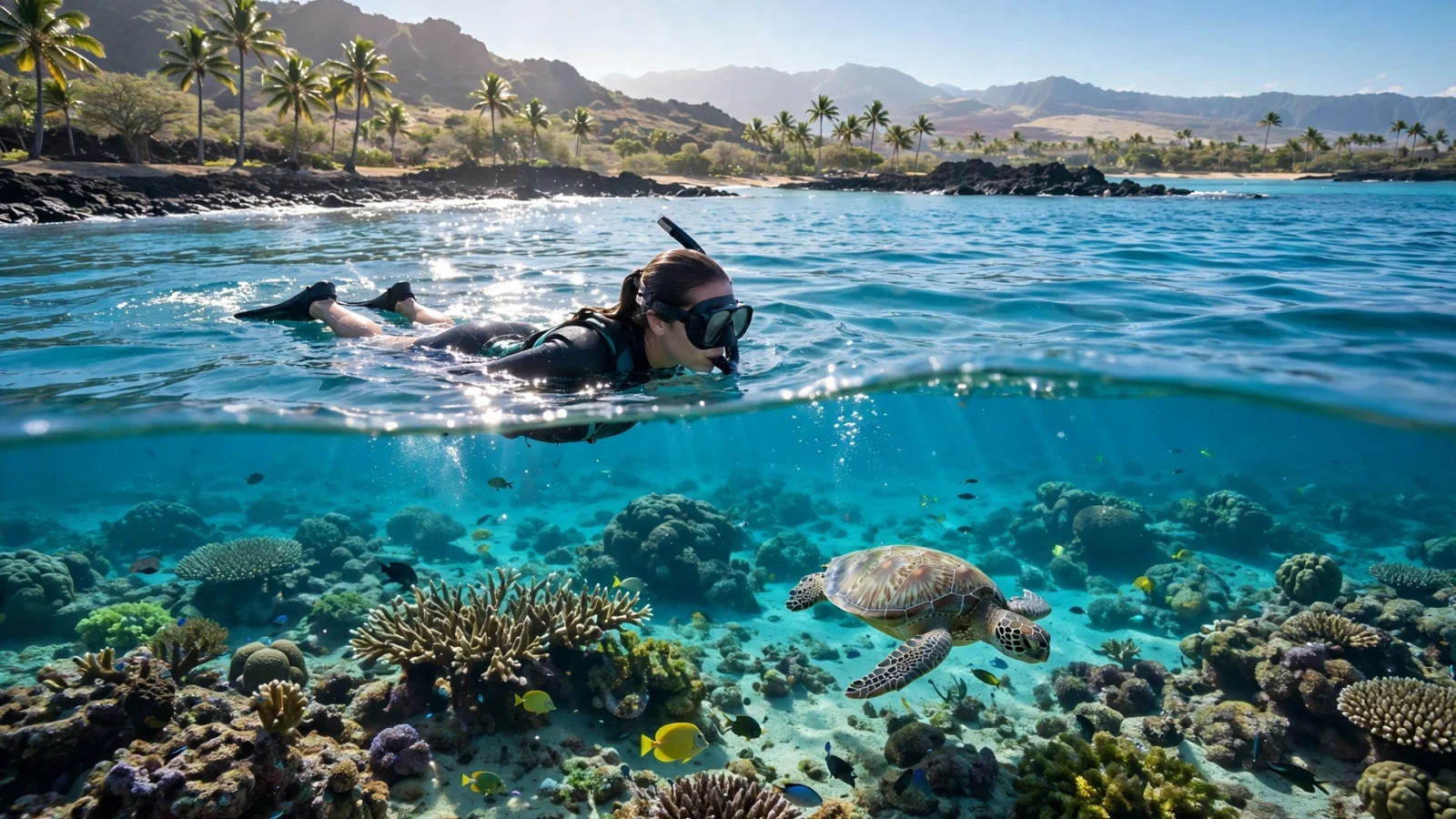
Ask ten people where to snorkel on the Big Island and nine of them are really answering a narrower question: where to snorkel in Kona. The island’s visitor coast — the dry, leeward strip running south from Kailua-Kona through Keauhou to Honaunau, with a second string of bays to the north — holds the clearest, calmest, most reliably snorkelable water in Hawaii, and almost every famous Big Island spot sits within about 45 minutes of a Kona hotel. This guide orders those spots the way you will actually use them: by distance from Kailua-Kona, with an honest verdict on each — what the entry is like, who it suits, and whether you need a boat, a kayak, a car or just a towel.
If you are planning the whole island rather than one coast, start with our Big Island snorkeling hub, which ranks the spots island-wide including Hilo. This page is the Kona zoom-in: one coast, in driving order.
Kona snorkeling at a glance
| Spot | Approx. distance from Kailua-Kona | Best for | Entry |
|---|---|---|---|
| Kamakahonu Beach (King Kam) | In town | A first dip, kids, testing rental gear | Sandy beach |
| Magic Sands (La’aloa) | ~4 miles south | A casual calm-day snorkel tacked onto a beach stop | Sandy beach — calm days only |
| Kahalu’u Beach Park | ~5 miles south | Beginners, families, turtles | Shallow sandy/rocky shore, lifeguarded |
| Keauhou Bay | ~6 miles south | Easy south-Kona base; manta snorkeling after dark | Rocky/sandy shore and boat tours |
| Kealakekua Bay (Captain Cook) | ~17 miles south | The best reef in Kona — clarity and fish density | Boat, kayak, trail hike, or the Napo’opo’o shore |
| Two Step (Honaunau Bay) | ~20 miles south | The best shore snorkeling in Kona | Natural lava-rock steps into deep water |
| Ho’okena Beach | ~25 miles south | A quieter South Kona beach day | Sandy beach |
| Honokohau / Ai’opio Beach | ~4 miles north | Turtles resting in a calm, shallow bay | Sandy beach by the harbor |
| Old Kona Airport | ~2 miles north of town | A local, low-key reef away from the crowds | Rocky shore |
| Kekaha Kai (Mahai’ula, Makalawena, Kua Bay) | ~6–10 miles north | White sand plus reef — the north day trip | Sandy beaches, some walking |
Distances are approximate road distances from central Kailua-Kona; sources and maps vary slightly by starting point, and Kona traffic on Ali’i Drive can stretch short drives at busy times. Every spot named above has a fuller treatment either in its own section below or in its dedicated guide, linked as you go.
The spots, south from town first
Most visitors stay in or near Kailua-Kona and day-trip south, because the south run stacks four of the coast’s five biggest names into one easy drive down Ali’i Drive and Highway 11. Take them in this order.
Kamakahonu Beach: the in-town warm-up
You can walk to Kamakahonu Beach from the Kailua Pier end of town, which makes it the most useful first snorkel in Kona: a small, protected sandy cove beside the historic Ahu’ena Heiau where you can test a rental mask, get a nervous beginner floating, and be back at your hotel in minutes. The reef is modest — this is a confidence session, not a destination — but turtles do cruise through, the water is about as gentle as ocean gets, and if anything about your gear is wrong, this is where you want to find it out. Our dedicated guide covers the entry, the historic site etiquette and what to expect.
Magic Sands: the calm-day bonus, never the plan
Magic Sands Beach (La’aloa Beach Park), a few miles south on Ali’i Drive, is a pretty white-sand pocket that earns its name honestly: in big surf the sand can wash offshore and the bay turns into a shore-break spot where snorkeling is off the table. On a flat, calm morning it is a pleasant casual snorkel along the rocky edges. Treat it as a bonus stop on a day when the ocean is clearly calm — never as the day’s main plan — and check our guide for how the beach changes with the seasons before you go.
Kahalu’u Beach Park: Kona’s beginner headquarters
If one spot does the most snorkeling work in Kona, it is Kahalu’u Beach Park, roughly five miles south of downtown. A partly walled, shallow bay keeps the inside calm while a real reef — fish, coral and some of the most reliable turtle encounters on the coast — starts within a few fin-kicks of shore. It is lifeguarded, set up for families, and shallow enough that first-timers can stand, regroup and go again. That convenience makes it busy and makes the parking fill early, so go first thing. The trade-off is clarity: Kahalu’u is good, not pristine, and on a stirred-up afternoon the famous spots further south will look noticeably better. Our full Kahalu’u guide covers the zones inside the bay, where the turtles feed, and the reef-etiquette rules the bay’s education volunteers ask visitors to follow.
Keauhou Bay: the easy base — and where the mantas are
Keauhou Bay, a little further south, works two shifts. By day it is a calm, working bay with decent snorkeling around its edges and the easiest logistics on this part of the coast. After dark it becomes one of the two famous manta ray sites: lights draw plankton, plankton draws mantas, and snorkelers float at the surface while rays barrel-roll beneath them. That night experience has its own full guide — our manta ray night snorkel page compares the Keauhou site with the second site up near the airport and walks through picking an operator — because for many visitors it is the single best reason to base themselves in Kona at all.
Kealakekua Bay: the best reef in Kona, and the one that takes planning
Seventeen miles south of town, Kealakekua Bay and the Captain Cook Monument hold the snorkeling Kona is famous for: a protected marine life conservation district with the clearest water and densest fish life on the coast, in a wide bay under steep cliffs. The catch is access, and choosing your route is the real decision here. Tour boats are the easy default and the way most people go. Kayaks cross from the Napo’opo’o side under the current permit rules. A steep trail descends to the monument shore. And the bay’s near shore at Napo’opo’o offers a lesser, simpler snorkel of its own. Each route changes the cost, the effort and how much of the best reef you actually reach, so read the dedicated guide before you commit — it compares all four honestly, including the shore option most Kona roundups skip.
Two Step: the best shore snorkeling in Kona
Just beyond Kealakekua, at Honaunau Bay next to Pu’uhonua o Honaunau National Historical Park, Two Step is where confident swimmers should point the car. Two natural lava ledges step straight into deep, clear water over a rich reef — no sand, no wading, no tour — with turtles, big fish schools and, on lucky mornings, spinner dolphins resting in the bay. It asks more of you than Kahalu’u: the entry is rock, there is no lifeguard, and the adjacent national historical park is a sacred place with its own rules (if you park inside the park, its entry fee applies — check the National Park Service for the current amount; the snorkel entry itself is along the shore outside the park grounds). Go early for parking and the calmest water, and read our Two Step guide for the entry-and-exit technique that keeps the lava ledges friendly.
Ho’okena: the quiet end of the south run
Ho’okena Beach is the south run’s exhale — a grey-sand South Kona beach with a gentler pace than the famous names, decent snorkeling along its rocky ends on calm days, and room to spend a whole beach day. It is not a step up in reef quality from Two Step or Kealakekua; it is a step down in crowds. If your group splits between snorkelers and beach-sitters, this is the compromise spot.
North of town: the airport run and Kekaha Kai
Kona’s north side is the half most roundups underplay. The water is the same clear leeward water, the crowds are thinner, and the signature outing is a state park with three quite different bays.
The closest stop is the Old Kona Airport shoreline just north of town — a local, low-key rocky reef where Kona residents snorkel away from the visitor circuit. A few miles further, the small sandy bay by Honokohau Harbor (Ai’opio) is known for turtles resting in its calm shallows; treat it as a gentle turtle-watching snorkel, give resting turtles their space, and never touch or crowd them — our snorkeling with turtles guide covers the distance rules that apply everywhere in Hawaii. The harbor area is also the shore landmark for the second manta site, covered in the manta guide linked above.
The north day trip is Kekaha Kai State Park. Its southern bay, Mahai’ula, pairs white sand with reef a short walk from parking over a rough park road. Walk further and Makalawena rewards the effort with one of the prettiest uncrowded beach-and-reef combinations near Kona. The park’s northern section, Kua Bay (Manini’owali), is the postcard — bright sand, turquoise water, reef along the rocky points — and the one most exposed to winter surf, so pick your day. Just beyond, Kohanaiki Beach Park adds long shoreline, ponds and pockets of reef, and if you are ranging further up the Kohala coast, Kukio Bay and Kiholo Bay continue the same pattern — each has its own guide.
Best Kona snorkeling for beginners and kids
Kona is the easiest coast in Hawaii to learn on, if you sequence it right. Start at Kamakahonu or Kahalu’u, where entries are sandy, water is shallow and help is nearby. Graduate to Keauhou’s calmer edges or a boat trip to Kealakekua, where the crew handles the logistics and the reef does the impressing. Leave Two Step until everyone is confident entering deep water from rock, and leave the exposed north bays for a calm day with an adult count that works. Our beginners’ guide to snorkeling in Hawaii covers the skills themselves — mask fit, breathing, clearing — and our snorkeling safety guide covers the ocean judgment that matters more than any spot choice: never snorkel alone, watch the water before you enter, and treat a churned-up, brown or fast-moving bay as a closed bay, whatever the itinerary says.
Shore snorkeling vs boat tours in Kona
Kona splits cleanly. Shore snorkeling here is genuinely excellent and free at Kahalu’u, Two Step, Kamakahonu and the north bays — for most visitors, most days, a rental set and a car are the whole cost of a great snorkeling trip. Tours earn their money in exactly two places: Kealakekua Bay, where a boat removes every access problem and puts you on the best reef in the bay, and the manta ray night snorkel, which is a tour product by nature — lights, boats and crew are the experience. Our Hawaii snorkeling tours guide compares the main tour types across the islands, and the Kealakekua and manta guides linked above handle their specific choices. Book the manta night early in your stay, not the last night: if weather cancels it, you want a second chance.
Best time to snorkel in Kona
Two rules cover most of it. First, mornings: Kona’s water is calmest and clearest before the afternoon breeze and boat traffic stir it, and the parking maths at Kahalu’u and Two Step reward anyone in the water by nine. Second, season works in Kona’s favour more than anywhere else in Hawaii. The leeward Kona coast is sheltered from the winter north swells that shut down famous north-shore spots on the other islands, so Kona keeps snorkeling through winter — with two exceptions to respect: big west swells can still close exposed bays like Kua Bay, and heavy rain (rare on this dry coast) sends runoff that clouds near-shore water for a day or so. The month-by-month picture, including the winter section, is in our best time to snorkel in Hawaii guide; for the general case for going from the beach rather than a boat, see shore snorkeling in Hawaii.
Renting gear in Kona
Kailua-Kona town is the rental base for the whole coast: shops cluster in town and along Ali’i Drive, a set picked up the afternoon before a south run beats a dawn queue, and weekly rates usually beat paying day by day if you will snorkel three or more times. Typical Hawaii ranges and the counter checks that separate a good set from a leaky one are in our snorkel gear rental guide — including the Kona-specific notes — and if you are deciding between renting, buying and bringing your own, the gear checklist runs the maths. One Kona-specific warning: Two Step and the lava entries punish bare feet less than they punish loose fins — make sure rental fins fit snugly before you leave the shop, because the entry is the one place you cannot adjust them.
Kona vs Hilo: which coast should you snorkel?
Visitors with one Big Island snorkeling day should spend it in Kona — clearer water, calmer conditions, the famous reef and the mantas are all on this coast, and this guide is the plan. Hilo earns its day differently: black-sand coves, freshwater-cooled lagoons and the island’s easiest turtle lagoon at Carlsmith, in a greener, rainier, more local setting. If you have two or more snorkeling days, do both — our Hilo snorkeling guide runs the east coast the same way this page runs the west, and the Big Island hub helps you split the days.
Frequently asked questions
What is the best snorkeling spot in Kona?
Kealakekua Bay has the best reef — the clearest water and densest marine life on the coast — but it takes a boat, kayak, hike or the simpler Napo’opo’o shore to reach. The best shore snorkeling is Two Step at Honaunau Bay, and the best beginner spot is Kahalu’u Beach Park. “Best” in Kona is a three-way answer, and each has a full guide linked above.
Can you snorkel for free in Kona?
Yes — most of Kona’s best snorkeling is free shore snorkeling. Kahalu’u, Two Step, Kamakahonu, Magic Sands on calm days and the Kekaha Kai bays cost nothing to enter; you pay only for gear rental and parking where a lot charges. Tours are worth paying for at Kealakekua Bay and for the manta ray night snorkel, not as the default way to snorkel this coast.
Where can I see turtles snorkeling in Kona?
Kahalu’u Beach Park is the most reliable turtle spot on the coast, with Honokohau’s Ai’opio bay and Two Step close behind. Turtles are protected: watch from at least ten feet away, never touch, chase or feed them, and let a resting turtle own its patch of sand or reef.
Is Kona good for snorkeling in winter?
Yes — it is Hawaii’s most reliable winter coast. The leeward shore is sheltered from the north swells that close the famous north-shore spots elsewhere. Exposed bays can still close in a big west swell, so check conditions on the day, but a winter trip based in Kona rarely loses its snorkeling.
Do I need a boat tour to snorkel Kona?
No. Kona’s shore snorkeling is strong enough to fill a trip on its own. A tour is the easy route to Kealakekua Bay’s best reef and the only way to do the manta ray night snorkel; everything else in this guide can be done independently with a car and a rental set.
How many days do I need for Kona snorkeling?
Two snorkeling days cover the highlights — one south run (Kahalu’u, Kealakekua or Two Step, mantas at night) and one north day (Kekaha Kai). Three or more days let you add Ho’okena, repeat a favourite in better morning conditions, and keep a spare evening for the manta trip in case weather moves it.
Is Kona or Maui better for snorkeling?
Maui has more calm sandy-entry beaches in a smaller area and the Molokini boat trip; Kona has clearer water, the better signature reef at Kealakekua, and the manta night snorkel. First-timers who want an easy beach every day lean Maui; snorkelers who want the best single reef and the night experience lean Kona. The full comparison is in our best Hawaiian island for snorkeling guide, including its head-to-head island pairs.
Where should a complete beginner snorkel first in Kona?
Kahalu’u Beach Park, on a morning, inside the calm part of the bay — shallow water, a lifeguard, an easy entry and turtles for motivation. Use Kamakahonu in town first if you want a ten-minute gear test before committing to the drive.
For the island’s other famous colored-sand beach, our Papakolea Green Sand Beach snorkeling guide gives the honest answer on whether you can snorkel there.