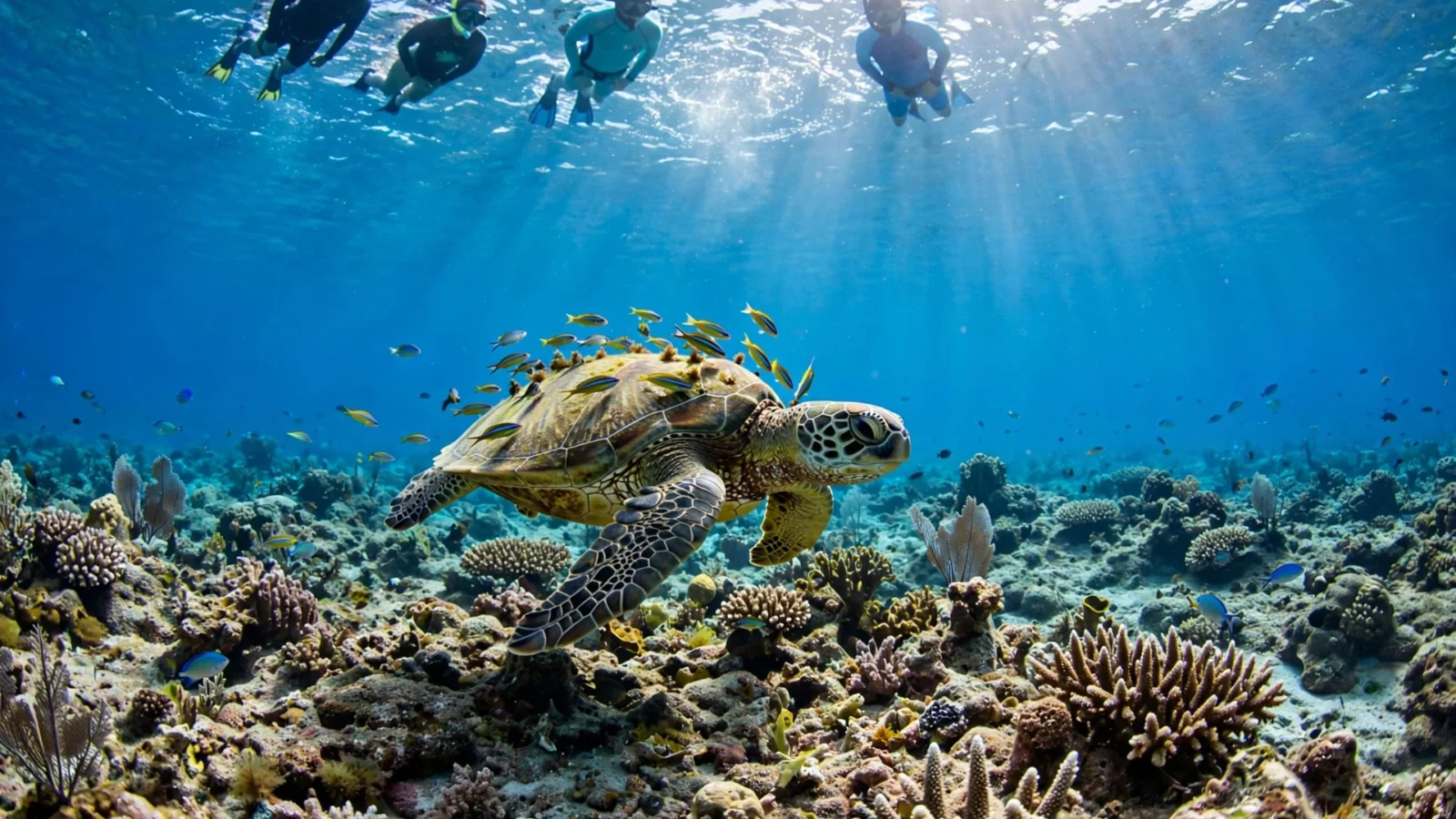
- Where
- Offshore reef off Waikiki, south shore Oahu — boat access only, no shore entry
- Cost
- Typically ~$85–160 per adult · 1.5–2.5 hr tours · gear and flotation included · check live prices
- Difficulty
- Beginner-friendly — guided, vested, crew in the water — but you must be comfortable in open ocean
- Turtles
- Very likely — it is a cleaning station; some operators offer free re-rides if none appear
- Departures
- Waikiki Beach itself (some catamarans board from the sand), Kewalo Basin Harbor, and nearby marinas
- Best time
- Morning departures — calmer water before the trade winds build
- Season
- Year-round · Nov–Apr trips can double as whale watches
- Lifeguard
- None offshore — your boat crew supervises the group
Turtle Canyon in 30 seconds: should you book it?
Book it if you are staying in Waikiki without a car, this is your first or second time snorkeling, seeing a sea turtle up close is the main goal of your Hawaii trip, or you are travelling with kids or nervous swimmers who will do better with a crew, a ladder and a flotation vest than with a rocky shore entry. Think twice if you get badly seasick (this is an open-ocean boat ride, not a lagoon), what you really love is coral and fish variety (shore reefs below beat it, free), or your budget is tight and you have a rental car — in that case a shore spot plus a pair of rental fins may make you happier. Everyone else should read our wider guide to snorkeling with turtles in Hawaii before deciding, because Turtle Canyon is the boat option in a list that also has free shore options.
This page is an independent guide, not a tour operator. We do not sell this trip, which means we can say the quiet parts out loud: what it really costs once parking and tips are added, who should honestly skip it, and what happens on the days the ocean does not cooperate.
Where is Turtle Canyon, exactly?
Turtle Canyon — also sold as Turtle Canyon Waikiki and sometimes Turtle Canyons, because the reef is a broken line of ridges and small canyons rather than one neat spot — sits in open water off Waikiki on Oahu’s south shore, in view of the beach and Diamond Head. Sources disagree on the exact distance: operators variously describe it as about a mile offshore, and some guides say closer to a mile and a half or more depending on which end of the reef a boat moors at. Treat any single figure cautiously. What matters practically is the ride: roughly 10–20 minutes by boat from a Waikiki beach boarding or from Kewalo Basin Harbor, short enough that most of your tour time is spent in the water, not in transit.
The water over the reef is commonly described as roughly 15–40 feet deep, with the cleaning-station ledges shallower and the sand channels between ridges deeper. You snorkel on the surface and watch the turtles below and around you; there is no need — and no permission from any sensible crew — to dive down to them.
Can you snorkel Turtle Canyon without a tour, or swim there from shore?
No — not sensibly, and this is the question most guides dodge. The reef is far offshore across a busy boat channel used by catamarans, dive boats, surfers’ access routes and harbour traffic. Swimming out from Waikiki Beach would be long, exhausting and genuinely dangerous, and there is no mooring, marker or lifeguard waiting for a solo swimmer at the other end. Experienced local boaters and dive boats do visit on private boats, and a strong, experienced kayaker with local knowledge is a different case from a visitor on holiday — but if you are reading a visitor guide, the honest answer is: if you want Turtle Canyon, book a boat. If you do not want a boat, choose a shore spot instead (the comparison table below exists for exactly that decision) rather than improvising a swim.
What a “cleaning station” actually is
Turtle Canyon is a stretch of reef where green sea turtles — honu — come specifically to be groomed: surgeonfish, wrasses and other small reef fish pick algae and parasites off their shells and skin while the turtles hang almost motionless in the water column or rest on the ledges. That behaviour is why sightings here are dependable rather than lucky: the turtles have a reason to be at this exact reef, on an ordinary daily rhythm, instead of wandering past at random.
For snorkelers it means the encounter most people fly to Hawaii hoping for, a short boat ride from their hotel. It also explains the etiquette. A turtle at a cleaning station that gets crowded or chased simply leaves, and the station works a little worse for the next group. Float still, let the fish finish their shift, and the turtles — busy being groomed — will treat you as furniture. That is not just politeness; it is the entire product working as intended.
What you will actually see
Turtles first. Green sea turtles are the headline and the near-certainty: individuals resting on the ledges, hovering at the cleaning station, and surfacing beside the group to breathe. Count varies by day — some trips report a handful, others a dozen or more — and no honest operator guarantees a number.
Reef fish second. Expect the south-shore cast: yellow tangs and other surgeonfish doing the cleaning, saddle and milletseed butterflyfish, Moorish idols, triggerfish, goatfish working the sand, wrasses everywhere, and the occasional moray eel tucked into a ledge. It is a good fish list, but be clear-eyed: the coral here is mostly low reef and rubble ridges, not a lush coral garden.
Occasional bonuses, never promises. Spotted eagle rays and white-tip reef sharks are seen at Turtle Canyon sometimes, spinner dolphins sometimes cross the boat’s path on the ride out, and from roughly November to April a tour can turn into an impromptu humpback whale watch on the transit. Hawaiian monk seals are rare visitors anywhere on the south shore. Any operator who guarantees any of these extras is overselling; treat them as a lucky day, not the ticket you bought.
Conditions and the best time to go
Time of day matters more than time of year. Morning departures are the default recommendation for a reason: overnight, the trade winds usually drop, and the south shore starts the day at its calmest and clearest. By early afternoon the trades have typically built, the surface chops up, visibility can fall, and the boat ride gets bouncier — which matters if anyone in your group is prone to seasickness. If a tour offers several departures, take the earliest one your holiday self can face.
| Period | Typical conditions | What it means for Turtle Canyon |
|---|---|---|
| May – September | Warmest water, generally in the low 80s °F; summer south swells possible | Peak snorkeling season. A run of south swell is the main thing that can stir this coast up — check the surf forecast, not just the weather. |
| October – November | Water still warm; crowds thin; trades more variable | A sweet spot: warm water, easier booking, first whales possible late in the period. |
| December – April | Cooler water, typically mid-70s °F; humpback whale season; occasional winter storms | Turtles are year-round residents, so the trip still works. Add the whale bonus, bring a rashguard or light top if you chill easily, and allow a spare day in case a trip is rescheduled for weather. |
| Any month — mornings | Calmest surface, best light and visibility | Book the first departure of the day whenever you can. |
| Any month — afternoons | Trade-wind chop builds; glare on the water | Still bookable and sometimes cheaper or easier to get, but the weakest version of the trip. |
For the bigger picture of seasons, swells and water temperature across the islands, see our guide to the best time to snorkel in Hawaii. One local rule applies here as everywhere in Hawaii: conditions are decided on the morning, not the month, so a good operator cancelling or moving a trip for surf or wind is protecting you, not scamming you.
Picking a tour (the differences are real)
Every operator sells the same reef; what varies is the experience around it. The spread in our October 2026 check ran from promotional fares under the headline range to premium small-group trips above it, with most solid options at $85–160. Prices move with season, demand and discount sites, so treat any number in any guide — including this one — as a ballpark to verify at booking, never as a quote. What is worth choosing for:
- Boarding point. A few catamarans board directly from Waikiki Beach (you wade out to the boat from the sand), which beats a shuttle or drive to Kewalo Basin Harbor for anyone without a car. Others depart Kewalo Basin, a short ride from Waikiki, where you will need to allow for transport and paid harbour parking.
- Group size. Six-passenger boats and 40-plus-passenger catamarans are different products at overlapping prices. Small boats mean more crew attention and easier re-boarding; big catamarans mean a steadier ride, shade, a toilet and often a waterslide or trampoline net the kids will remember as much as the turtles.
- Turtle policy. Several operators offer a free second trip if no turtles appear. Get the terms in writing at booking: does it cover your whole party, how long is it valid, and does “no turtles” mean none seen at all?
- What is included. Mask, snorkel, fins and a flotation vest should be standard, and most tours add a crew member in the water with the group. Prescription masks, photo packages, drinks, snacks and wetsuit tops are the usual paid extras — ask before you assume.
- Timing and duration. 1.5–2.5 hours total is normal, with roughly an hour in the water. A trip that is mostly sailing is a lovely cruise but a different purchase from a trip built around snorkel time.
Operator red flags
Walk away from any operator who guarantees wild-animal sightings with no re-ride policy behind the promise, encourages touching or feeding turtles (both are illegal as well as harmful), packs snorkelers in with no in-water crew, will not tell you the boarding point and parking situation before you pay, or has no clear weather-cancellation policy. Hawaii’s good operators compete hard on exactly these points, so you never need to settle for a vague one.
The true cost: what a Turtle Canyon trip actually adds up to
The ticket is not the whole bill, and this is the table most tour pages will not print.
| Cost | What to expect | Notes |
|---|---|---|
| Tour ticket (adult) | Typically ~$85–160 in our October 2026 check; promotional fares sometimes lower | Child pricing is usually lower; check the operator’s age bands. Verify the live price — do not book off a guide’s number. |
| Getting to the boat | Free if boarding on Waikiki Beach on foot; taxi, rideshare or bus fare if departing Kewalo Basin | Kewalo Basin has paid parking if you drive — rates change, so check the posted signs on the day rather than trusting any guide. |
| Crew tip | Customary for good service; budget for it rather than being surprised | Crews work for tips on most Hawaii tour boats. Cash or card options vary by operator. |
| Extras | Photo packages, prescription masks, drinks and gear upgrades are commonly sold on board | All optional. Decide your ceiling before the sales pitch, ideally while still dry. |
| Reef-safe sunscreen | Bring your own mineral (non-nano zinc or titanium) sunscreen | Hawaii law bans sunscreens containing oxybenzone and octinoxate. Apply before boarding so it has time to set and less washes into the reef. |
| There is no separate park fee | $0 | Unlike Hanauma Bay, Turtle Canyon itself has no entrance fee, reservation system or park ticket — the tour ticket is the only admission, because a boat is the only way in. |
Beginners, kids and non-swimmers: an honest self-assessment
Turtle Canyon is marketed as beginner-friendly, and mostly that is fair: flotation is provided, the group stays together near the boat, and a crew member is in the water. It also regularly appears on lists of Hawaii’s easiest guided snorkels, including our own beginner snorkeling guide. But “beginner-friendly” has limits that marketing skips:
- You are in the open ocean. There is no bottom to stand on, no beach to wade back to, and the entry is a boat ladder. You do not need to be a strong swimmer, but you do need to be calm floating in deep water wearing a vest.
- The boat ride counts. Ten to twenty minutes each way on open water, plus a boat that moves at anchor. If you or your child gets seasick in cars, take precautions before boarding — medication needs time to work — and tell the crew early, not late.
- Kids’ minimums are the operator’s, not the reef’s. Tours set their own minimum ages and child rules, and they differ. Check the exact policy for your youngest child before paying, and choose a morning trip: tired, hungry, windswept afternoons are how good trips go wrong with small children.
- Practise first if you can. Even ten minutes with a mask and snorkel in a hotel pool the day before — breathing through the tube, clearing a flooded mask — turns a nervous first-timer into a relaxed one.
If that assessment honestly rules the boat out, you have not lost the turtles: Waikiki and the rest of Oahu have shore reefs where turtles also appear, with your feet able to touch sand. The comparison table below is your Plan B, and it is a good one.
Safety at an offshore reef
- Stay with the group and the crew’s boundaries. Boats moor around the reef and other boats, divers and surface traffic move through the area. The crew’s flagged or roped area is not a suggestion.
- Mind the ladder and the hull. Most scrapes on boat snorkel trips happen re-boarding, not snorkeling. Wait your turn, keep clear of the boat’s stern, and hand your fins up if the crew asks.
- Sun and hydration. You will burn faster than you expect on a boat deck plus an hour face-down in glittering water. Reef-safe sunscreen before boarding, a rashguard if you have one, and water before and after.
- Seasickness is a safety issue, not just comfort. A miserable, dehydrated snorkeler makes poor decisions. Prevent it, sit where you can see the horizon on the ride, and skip the trip entirely if you are already unwell.
- Know your day. High surf, strong wind or poor visibility can and should cancel or move a trip. A rescheduled trip is a good operator doing their job.
The rules apply out here too
Green sea turtles are protected under federal and Hawaii state law. NOAA Fisheries viewing guidance is to stay at least 10 feet (about 3 metres) from sea turtles, on the surface and below it: no touching, no chasing, no feeding, and never position yourself between a turtle and the surface — they are rising to breathe. Crews brief this before anyone gets wet, and Hawaiian monk seals, if one ever appears, get far more distance still. The practical secret is the same as everywhere: float still near the cleaning station and the turtles, busy being groomed, will come to you. The best photos at Turtle Canyon come from patience, not pursuit.
Turtle Canyon vs the shore alternatives
| Spot | Access | Cost | Turtles | Reef & fish | Best for |
|---|---|---|---|---|---|
| Turtle Canyon (this page) | Boat only | ~$85–160 tour | Very likely — cleaning station | Modest reef, good fish, turtles are the show | Waikiki visitors without a car; first-timers; turtle-first trips |
| Hanauma Bay | Shore, reservation required | Park entry + parking (check official rates) | Possible, not the main draw | The best fish and reef of this list | Reef lovers who win the reservation race |
| Shark’s Cove | Shore, rocky entry, North Shore | Free | Often seen | Excellent in calm summer conditions; dangerous in winter surf | Confident snorkelers with a car, in summer |
| Electric Beach (Kahe Point) | Shore, west side | Free | Often seen | Strong fish life around the warm-water outflow; entry needs care | Experienced shore snorkelers |
All four spots sit under the same island umbrella — see our Oahu snorkeling hub for the full map of options, and our shortlist of Hawaii snorkeling tours worth paying for if you decide a boat day is definitely in your trip.
Is it worth it if you’ve snorkeled elsewhere in Hawaii?
Honest answer: it depends what you’re buying. As reef, Turtle Canyon is modest — Shark’s Cove and Electric Beach beat it underwater, free. As a turtle encounter with zero logistics — no car, no reservation race, no rock entry, crew handling everything — nothing on Oahu matches it. Families, first-timers and the carless are exactly who it’s for. If turtles do not show on your trip — rare, but wild animals keep their own counsel — use the re-ride policy if your operator offered one, and do not let one quiet morning rewrite the odds: a cleaning station is the closest thing nature offers to an appointment.
Field reports we drew from
- Pricing and formats re-checked October 2026 across operator sites and major booking listings for Turtle Canyon tours departing Waikiki Beach and Kewalo Basin Harbor. Prices, boarding points and policies change — verify live before booking.
- Distance, depth and departure details cross-checked across multiple operator and guide sources; where sources disagree (offshore distance, exact reef depth), this page says so rather than picking a false precision.
- Wildlife rules: NOAA Fisheries viewing guidelines (10-ft turtle rule) and Hawaii state protection of green sea turtles (honu).
- Sunscreen: Hawaii’s ban on oxybenzone and octinoxate sunscreens.
FAQ
Are turtles guaranteed at Turtle Canyon?
Wild animals, so no — but a cleaning station is as close as nature offers to a guarantee, because turtles visit this reef daily to be groomed. Several operators back that confidence with a free re-ride if no turtles appear; check the exact terms when you book.
Can you snorkel Turtle Canyon without a tour?
Not practically or safely as a visitor. The reef lies well offshore across a busy boat channel, with no shore entry, mooring for swimmers or lifeguard. Book a boat, or choose a shore spot such as Hanauma Bay, Shark’s Cove or Electric Beach instead — do not attempt to swim out.
How much does Turtle Canyon snorkeling cost?
Most adult tickets sat around $85–160 in our October 2026 check, with promotional fares sometimes lower and premium small-group trips higher. Add transport or harbour parking if you depart Kewalo Basin, a customary crew tip, and any optional extras such as photo packages. There is no separate park entrance fee or reservation cost for the reef itself.
What is the best time for Turtle Canyon snorkeling?
The earliest morning departure, in any month. Water is calmest and clearest before the trade winds build, and seasickness is least likely. Seasonally, turtles are present year-round; summer brings the warmest water, and November to April adds a chance of humpback whales on the boat ride.
Can non-swimmers do this tour?
Yes — this is one of Hawaii’s most non-swimmer-friendly ocean activities: flotation is provided, the crew is in the water, and the group stays near the boat. The honest limits are comfort, not skill: you must be calm floating in deep open-ocean water with no bottom to stand on, and able to handle a short boat ride and a ladder entry.
Is Turtle Canyon good for kids?
Generally yes, and families are a large share of its passengers — short boat ride, high turtle odds, crew supervision. Operators set their own minimum ages and child policies, so confirm those for your child before booking, choose a morning sailing, and plan for seasickness prevention and sun protection.
How deep is Turtle Canyon, and do you need to dive down?
The reef sits in roughly 15–40 feet of water depending on the ledge or channel — sources vary, and you experience all of it from the surface. Turtles rest below, hover at the cleaning station and surface to breathe beside the group, so free-diving down is unnecessary and, toward a turtle, against the rules.
Turtle Canyon or Hanauma Bay?
Different prizes: Hanauma for fish, reef and the classic protected-bay day — if you can get a reservation and make your own way there. Turtle Canyon for turtles, zero logistics and a boat ride from your Waikiki hotel. If time and budget allow both, they complement each other better than they compete.