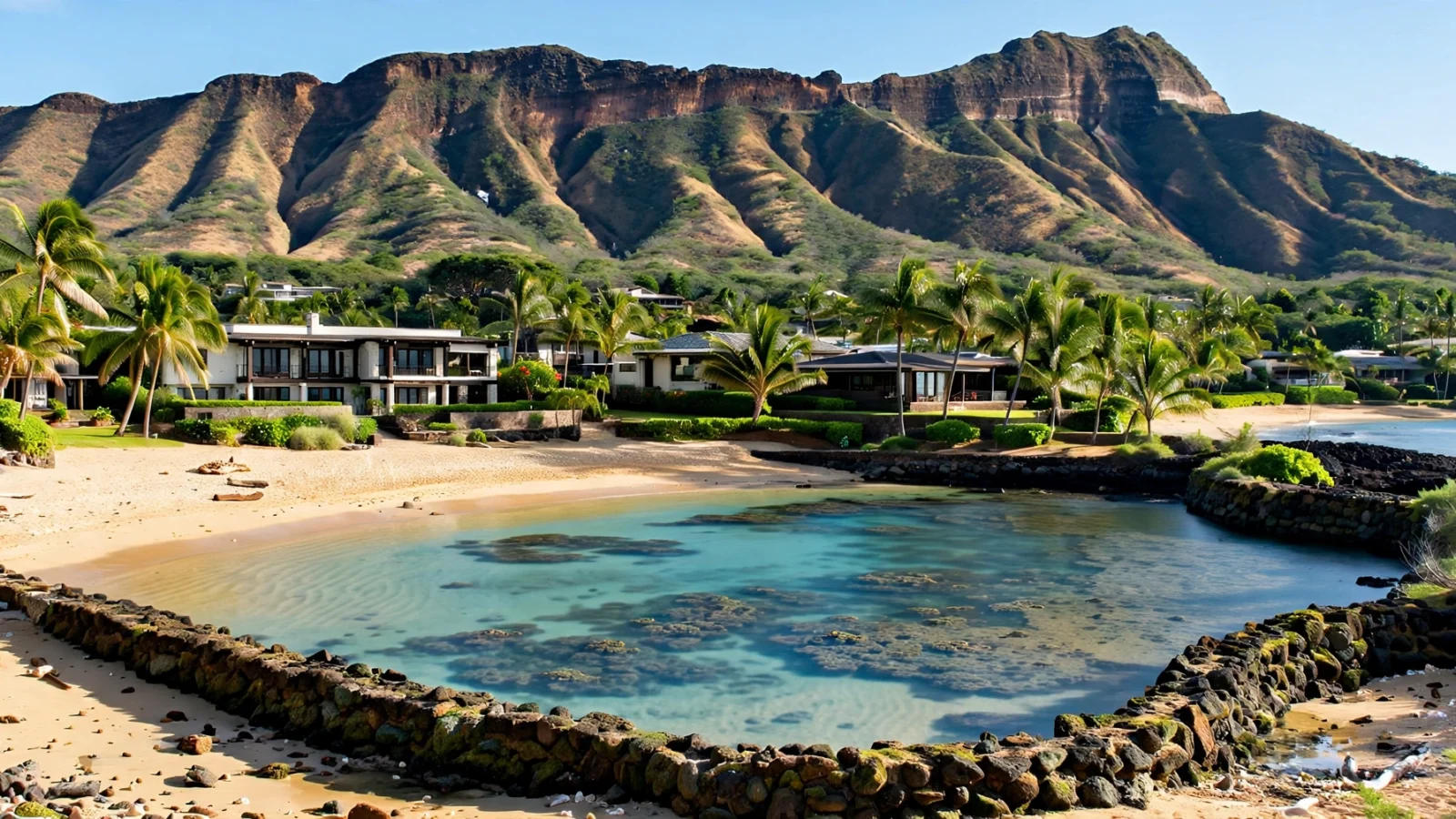
Waikiki has the crowds, Hanauma Bay has the reservation system, and Kaimana has the local families — but walk fifteen minutes past the end of Waikiki, below the slopes of Diamond Head, and the shoreline changes character completely. The hotels end. The beach narrows to a strip of sand in front of quiet residential streets. And at the far south end of Diamond Head Beach Park, past Black Point, the shallow reef that makes most of this coast a poor swim opens into a pool-like cove that locals have used for generations: Cromwell’s Cove, on Cromwell’s Beach. It is one of the most-loved small snorkel spots in Honolulu and one of the least explained. The pages that mention it call it a hidden gem, note the clear water, and move on — nobody tells you that the whole spot runs on the tide, that most of the reef here is too shallow to snorkel at all, or that there are two completely different ways to reach it and one of them involves a cliff path. This is that guide: where the snorkeling actually is at Cromwell’s, when the tide makes it work, how to get in without annoying the neighbourhood it hides in, and when one of its famous neighbours is honestly the better snorkel. For the full south-shore picture, start with our Oahu snorkeling hub.
The honest summary, up front: Cromwell’s is a small, shallow, local snorkel — not a destination reef. The cove itself is a natural pool, deeper than the surrounding reef flat, with a sandy bottom, a rock wall along one side and reef patches around it that hold real tropical fish on a calm, higher-tide morning. That is the snorkel. The rest of Diamond Head Beach, for all its beauty, is a shallow reef flat that reaches almost to the sand, and swimming over most of it means floating inches above coral you must not touch or stand on. There is no lifeguard, no bathroom, no rental stand and no shop — you bring everything, you judge the ocean yourself, and you share the water with a handful of neighbours instead of a tour group. If your group needs a lifeguard, an easy lesson-grade entry and guaranteed fish density, Hanauma Bay or Kaimana Beach is your beach. If you are staying in Waikiki, you are a comfortable swimmer, and you like your snorkeling small, quiet and free, keep reading.
Quick facts
- Location: Cromwell’s Beach and Cromwell’s Cove, at the far south end of Diamond Head Beach Park (Kuilei Cliffs Beach Park), near Black Point, Honolulu, Oahu — walking distance east of Waikiki, below Diamond Head
- The snorkeling, honestly: A pool-like cove with a sandy bottom plus reef patches around it. Snorkel the cove and patches at higher tide; at low tide the reef becomes tide pools and the cove is a swim, not a snorkel
- Cost: Free. Public beach access, no entry fee and no reservation — this is not the Diamond Head crater hike, which is a separate state monument up the road
- Lifeguard: None. Not at Cromwell’s and not anywhere along Diamond Head Beach Park
- Facilities: None at Cromwell’s itself — no restrooms, no picnic tables, no food or rentals nearby. Showers are on the Diamond Head Beach Park cliff trail (top and bottom), not at the cove
- Parking: Very limited street parking on the residential streets near the Kulamanu Place access — obey signs, park legally, be quiet and respectful. Alternative: the Diamond Head Road lookout turnouts, then the paved path down
- Best window: A calm morning on a rising or higher tide. Flat days only — when the surf breaks outside the reef are working, the shallow reef is no place to snorkel
- Rentals: None here. Bring your own gear from Waikiki
Two beaches, one shoreline: Diamond Head Beach Park and Cromwell’s
The first thing to untangle is the geography, because the names overlap and the snorkeling quality changes completely along a ten-minute walk. Diamond Head Beach Park — formally Kuilei Cliffs Beach Park — is the whole stretch of narrow beach at the foot of Diamond Head, reached from the scenic lookouts on Diamond Head Road. It is a surf and stroll beach first: four or five surf breaks sit outside the reef, roughly a quarter of a mile offshore, the shoreline is a favourite sunset walk, and the reef flat inshore is shallow almost everywhere. Cromwell’s Beach is the far south end of that same shoreline, where the coast bends toward Black Point and the residential streets of the Diamond Head neighbourhood come down to the water. Cromwell’s Cove is the feature at that south end: the one deeper section of water along this coast, a pool-like pocket enclosed by shallow reef, with a rock wall along its edge and a larger, shadier stretch of sand behind it than the cliff-side beach offers.
Next door, above the shore, is Shangri La — Doris Duke’s former home, now a museum of Islamic art — which is why Cromwell’s sometimes appears in guides as “the beach by Shangri La.” You cannot enter the museum from the beach and the beach is not part of it; it is simply the landmark locals use to place the cove. What matters for a snorkeler is the split personality of the shoreline: walk north from Cromwell’s and you are over reef flat; stay at the south end and you have the cove, the reef patches around it, and the only water on this coast that is reliably deep enough to swim and snorkel in. Almost every disappointment at “Diamond Head snorkeling” comes from entering the water in the wrong section — and almost every good report comes from the cove.
Where the snorkeling actually is
The cove pool. Cromwell’s Cove is the centre of the snorkel here. It is a deeper pocket — deep enough to actually swim in, where most of this coast is wading depth — with a largely sandy bottom, which is exactly why it works: you can float, fin and look around without hovering over coral the whole time. The edges are where the life is. Reef patches and rocky structure around the pool hold the fish, and the rock wall along the cove is a vertical slice of habitat — look along it rather than over the open sand. A set of concrete steps descends into the water by the wall, which makes entry and exit easier than a rock scramble, though the steps can be slippery and the wall area is also where locals enter the water with a small jump at higher tide (more on that in the safety section — it is not the recommended way in for a visitor with a mask in hand).
The reef patches. Around and just outside the cove, patches of reef sit in shallow water over a mostly sandy and rocky bottom. This is the fish water: the standard south-shore reef community in miniature. It is also genuinely shallow — at lower states of the tide there may be only a foot or two of water over parts of it, which is not snorkeling depth, it is scraping depth. This is why the tide rule below is not a nicety at Cromwell’s; it is the whole plan.
The reef flat north. Heading north along Diamond Head Beach from the cove, the reef flat continues, shallow and close to shore, with a few sandy spots the size of a swimming pool where the bottom colour changes from dark coral to light sand. Those sandy pockets are fine for a dip. As a snorkel, the flat is poor and fragile: too shallow to fin over comfortably, easy to damage, and quick to stir into murk. Treat the northward shoreline as your walking route and your sunset, not your snorkel — and if you walked in from the cliff path, snorkel at the cove before you walk back.
The tide pools. At low tide the reef around the cove drains into a chain of tide pools. This is the other Cromwell’s, and for many visitors — especially with children — it is the better one: clear still pools with small fish, crabs, sea cucumbers and other intertidal life at your feet, no swimming required. Look, photograph, and leave everything exactly where it is; step on sand and bare rock, never on living reef, and never pry anything loose. Our best time to snorkel in Hawaii guide explains how to read a tide chart before you go — at Cromwell’s, that five minutes decides which beach you get.
The tide rule: high tide snorkels, low tide wades
No other spot near Waikiki is as tide-dependent as Cromwell’s, so here is the rule in one place:
| Tide | What Cromwell’s becomes | Best move |
|---|---|---|
| Higher / rising tide | The cove fills and deepens; reef patches have enough water over them to fin across without touching | This is the snorkel window — cove first, then the patches around it |
| Mid tide, falling | The cove still swims well; the patches get skinny and the flat starts to show | Snorkel the cove only; keep fins up and stay off the shallow patches |
| Low tide | Reef drains into tide pools; parts of the narrow beach widen again but the water over the reef is inches deep | Tide pools and a cove swim. Do not try to snorkel the exposed reef — there is no water to snorkel in |
Two consequences worth planning around. First, a high tide also shrinks the sand — parts of this narrow beach can disappear under a high tide, so your towel spot and your snorkel window compete with each other; come for the water, not for a full day of sand real estate. Second, tide is not the only gate: a calm ocean matters as much. Cromwells is also the name of a surf break near Black Point, and on a day when the outside breaks along Diamond Head are working, surge pushes across the shallow reef, visibility drops and the cove is a much less friendly place. South-shore surf is most common in the summer months, while winter is often (not always) calmer on this coast — the reverse of the North Shore. The reliable formula is boring and true: a flat morning, a rising tide, and water that looks clear from the wall before you commit. If it looks rough from shore, it is rough — walk the coast instead and try Ala Moana and Magic Island, where a breakwater does the calming work for you.
What you will see
Set expectations to the size of the place: this is a neighbourhood reef, not an aquarium bay. Over the reef patches and along the cove wall on a clear morning you can expect the everyday south-shore community — tangs grazing the reef, butterflyfish in pairs, wrasses working the rock, small schools of juvenile fish in the shallows, and the occasional octopus or eel tucked into the structure if you are patient and look into the shaded edges rather than the open sand. Reviewers report occasional turtle sightings here, and turtles do cruise this coast — treat one as a bonus, never a promise, and keep the legal distance if one appears: watch from at least ten feet away, never touch, chase or block its path, as our snorkeling with turtles in Hawaii guide sets out. At low tide the show moves into the pools: tiny fish, hermit crabs, sea cucumbers, urchins in the shaded pockets and the small dramas of the intertidal zone, all in water inches deep. Visibility is the honest variable — it is excellent on flat, calm mornings and poor after wind, rain or surf has stirred the shallow bottom. If the water looks milky from the wall, the fish are still there; you just will not see them well, and another morning is the fix. However modest the list, remember what this spot is for: it may be the quietest water you will snorkel this close to Waikiki, and on the right morning you may have the cove nearly to yourself. Wear reef-safe sunscreen — Hawaii law restricts sunscreen sales to reef-compliant formulas, and the detail matters on a reef this shallow; our reef-safe sunscreen guide covers the label check.
Getting there: two routes, honestly compared
Route 1 — the Kulamanu Place access (the Cromwell’s way in). From Waikiki, head east past Kapiolani Park and follow Diamond Head Road south, then turn right onto Kulamanu Street and right again onto Kulamanu Place. The public beach entrance is at the end of the road. This is the flat, easy arrival — families unload coolers and gear right at the access — and it puts you directly at Cromwell’s Beach with the cove in front of you. The catch is parking and manners. There is no lot: parking is on the neighbouring residential streets, it is limited, and this is a quiet neighbourhood whose residents live steps from the path. Park legally, read every sign, keep voices down, do not block driveways, and leave nothing behind. If the streets are full, that is the beach telling you it is at capacity — go to Route 2 or come back on a weekday morning.
Route 2 — the Diamond Head Road lookouts and the cliff path. Park at the scenic lookout turnouts on Diamond Head Road, above Kuilei Cliffs Beach Park, and take one of the paved pathways down to the beach — roughly a hundred yards of path — then walk south along the shoreline to Cromwell’s Cove at the far end. Showers sit at the top and bottom of the cliff-side trail, which is more infrastructure than Cromwell’s itself ever offers. This route suits anyone already visiting the lookouts, and the shoreline walk is beautiful — but pack light, because everything you carry down comes back up the path, and note the standing local warning for the lookout parking: car break-ins happen here, so leave nothing visible or valuable in the car. At higher tides parts of the shoreline walk get wet and narrow; factor that into your timing.
However you arrive, build the visit like a local: weekday morning if you can, gear already sorted, water and snacks in the bag (there is nothing to buy within a comfortable walk), and nothing left in the car that you would miss.
Facilities: the honest list
Cromwell’s has no facilities, and pretending otherwise ruins trips, so: there is no restroom at Cromwell’s Beach, and Diamond Head Beach Park has no bathrooms either — go before you come. There is no lifeguard anywhere on this shoreline. There are no picnic tables, no rentals, no food and no shops at the cove; the showers on the cliff trail (top and bottom) belong to the beach-park route, not to Cromwell’s itself. Shade exists in patches under the palms and trees behind the Cromwell’s sand — more than on the cliff-side beach — but bring your own sun protection anyway. There is no entry fee and no reservation; the beach is public, as all Hawaii beaches are. And one persistent confusion to clear up: the fees and reservations you may have read about for “Diamond Head” belong to the State Monument crater hike, a different place up the road. The beach below the crater is free — the price of admission is the walk, the tide chart, and behaving well in someone’s neighbourhood. For what to pack for a no-facilities snorkel like this one, our Hawaii snorkeling gear checklist is the list.
Safety at Cromwell’s
The shallow-reef rules run everything. Most of the water here is a foot or two deep over living reef. Float flat, fin gently, and never stand on reef or rock that has anything living on it — standing damages the coral and the reef returns the favour with cuts and urchin spines. If the water over a patch looks too thin to float across, it is: turn back to the cove rather than walking it. Reef shoes help for the walk in and the tide pools, but they are not a licence to stand on coral.
The wall jump — the honest version. The rock wall at the cove is a local institution, and yes, people jump from it; the drop can be around six feet depending on the tide. Depth in the cove changes with that same tide, the bottom has rocky edges, and a jump that was fine at high tide is a bad idea two hours later. If you are here to snorkel, use the steps, keep your mask in your hand rather than on your face for any entry, and never dive headfirst anywhere at Cromwell’s. Watching the locals is free; copying them without local knowledge is how visitors get hurt on this coast.
No lifeguard, surf outside, judgement required. Nobody is watching this water but you. The surf breaks sit outside the reef, and on bigger south-swell days surge and current move across the shallow inshore zone, especially near the channels through the reef. Stay inside the cove and reef area, never snorkel out toward the breaks, and get out if the water starts to push you around. Children belong in the cove itself on calm days, within arm’s reach — this is a pool-like cove, not a guarded swimming pool. Our Hawaii snorkeling safety guide covers the general rules; Cromwell’s adds two of its own: respect the tide, and respect the street you parked on.
Is Cromwell’s good for beginners?
Confident beginners, on the right morning: yes — the cove is one of the gentlest entries near Waikiki, sandy-bottomed, enclosed, and small enough that you are never far from the steps. First-time-ever snorkelers: honestly, no. There is no lifeguard, no rental stand to fix a leaking mask, no bathroom, and the moment you drift past the cove you are over shallow reef that punishes beginners’ instinct to stand up. Learn the basics somewhere serviced first — Hanauma Bay with its orientation and lifeguards, or the guarded lagoon at Ala Moana — using our beginners’ guide to snorkeling in Hawaii to pick, then come to Cromwell’s for your quiet second or third snorkel, when staying off the reef is already a habit. Families land in between: the cove and the low-tide pools are a genuinely lovely small-kid morning, provided the adults accept the no-facilities deal and time the pools for low tide.
Cromwell’s vs the Waikiki-area alternatives
| Cromwell’s Cove | Kaimana Beach (Sans Souci) | Hanauma Bay | |
|---|---|---|---|
| The snorkel | Pool-like cove + shallow reef patches; tide decides | Open reef flat by the Natatorium channel; steadier depth | Big protected bay, the densest fish life on Oahu |
| Entry | Concrete steps by the cove wall; sandy cove bottom | Sandy beach entry | Sandy beach entry after the orientation video |
| Lifeguard | None | Yes, at Kaimana | Yes |
| Facilities | None at the cove | Restrooms and showers in the park area | Full facilities, rentals, tram |
| Cost / booking | Free, no booking, public access | Free, no booking | Entry fee + advance reservation required |
| Best for | Quiet local mornings, tide pools, confident swimmers | A serviced Waikiki snorkel without the Hanauma system | First-timers and guaranteed fish density |
Nearby spots to pair with it
Cromwell’s is a morning, not a day — pair it. Walk or drive back toward Waikiki for Kaimana Beach, where the reef by the Natatorium offers a steadier, lifeguarded snorkel, or continue into Waikiki itself for Queen’s Beach and Sans Souci. On a different morning, Kuilima Cove at Turtle Bay gives you the same protected-cove idea, supersized, on the North Shore. And if the Cromwell’s tide pools were the highlight for your family, plan a dedicated low tide at the tide-pool end of our Oahu list via the Oahu hub.
Frequently asked questions
Can you snorkel at Cromwell’s Beach?
Yes — at Cromwell’s Cove, the pool-like deeper section at the south end of Diamond Head Beach Park, and over the reef patches around it. Time it for a calm morning on a higher tide; at low tide there is not enough water over the reef to snorkel, and the spot becomes a tide-pool and swimming cove instead.
Where exactly is Cromwell’s Cove?
At the far south end of Diamond Head Beach Park (Kuilei Cliffs Beach Park), near Black Point, below Diamond Head and next to Shangri La. Reach it either by the public access at the end of Kulamanu Place or by walking south along the shore from the Diamond Head Road lookout paths.
Where do you park for Cromwell’s Beach?
There is no parking lot. For the Kulamanu Place access, park legally on the neighbouring residential streets — spaces are limited, so obey signs, do not block driveways and keep noise down. The alternative is the lookout turnouts on Diamond Head Road, then the paved path down; leave nothing visible in the car there, as break-ins are a known problem.
Is there a lifeguard or bathrooms at Cromwell’s Beach?
No to both. There is no lifeguard anywhere along Diamond Head Beach Park and no restrooms at the park or the cove. Showers are located on the cliff-side trail (top and bottom) on the beach-park route. Bring everything you need, including water.
What is the best time to snorkel at Cromwell’s?
A flat, calm morning with a rising or higher tide. The tide matters more here than almost anywhere near Waikiki: higher water covers the reef patches, lower water drains them into tide pools. Avoid days when the surf breaks outside the reef are working — surge crosses the shallow reef and visibility drops.
What will I see snorkeling at Cromwell’s Cove?
The everyday south-shore reef community on a small scale — tangs, butterflyfish, wrasses and juvenile fish over the reef patches and along the cove wall, with an occasional turtle reported but never guaranteed. At low tide, the tide pools hold small fish, crabs, sea cucumbers and urchins in inches of clear water.
Is Cromwell’s Beach free and open to the public?
Yes. It is a public beach with free access and no reservation — like all Hawaii beaches, the shoreline is public. The fees and reservations associated with “Diamond Head” belong to the separate State Monument crater hike up the road, not to this beach.
Can you jump off the wall at Cromwell’s Cove?
Locals do, from the rock wall by the cove — the drop varies with the tide, up to roughly six feet. The depth below changes with the same tide and the edges are rocky, so it is far safer to enter by the concrete steps, especially carrying snorkel gear, and never to dive headfirst. If you cannot see and judge the bottom clearly, do not jump.