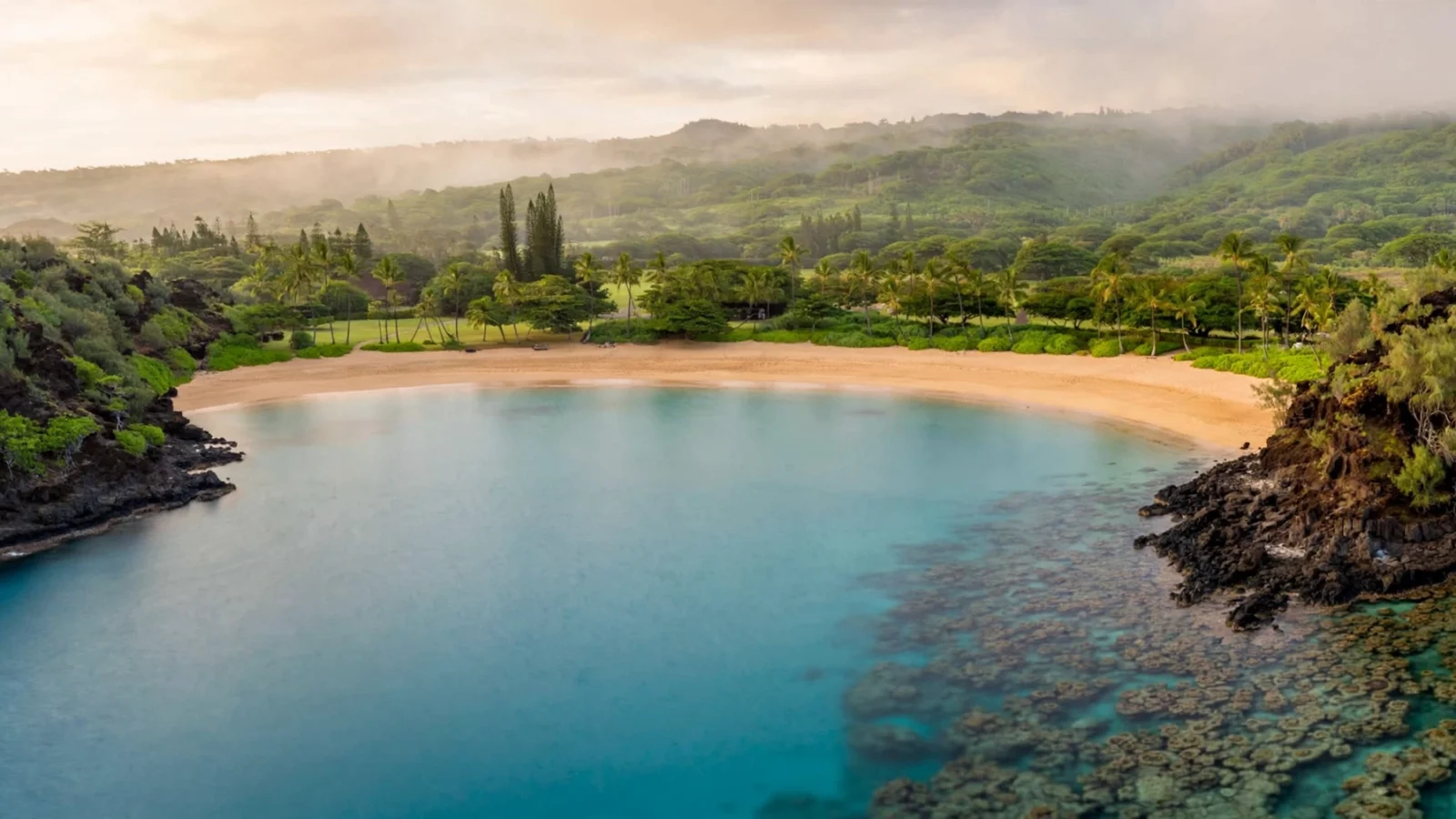
Napili Bay is the West Maui snorkel spot that hides in plain sight. It sits one bay south of famous Kapalua, in front of a low-rise stretch of condos and two much-loved restaurants, and most visitors drive past it on the way somewhere else. That is a shame, because on a calm morning this crescent of golden sand delivers exactly what people fly to Maui hoping for: an easy sandy entry, a reef line close to shore, green sea turtles feeding along the rocks, and water shallow enough — 2 to 20 feet — that you never have to swim far from the beach to see it.
Napili is not a secret, and it is not perfect. There is no lifeguard, no public parking lot, and in winter the same bay that is glassy in July can be genuinely dangerous. This guide covers the snorkeling itself in detail — where in the bay to swim, when to go, and when to skip it — plus the parking reality that catches first-timers out.
The short version: Snorkel the rocky south (left) side and the reef patch mid-bay, not the sandy middle. Go early — before 9am for both the calmest water and a parking spot. There is no lifeguard. In winter (November to March), only enter on a genuinely calm morning after checking conditions, and never round either point.
Where to snorkel in Napili Bay
Napili is a crescent roughly a quarter-mile long, with rocky points at both ends and a reef line running about 30 yards offshore that shelters the inside of the bay. The snorkeling follows a simple rule: the life is on the structure, not the sand.
The south (left) side is the best snorkeling in the bay. Facing the ocean from the beach, head left toward the Gazebo restaurant end. The rocks and reef along this side hold the densest fish life and are the most reliable place to find turtles grazing on algae. Work your way slowly along the rock line rather than swimming straight out.
The mid-bay reef patch is worth a look once you are comfortable: a patch of reef sitting off the sandy centre that holds fish and gives the bay a second zone beyond the edges. Visibility here depends heavily on how much sand the swell has stirred up, so judge it on the day.
The north side, toward the Sea House restaurant and Napili Kai, is also rocky and snorkelable, and can be the quieter option when the south side has drawn a crowd. It is a fine second lap rather than the main event.
Do not round either point. The currents outside the bay’s shelter are a different proposition from the calm water inside it, and the south point in particular sweeps toward Honokeana Cove. Everything worth seeing is inside the crescent — stay there.
Parking and access: the part nobody warns you about
Napili Bay has no public parking lot, and there is no parking fee or reservation for the bay itself. Parking is free street parking, and it is the single biggest logistical hurdle of a Napili snorkel morning:
- Napili Place — parallel street parking, the first choice. It puts you at the south end of the bay, closest to the best snorkeling.
- Hui Drive — one street north, the next place to try.
- Lower Honoapiilani Road — overflow parking along the main road when both streets are full.
Spaces fill early. Aim to arrive before 8–9am; there is also a smaller turnover window around 2pm as morning beachgoers leave, though by then the wind has usually chopped up the snorkeling anyway. Never park in resort or condo lots — they are private, and enforcement is real.
There are two main public access paths — at the end of Napili Place and mid-way along Hui Drive — with additional access near Kapalua Place at the north end and by the Gazebo. If you strike out entirely, the paid lot at neighbouring Kapalua Bay (about $29–30 per day — check the lot and its payment app on the day, as rates change) is a short walk south and doubles as a second snorkel stop; our Kapalua Bay snorkeling guide covers that bay in full.
Best time to snorkel Napili Bay — and the winter warning
Time of day: mornings win, decisively. The bay is calmest and clearest early; wind and chop typically build from late morning and stir the sand, dropping visibility. An 8am entry and an 11am entry at Napili can feel like two different bays. Our best time to snorkel in Hawaii guide explains the pattern across the islands.
Time of year: this is where Napili needs honesty. Some rental-shop pages describe the bay as a year-round snorkel spot. Treat that as conditional at best:
- May to September — the calmest, safest window. This is when Napili earns its beginner-friendly reputation.
- April and October — transitional. Good days are common, but check conditions rather than assuming.
- November to March — frequent north and west swell brings shorebreak, a sweep along the rocks, and rip risk near the bay mouth. On rough winter days this bay is for watching, ideally with a coffee, not for snorkeling. Whales are visible from shore in this season (roughly December to April), which is the correct way to enjoy a rough winter day here.
Pre-swim conditions checklist: check a Maui snorkel report the same morning; look at the water before gearing up (whitewash across the bay mouth = skip it); stay out for around 72 hours after heavy rain, when brown water ruins visibility and water quality; and if the entry rocks look awash, they are telling you something.
How to enter and snorkel the bay
- Enter from the sand anywhere along the crescent — it is a gentle, barefoot-friendly sandy entry. Shuffle your feet as you wade out.
- Put your fins on once you are waist-deep, away from the slippery, algae-covered rocks at the edges.
- Angle toward the south rock line and follow it slowly; pause often — turtles and octopus reward patience, not distance covered.
- Keep to the inside of the bay, stay off the reef (never stand on coral), and keep at least 10 feet from any turtle.
- Exit the way you came in, watching for shorebreak on your way back to the sand, and rinse at the outdoor showers.
What you will see
Green sea turtles (honu) are the headline act. They feed on algae growing on the side rocks and surface around the bay through the day, with sunrise and sunset commonly reported as active times. Watch them from 10 feet or more, never touch or feed them, and let them come to you if they choose — our snorkeling with turtles guide covers the etiquette properly.
Reef fish reported consistently at Napili include raccoon, ornate and threadfin butterflyfish, Moorish idols, yellow tangs and convict tangs, parrotfish, wrasses, goatfish, damselfish, boxfish and pufferfish, trumpetfish and cornetfish out over the sand channels, and the state fish, the humuhumunukunukuapua’a, around the rocks. Squirrelfish and bigeyes shelter in the shade of ledges, and octopus and eels are found by snorkelers who move slowly and look into the structure. Hawaiian monk seals are occasionally reported — a treat if one appears, and another animal to admire from a respectful distance. None of this is guaranteed on any given day; calm, early, clear water stacks the odds.
Is Napili Bay good for beginners and kids?
Sources disagree — one major rental guide rates Napili “intermediate” and kid-friendly from age 7+, while a dedicated snorkel guide tags it beginner-friendly. The reconciled answer: beginners are fine at Napili only on a calm morning, ideally in the May–September window, staying in the centre and south of the bay with a buddy and a flotation device. There is no lifeguard to fall back on, the entry rocks are slippery, and a winter-swell day converts this bay into somewhere beginners should not be at all. Confident kids who can already swim will love the shallow inside reef; non-swimmers and first-timers belong at a lifeguarded or lagoon-style spot — see our beginners’ snorkeling guide for better first-day choices, and our Hawaii snorkeling safety guide before any unguarded beach.
Facilities, food and gear
Napili is a residential bay, not a developed beach park, so set expectations accordingly. There are outdoor showers, but no picnic tables, barbecues or playground. On restrooms, sources flatly contradict each other — the honest summary is that no standalone public restroom block is confirmed; restrooms are at the Sea House and resort restaurants, so plan accordingly rather than counting on a beach restroom. There is no lifeguard at Napili Bay.
Food is a genuine strength: the Sea House at the north end (at Napili Kai) and the Gazebo at the south end (at Napili Shores) are both beloved, and a post-snorkel breakfast is part of the Napili ritual. There is no gear rental on the beach itself — rent at Napili Village or elsewhere in West Maui before you come, and use our Hawaii snorkeling gear checklist so nothing essential stays in the condo. Hawaii law requires mineral-only (reef-safe) sunscreen — apply it before you arrive so it has time to absorb.
One rule worth stating plainly: Napili Bay is not a Marine Life Conservation District. The protected MLCD in this neighbourhood is Honolua-Mokuleia, a few minutes north — covered in our Honolua Bay snorkeling guide. Normal fishing and ocean rules apply at Napili, and the turtle-distance and no-touch-coral rules apply everywhere in Hawaii regardless.
Napili Bay vs Kapalua Bay: which should you snorkel?
It is one of the most-asked questions about this stretch of coast, and the two bays sit about a five-minute walk apart, so many people simply do both.
| Napili Bay | Kapalua Bay | |
|---|---|---|
| Entry | Wide sandy crescent | Smaller, sheltered crescent |
| Best snorkeling | South rock line + mid-bay reef patch | Along both rocky sides |
| Parking | Free street parking, fills before ~9am, no lot | Paid lot (about $29–30/day, check on the day) |
| Lifeguard | None | None |
| Facilities | Showers; restaurants at both ends; no confirmed public restroom block | More developed beach-park feel |
| Feel | Local, residential, spacious sand | Compact, postcard-pretty, busier |
Choose Napili if you arrive early, want free parking and room to spread out on the sand, and like a local feel. Choose Kapalua if you arrive later (paid parking solves the Napili street-parking problem), want the more sheltered compact bay, or are pairing snorkeling with the Kapalua coastal trail. On a calm summer morning, Napili first at 8am and Kapalua as the second stop is the connoisseur’s order.
Nearby snorkeling spots
Napili sits in the middle of West Maui’s best snorkeling corridor, all of it covered on our Maui snorkeling hub: Kapalua Bay immediately north, Honolua Bay a few minutes further for the island’s best reef on a calm summer day, and Black Rock at Kaanapali to the south for a high-energy beach-day alternative.
Napili Bay snorkeling FAQs
Is Napili Bay good for snorkeling?
Yes — on a calm morning it is one of West Maui’s best shore snorkels: an easy sandy entry, a reef line close to shore, and reliable turtles along the south rocks. In winter swell it is a different, unsafe bay, so conditions decide.
Are there turtles in Napili Bay?
Yes. Green sea turtles feed on algae on the rocks at both sides of the bay and are seen on most calm mornings. Keep at least 10 feet away and never touch or feed them.
Where do you park for Napili Bay snorkeling?
There is no public lot. Use free street parking on Napili Place first, then Hui Drive, then Lower Honoapiilani Road — and arrive before about 9am, because it fills. Do not park in resort or condo lots.
What are the current conditions at Napili Bay?
Check a Maui snorkel report the morning you go, then judge the bay in person: calm, clear water inside the crescent is a go; whitewash at the bay mouth, shorebreak, or brown water after rain means skip it.
Is Napili Bay safe for swimming and snorkeling?
It has no lifeguard, slippery entry rocks, and genuine winter-swell hazards. On a calm summer morning, staying inside the bay, it is a reasonable spot for competent swimmers; in winter swell or for non-swimmers, it is not.
How deep is Napili Bay?
About 2 to 20 feet across the snorkeling zones — shallow at the sandy entry, deepening along the reef and toward the bay mouth.
Can you snorkel Napili Bay in winter?
Only on a genuinely calm winter morning after a conditions check. November to March regularly brings dangerous north and west swell, shorebreak and currents; most winter days are watch-from-the-beach days.
Is Kapalua Bay or Napili Bay better for snorkeling?
Neither wins outright: Napili has free (early) street parking, more sand and a local feel; Kapalua has paid parking, a more sheltered compact bay and a more developed feel. They are a five-minute walk apart — snorkel both, Napili first if you are early.
Just around the southern point, the next cove south is Honokeana — our Honokeana Cove snorkeling guide covers its sheltered, turtle-rich water.