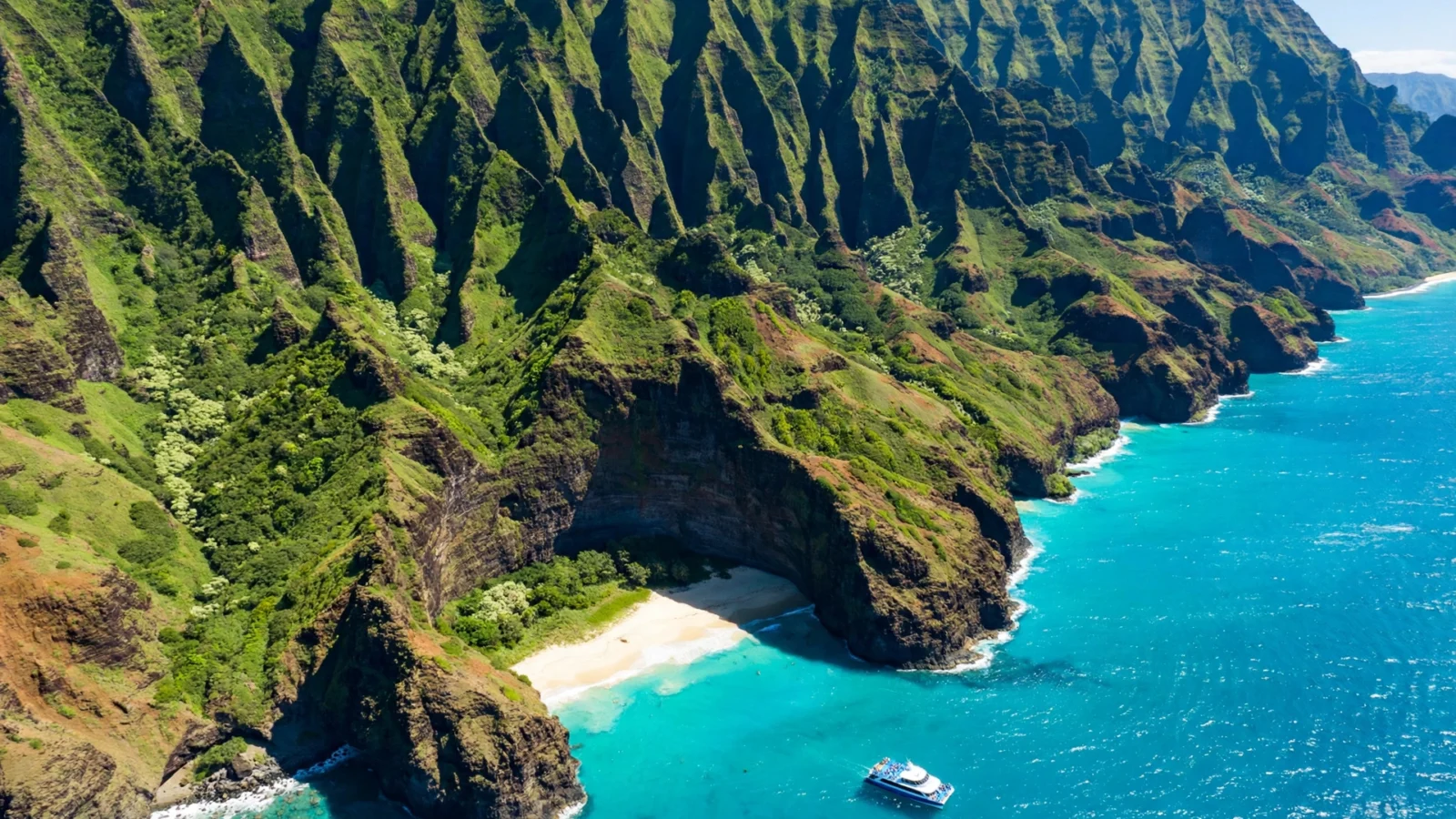
Kauai is the island for travellers who want Hawaii at its greenest and least hurried — and it rewards a plan more than any other island does. The north shore’s best snorkeling only works in summer, the two places everyone wants to see (Ke’e Beach and the Kalalau Trail) run on a reservation system that sells out, and the Na Pali Coast has no road at all. Get those three things right and the rest of the island opens up: reef snorkeling at Poipu and Tunnels, the Na Pali cliffs by boat, Waimea Canyon, river trips to a fern-covered grotto, and beaches that stay quiet even in high season. This guide covers the best things to do in Kauai, with the snorkeling-first angle this site is known for — every recommendation below is one we would actually do, with the reservations, fees, and best times the big listicles skip.
If you only remember one thing, make it this: pick your shore by the month. In summer (roughly May to September) the north shore — Tunnels, Ke’e, Anini — is calm and clear, and it is some of the best shore snorkeling in Hawaii. In winter that same coast takes the full force of North Pacific swell and is usually off-limits, while the south shore around Poipu keeps working in every month. Lydgate Beach Park on the east side is the reliable year-round fallback. The full month-by-month verdict is in our which side of Kauai is best for snorkeling guide.
Short on time? Our top five things to do in Kauai are: snorkel Poipu Beach Park and Tunnels Beach, cruise the Na Pali Coast by boat, drive up to Waimea Canyon, hike the first two miles of the Kalalau Trail to Hanakapiai Beach (with a reservation), and spend a slow morning on Hanalei Bay.
See also our Hawaii-wide list of the best things to do in Hawaii.
1. Snorkel Kauai’s Best Reefs
Snorkeling is the single best thing to do in Kauai — and the island’s reefs are the reason many visitors come back. The water is clearest in the morning before the trade winds pick up, and the seasonal switch above decides which shore you should be on. If you are planning a trip around the water, start with our complete guide to the best places to snorkel in Kauai, which ranks every spot we cover in depth. Below are the snorkel experiences that belong on every first-timer’s list.
Poipu Beach Park
Poipu is Kauai’s insurance policy: a lifeguarded south-shore park that works in every month, including the winter weeks when the north shore is closed out. The snorkeling sits around the tombolo — the narrow sand strip running out to Nukumoi Point — with the better reef and fish density on the western side, a shallow keiki (children’s) area for small kids, and turtles that haul out on the sand in the late afternoon. Hawaiian monk seals nap here too; they are endangered and protected, so keep at least 50 feet back and let them sleep. Parking is free and the lot is large by Kauai standards, though midday weekends still fill it. Full details: Poipu Beach snorkeling guide.
Tunnels Beach (Makua)
Tunnels is the reef people picture when they picture Kauai snorkeling: a wide horseshoe of coral with ledges and arches, turtles grazing the inner reef, and Mount Makana rising behind the beach. The inner lagoon suits confident snorkelers; the outer reef is for experienced ocean swimmers in flat conditions only. Access is the part most guides get wrong. Tunnels has no car park of its own. The normal way in is Ha’ena Beach Park, the county park a little to the east: park there free, first-come, and walk roughly half a mile to a mile along the sand to the reef. You do not need a Ha’ena State Park reservation for the county beach park — that system covers the state park and Ke’e Beach at the end of the road. There is no lifeguard at Tunnels itself and no facilities to plan around, so bring water and shade — and go in summer only. Full details: Tunnels Beach snorkeling guide. Choosing between the two north-shore beaches? Our Anini vs Tunnels Beach snorkeling guide settles it by traveler type.
Ke’e Beach
Ke’e is where Kuhio Highway ends and the Na Pali Coast begins: a reef-protected lagoon under the cliffs, with a lifeguard tower, and beginner-friendly water inside the reef on calm summer days. Stay inside the lagoon — the channel to open ocean on the left side pulls hard even when the surface looks gentle, and winter surf makes the whole beach a spectator sport. Ke’e is inside Ha’ena State Park, and that means reservations: non-residents book an entry reservation ($5 per person) or a parking reservation ($10 per vehicle) up to 30 days ahead through GoHaena.com, and the park caps visitors at 900 a day. Book the moment your window opens — the slots go fast. On the day, Ke’e pairs naturally with a Tunnels morning: snorkel Tunnels early, then use your Ha’ena parking slot for Ke’e and the Kalalau Trail lookout. Ke’e shares a dedicated guide with Lydgate: our Ke’e and Lydgate snorkeling guide.
Anini Beach
Anini sits behind one of the longest fringing reefs in Hawaii, and that reef does the work: on most summer days the inside water stays shallow, warm and gentle when other north-shore spots have a shorebreak. It is the north shore’s best beginner and family snorkel — with two honest caveats. There is no lifeguard, and the channels through the reef carry current out to deep water, so the rule is simple: snorkel the shallows over sand and reef edge, never drift toward a channel, and get out if the water starts moving you sideways. Parking is free at the county beach park and rarely the battle it is farther west. Full details: Anini Beach snorkeling guide.
Lydgate Beach Park
On the east side between Lihue and Wailua, Lydgate’s two rock-walled ponds remove the ocean from the equation: no surf, no current, knee-to-chest-deep water, a lifeguard, and real fish — the ponds are stocked by the sea itself through gaps in the walls, so kids snorkel over genuine reef species in bathwater conditions. It is the best first snorkel on the island for small children, full stop. The honest trade-offs: visibility drops after heavy rain when the Wailua River runs brown, and confident adults will find the ponds small. Treat Lydgate as the family and bad-weather anchor, not the whole Kauai plan. It shares a guide with Ke’e: see the Ke’e and Lydgate guide.
Na Pali Coast by Boat — the Snorkel Stop
The Na Pali Coast has no road, so the only way to snorkel it is by boat — and the morning catamaran trips from Port Allen all build in a snorkel stop in clear water beneath the cliffs, often with dolphins alongside on the way out. Raft trips run from around $215 per person; the classic catamaran snorkel sail runs about $220–$292 for four to six hours, with breakfast and lunch included on the bigger boats. Book a morning departure for the calmest seas, take motion-sickness precautions if you need them, and confirm your departure with the operator before you drive to the harbor — the west-side harbors have had storm-related notices in 2026. Full detail on the coast itself is in our Na Pali Coast snorkeling guide.
A few snorkeling rules that apply everywhere on Kauai: snorkel in the morning, never stand on coral, keep a respectful distance from turtles (they are protected by federal law), and use reef-safe sunscreen — Hawaii bans sunscreens containing oxybenzone and octinoxate. If the water looks choppy from shore, it will be worse in the water: pick another bay, or another day. See every spot on this page pinned with GPS coordinates in our Kauai snorkeling map.
2. Spend a Day on Kauai’s Best Beaches
Even if you never put on a mask, Kauai’s beaches are worth the trip — and they are quieter than the famous beaches on the other islands. Hanalei Bay is the showpiece: a nearly two-mile crescent of sand backed by green mountains, calm enough to swim in summer, with a pier that makes the best sunset walk on the island. In winter it turns into a surf beach, so swim only when it is flat. Poipu Beach Park is the all-rounder — lifeguarded, with the keiki pond for kids and the tombolo reef for snorkelers — and the beach to base a south-shore day around. Ke’e Beach, at the end of the road, is the prettiest small beach on the island when the summer lagoon is calm (remember the Ha’ena reservation). Anini is the calmest open-coast swimming on the north shore in summer. On the south-west side, Salt Pond Beach Park gives you lifeguarded, rock-sheltered swimming with a fraction of Poipu’s crowd — see our Salt Pond Beach snorkeling guide — and the working salt ponds behind the beach are still harvested by local families. Shipwreck Beach, below the Grand Hyatt, is the dramatic one: big surf, a cliff-top coastal walk, and not a swimming beach on most days. All of Kauai’s beaches are public, and the beach parks are free, with parking, restrooms, and showers at the main ones.
3. Cruise the Na Pali Coast
The Na Pali Coast is the seventeen-mile stretch of fluted green cliffs on Kauai’s north-west shore, rising as high as 4,000 feet straight out of the Pacific — and it is the single most spectacular thing to see on the island. No road reaches it. The standard way in is a boat from Port Allen on the west side (about 30 minutes from Poipu, closer to two hours from Princeville), with the classic morning catamaran running four to six hours and $220–$292 per person, and raft trips from around $215. The rafts duck into sea caves the big catamarans cannot enter; the catamarans are steadier and include meals and a snorkel stop. Winter seas run rougher, and summer is the calmest window — book the morning departure either way. If you would rather see it from the air, helicopter tours run 50 to 60 minutes around the island and give you roughly 15 to 20 minutes over the coast itself, from around $336 per person. The third way in is on foot, which is the next section.
4. Hike the Kalalau Trail (or Just the First Two Miles)
The Kalalau Trail is the famous 11-mile footpath along the Na Pali Coast from Ke’e Beach to Kalalau Beach — and it is also the most permit-heavy hike in Hawaii. Day hikers are allowed the first two miles to Hanakapiai Beach, and from there a two-mile side trail climbs inland to Hanakapiai Falls, making an eight-mile round trip that takes five to eight hours. That is the legal limit for day hikers: going past Hanakapiai Valley requires an overnight camping permit ($35 per person per night for non-residents, booked 90 days out), even for a single-day attempt. Either way you need a Ha’ena State Park reservation first — entry ($5 per person) or parking ($10 per vehicle) through GoHaena.com, released 30 days ahead at midnight Hawaii time, with the park capped at 900 visitors a day. The trail is muddy, narrow, and exposed in places, and the stream crossings rise fast after rain — start early, carry more water than you think you need, and do not attempt it in bad weather. If the full hike is too much, the two-mile walk to Hanakapiai Beach alone is still one of the best half-days on Kauai.
5. Drive Waimea Canyon — the Grand Canyon of the Pacific
Waimea Canyon is the ten-mile-long, roughly 3,000-foot-deep gorge on Kauai’s west side, and the drive up to it is the best road trip on the island. The paved road climbs from Waimea town past the main canyon lookout at mile marker 10, then on through Koke’e State Park to the Kalalau Lookout, where on a clear day you look straight down into the Na Pali valleys you cannot reach by road. Non-residents pay $5 per person to enter and $10 per vehicle to park, paid at the kiosks — one ticket covers both parks for the day, and no advance reservation is needed. Two honest notes for 2026: the parks closed for about two months after Hurricane Lowell and reopened on November 7, 2026 with reduced services, so check the DLNR park notices the morning you go — upper lookouts and Koke’e Road have been reopening in stages, and at times only the first lookout is open. And go early or late in the day: the canyon photographs best in low light, and the midday lots fill.
6. Cruise the Wailua River and Chase Waterfalls
The Wailua River is the only navigable river in Hawaii, and the classic way to see it is a boat cruise from the Wailua River Marina up to the Fern Grotto, a lava-rock amphitheatre draped in ferns where boats have been stopping for generations. It is a gentle, family-friendly outing — about an hour and a half on the water — and it pairs well with the waterfalls on the same east-side drive. Wailua Falls, the twin falls just up the road, is visible from a roadside viewpoint and costs nothing to see; Opaekaa Falls, a few minutes north, is the same. If you want a waterfall you can swim under, that is a different trip — ask locally about current conditions and never swim below a waterfall after rain. The east side is also where the rain falls most, so treat a wet morning here as the day to do the river, not the beach.
7. Free Things to Do in Kauai
Kauai is an expensive island, but some of its best experiences cost nothing. The beaches themselves are the obvious place to start: every beach in Hawaii is public, and the beach parks are free, so a day at Anini or Salt Pond costs no more than parking. The sunset from Hanalei Bay’s pier is free and reliably excellent — get there thirty minutes before the sun goes down. The Kilauea Lighthouse overlook, on the road outside the refuge, gives you the same headland view as the paid entry without the reservation or the fee. Spouting Horn, the blowhole on the south shore near Poipu, is a free roadside stop that fires best at high surf — stay behind the rail, because people have been swept in here. Wailua Falls and Opaekaa Falls are both free from their roadside viewpoints. And the Saturday farmers market in Lihue is free to browse and full of local fruit, baked goods, and crafts. The one free activity to treat with respect is Queen’s Bath in Princeville: a natural lava-rock tide pool that is beautiful in flat summer conditions and genuinely dangerous in winter surf — people have died here, so check the ocean before you go and skip it entirely when the surf is up. Full detail: Queen’s Bath snorkeling guide.
8. Things to Do in Kauai with Kids (Family Activities)
Kauai is one of the easiest Hawaiian islands for families, because so much of the island is beach-based and gentle — as long as you pick the right shore for the season. Lydgate Beach Park’s walled ponds are the default first snorkel for small children: knee-to-chest-deep water, a lifeguard, no current, and real fish. Poipu Beach Park is the second family anchor: lifeguarded, with a shallow keiki area and turtles on the sand in the late afternoon. In summer, Anini’s shallows are the calmest open-coast water a family will find. When the kids need a break from the beach, the Wailua River cruise to the Fern Grotto is the easiest group outing on the island, and the Kilauea Point refuge — advance reservations required, $10 per person 16 and over plus a $1 booking fee, under-15s free — is a short, flat walk to a lighthouse on a 180-foot bluff with seabirds overhead and, from December to April, whales offshore. A luau is the classic family evening: Smith’s Family Garden Luau in Wailua is the long-running one, with a garden setting and a show that works for all ages — book ahead in high season. And a sunset sail or a whale-watching cruise (in season) is an easy, memorable outing for kids who are old enough to sit on a boat for a couple of hours. Book the calm, morning departures and pack snacks — Kauai’s best activities run on island time, and a fed kid is a happy kid.
9. More of the Best Things to Do in Kauai
Explore Hanalei town. The little surf town at the end of the north-shore road is worth a slow hour or two by itself: boutiques, food trucks, shave ice, and the bay just across the street — plus the pier at sunset. It is the base for the north shore in summer, and the reason to stay up here rather than driving back south every night.
See Princeville from the cliffs. Princeville, the resort community above Hanalei Bay, is where many north-shore visitors stay — and the things to do in Princeville Kauai are mostly about the setting: the cliff-top views over the bay, the Makai Golf Course, the coastal trail down to Hideaways Beach (a steep descent to one of the fishiest reefs on the island, summer only, with a nine-or-ten-car lot — see our Hideaways Beach snorkeling guide), and Queen’s Bath, the lava-rock tide pool that is beautiful in flat summer conditions and genuinely dangerous in winter surf. Princeville is a base, not a destination in itself — stay here for the north shore, and spend your days in Hanalei, at Anini, or on the water.
Visit the Kilauea Point National Wildlife Refuge. The historic lighthouse sits on the northernmost point of the main Hawaiian Islands, on a bluff above nesting seabirds — red-footed boobies year-round, Laysan albatross roughly November to July — and the view alone justifies the trip. Advance reservations are required for everyone 16 and over, booked through Recreation.gov ($10 per person plus a $1 booking fee; under-15s free), open Wednesday to Saturday, 10 a.m. to 4 p.m., with 45-minute time slots. The lighthouse interior is closed, so the visit is the grounds, the birds, and the coastline. If the slots are gone, the free roadside overlook still gives you the headland view.
Kayak the Wailua River. If the Fern Grotto cruise feels too tame, rent a kayak at the marina and paddle the river yourself — the same water, at your own pace, with a short hike at the end to a waterfall. Go early, before the tour boats, and check the rain: the river rises fast after a downpour.
See Kauai from a helicopter. The island’s interior — the crater of Mount Waialeale, one of the wettest places on earth, and the waterfalls that have no road access — is only visible from the air, and the 50-to-60-minute island circuit is the one splurge that shows you a Kauai no other activity reaches. Book the first flight of the day for the clearest skies.
Taste Koloa Rum. The Koloa Rum Company pours its tastings in Lihue, and it is the easiest low-effort stop on a Lihue day — a good pairing with the farmers market or a Wailua River morning. Designated drivers only, obviously.
Walk the south shore. The coastal path from Poipu past Brennecke Beach and Shipwreck Beach is the island’s best easy walk: cliffs, blowholes, and monk seals on the sand if you are lucky. See our Brennecke Beach snorkeling guide and Shipwreck Beach snorkeling guide for the snorkeling at either end of it.
How Many Days Do You Need in Kauai?
Five to seven days is the sweet spot: enough for the snorkeling, a couple of big days out, and a beach day that does not feel like a luxury. Three days is a realistic minimum for the highlights. Here is a snorkeling-first, three-day version of the trip above:
Day 1: Morning snorkel at Poipu Beach Park, afternoon at Salt Pond or Brennecke, and sunset on the south shore.
Day 2: Morning boat trip along the Na Pali Coast from Port Allen, afternoon drive up Waimea Canyon, and (in season) a sunset whale watch.
Day 3: Early start for Hanalei Bay and a north-shore snorkel at Anini or Tunnels (summer), Ke’e Beach and the Kalalau Trail viewpoint with your Ha’ena reservation, then Hanalei town at sunset.
Stay based on the season: Poipu on the south shore is the safe year-round base, with reliable beach weather in every month. Princeville and Hanalei on the north shore are the better base in summer, when the north-shore snorkeling is at its best — but in winter you will be driving south for swimmable water most days. If you split your stay, do the north shore first and the south shore second, so a winter swell never strands you.
Best Time to Visit Kauai
Kauai is a year-round destination, but the island changes more with the seasons than the other islands do. Summer (May to September) brings the calmest ocean conditions on the north shore — the best time for snorkeling Tunnels, Ke’e, and Anini, and the only window for the Kalalau Trail’s stream crossings at their friendliest. Winter (December to April) brings whale season and the biggest surf on the north shore, while the south shore around Poipu stays swimmable. Spring and fall are the quieter shoulder seasons, with good weather on both shores. One timing detail worth knowing: Hawaii does not observe daylight saving time, so the state stays on Hawaii-Aleutian Standard Time (UTC-10) year-round — sunrise and sunset times shift less through the year than they do on the mainland, and your flight times from the mainland shift by an hour in spring and fall.
Frequently Asked Questions
What are the best things to do in Kauai?
The best things to do in Kauai are snorkeling at Poipu Beach Park, Tunnels Beach, and Ke’e Beach; cruising the Na Pali Coast by boat; hiking the first two miles of the Kalalau Trail; driving Waimea Canyon; cruising the Wailua River to the Fern Grotto; and spending a slow morning on Hanalei Bay.
What is free to do in Kauai?
Kauai’s beaches and sunsets are free, as are the Hanalei Bay pier at sunset, the Kilauea Lighthouse roadside overlook, Spouting Horn near Poipu, and the Wailua Falls and Opaekaa Falls viewpoints. Most beach parks have free parking, restrooms, and showers.
What should families do in Kauai?
Families do best with calm, sheltered spots like Lydgate Beach Park’s ponds and Poipu Beach Park’s keiki area, a Wailua River cruise to the Fern Grotto, and a visit to the Kilauea Point refuge to see the seabirds. In summer, Anini’s shallows are the calmest open-coast water for kids.
How many days do you need in Kauai?
Five to seven days is the sweet spot for Kauai. Three days covers the highlights if you plan around the snorkeling: one south-shore day, one Na Pali and Waimea Canyon day, and one north-shore day with a Ha’ena reservation.
What is the best month to snorkel in Kauai?
For the north shore (Tunnels, Ke’e, Anini), the best months are May to September, when the water is calmest. The south shore around Poipu and Lydgate on the east side are swimmable year-round, so in winter base your snorkeling there.
Do I need reservations in Kauai?
Yes, for the two places everyone wants to see. Ha’ena State Park (Ke’e Beach and the Kalalau Trail) requires an advance reservation for non-residents — $5 per person for entry or $10 per vehicle for parking, booked up to 30 days ahead. Kilauea Point National Wildlife Refuge also requires advance reservations ($10 per person 16 and over, under-15s free). Waimea Canyon needs no reservation; you pay $5 per person and $10 per vehicle at the kiosks on the day.
Is Kauai good for snorkeling?
Yes — Kauai has some of the best shore snorkeling in Hawaii, but it is seasonal. The north shore in summer (Tunnels, Ke’e, Anini) rivals anywhere in the state, and the south shore (Poipu, Koloa Landing) and east side (Lydgate) work year-round. Pick your shore by the month and snorkel in the morning, before the trade winds pick up.
Where should I stay in Kauai?
Poipu on the south shore is the safe year-round base, with the most reliable beach weather. Princeville and Hanalei on the north shore are the better base in summer, when the north-shore snorkeling is at its best. In winter, stay south and drive north for sightseeing.
Kauai rewards travellers who plan around the seasons, book the big-ticket items early, and leave room for the beach. Start with the snorkeling — for the full list, see our guide to the best places to snorkel in Kauai — and the rest of the island will take care of itself. If you are island-hopping, our things to do in Maui guide and things to do in Oahu guide follow the same plan, and our best Hawaiian island for snorkeling guide compares all four islands head to head.