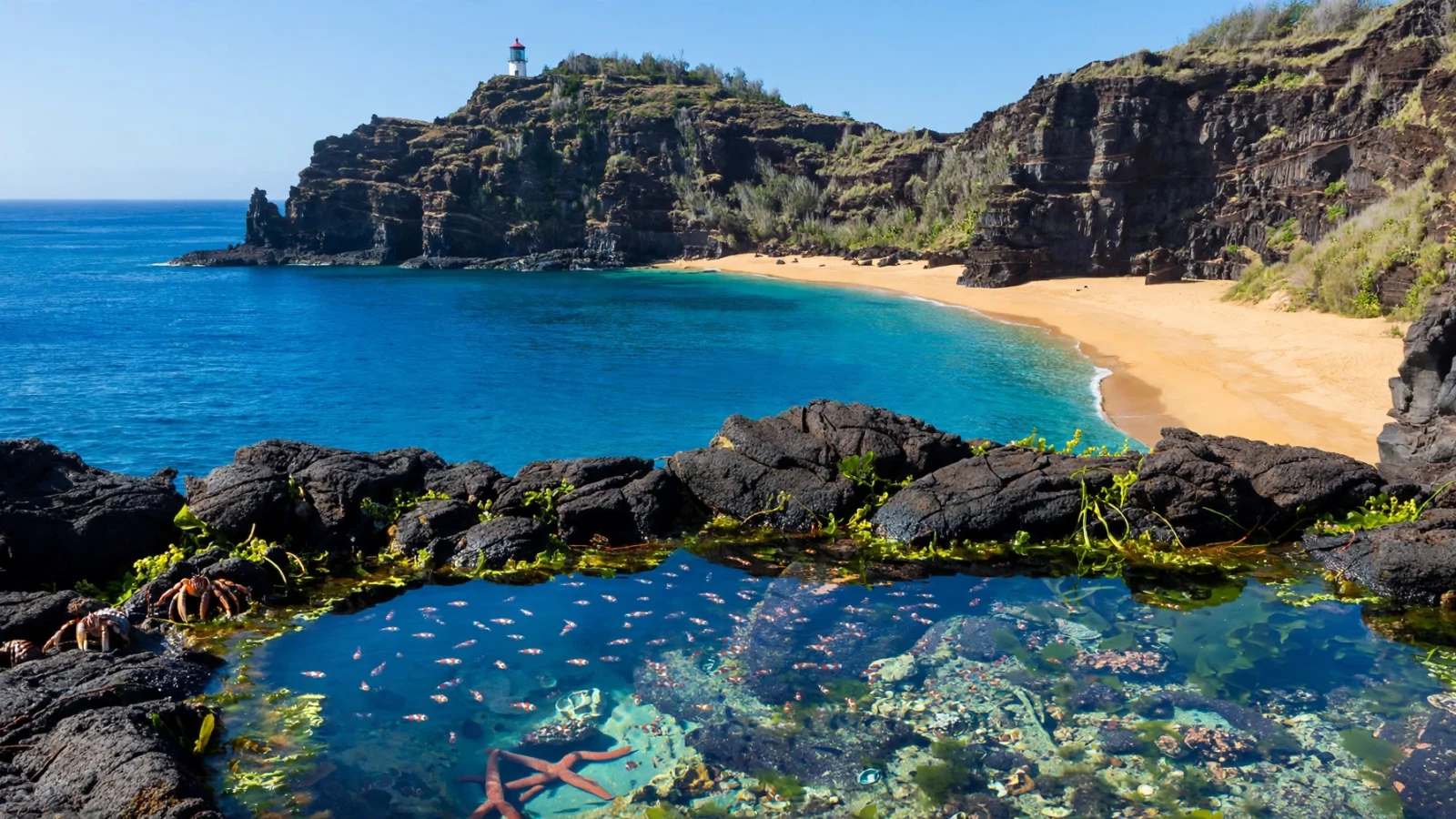
Makapu’u is one of the most photographed corners of O’ahu — the red-roofed lighthouse on the headland, the golden crescent of beach under sheer black cliffs, the lava tide pools that show up in every “hidden gems” list. If you’re planning a snorkel day here, you deserve the honest version first: Makapuu Beach itself is a bodyboarder’s beach with a heavy shorebreak, and snorkeling it is a calm-mornings-only proposition for strong swimmers. The famous tide pools hold the real marine life — small fishes, sea urchins, crabs in clear lava-rock basins — but reaching them means a steep unofficial scramble down from the lighthouse trail, and Hawai’i State Parks asks visitors to stay on the paved trail because rogue waves can wash you out to sea. The family-safe snorkel play in this corner of the island isn’t Makapuu at all — it’s Baby Makapu’u, a few minutes up the coast, where shallow protected pools are made for kids. Our O’ahu snorkeling hub covers the island’s reliable reef spots; this guide tells you exactly what Makapuu can and can’t give you, when it’s worth a mask, and where to go instead when it isn’t.
Quick facts
- Location: Southeastern O’ahu, off Kalaniana’ole Highway (Highway 72), inside Kaiwi State Scenic Shoreline — about 25 minutes from Honolulu, 20 from Kailua
- The snorkeling, honestly: The beach: conditional at best — powerful shorebreak, rip currents, only worth a mask on flat calm summer mornings if you’re a strong swimmer. The tide pools: excellent little marine-life aquariums in calm low-tide conditions, but access is unofficial, steep, and officially discouraged. Baby Makapu’u: shallow, protected, family-safe pools and gentle snorkeling — the easy win.
- Lifeguard: Yes at Makapuu Beach Park. No lifeguard at the tide pools or Baby Makapu’u
- Facilities: Makapuu Beach Park has restrooms, showers, picnic tables, and a parking lot; entry is free. No bathrooms at the lighthouse trailhead. Nothing at Baby Makapu’u
- Best conditions: Calm summer mornings, low tide, light trade winds — and always check the surf forecast before you drive out
- Our verdict: 6/10 as a snorkel outing — but only because the wider Makapuu area (tide pools + Baby Makapu’u) counts. The beach alone wouldn’t make our list.
The honest verdict: three places, three different answers
“Can you snorkel at Makapuu?” gets three different answers depending on which Makapuu you mean. Here’s the breakdown:
| Spot | Snorkeling verdict | Who it’s for |
|---|---|---|
| Makapuu Beach Park | Poor-to-conditional — heavy shorebreak and rip currents; only on glassy calm summer mornings | Strong swimmers only |
| Makapuu tide pools | Great marine life viewing in clear pools — but steep unofficial access and real rogue-wave danger | Sure-footed adults, calm low-tide days only |
| Baby Makapu’u | Shallow protected tide pools and gentle snorkeling — the family pick | Kids, beginners, first mask dips |
If what you want is easy reef snorkeling with coral and clouds of fish, skip straight to Hanauma Bay or Waimanalo Beach. Makapuu is the add-on to a lighthouse-trail morning, not the main event.
Makapuu Beach Park: the shorebreak reality
Makapuu Beach Park is gorgeous and absolutely worth a visit — a golden crescent cupped by cliffs, with the lighthouse point towering over it. As a swim or snorkel beach, though, it has a well-earned reputation: powerful shorebreak, rip currents, and waves that break hard close to shore. It’s a famous bodyboarding spot for a reason — the same energy that makes it fun on a board makes it rough under a mask.
Can you snorkel here? On a flat calm summer morning, before the trades pick up, the water near the rocky edges of the bay can be clear enough for a look around — rocky outcrops hold reef fish and the occasional turtle. But this is a conditional, judgment-call snorkel: if there’s any swell running, stay out. A lifeguard is on duty at the beach, which is more than most east-side spots offer, and there are showers and restrooms for the rinse-off after.
Rule of thumb: if the bodyboarders are having fun, snorkelers shouldn’t be in. Mornings are your window; by afternoon the trades and the chop usually end the conversation.
The Makapuu tide pools: marine life in a lava aquarium
The tide pools below Makapu’u Point are the area’s real snorkel prize — natural basins carved into black lava rock, filled with clear seawater at low tide, holding small reef fishes, sea urchins (wana), crabs, and algae-covered rock that works like a miniature reef. On a calm day the water is gin-clear and you can float a pool with a mask and watch the little ecosystem work.
Getting there is the catch. From the paved Makapuu Lighthouse Trail, about three-quarters of the way up at the whale informational sign (the one with the viewing scopes), a worn unofficial path drops steeply down the hillside to the pools. It’s loose gravel and crumbly rock, white arrows painted on boulders mark the easiest line, and it’s completely exposed — wear hiking or water shoes, not flip-flops, and bring water. This descent is not for kids or anyone unsteady on loose terrain.
And the serious part: the surf here turns dangerous fast. Waves can smash over the barrier reef and surge into the pools, and rogue waves have washed people off these rocks and out to sea. Hawai’i State Parks asks visitors to stay on the paved trail, and the park’s own guidance is not to access the tide pools. Many experienced locals will tell you the pools are fine on a truly calm low-tide day — and on those days they are spectacular — but treat this as an at-your-own-risk decision: check the surf forecast, go only at low tide on a flat ocean, stay far from the outer ledge, and never turn your back on the sea. If waves are breaking over the reef into the pools, don’t go down. There’s also a blowhole in the area — fun to watch from a distance, dangerous up close, with a powerful downward suction.
Bottom line: the tide pools are a reward for experienced, sure-footed snorkelers on the right day — not a casual add-on, and never a kids’ activity.
Baby Makapu’u: the family-safe version
A few minutes north along the coast toward Waimanalo sits Baby Makapu’u — and for families, this is the Makapuu-area snorkel spot that actually delivers. A string of shallow, protected tide pools with sandy bottoms sits just off the beach, separated from the surf by rock — calm, clear, and made for kids. Depths run from inches to a few feet, so toddlers can splash while older kids snorkel the shallow water beyond the pools, where you can spot small fish and the occasional turtle over the rocks.
It’s undeveloped: no facilities, no lifeguard, little shade — bring reef-safe sunscreen and an umbrella. But as an introduction to masks and fins, it’s one of the better easy entries on the windward side. Pair it with a beach morning at Waimanalo or Kailua for a full day.
Best time and conditions
Makapuu’s whole story is conditions. The rules:
- Season: Summer (roughly May–September) brings the calmest ocean on this side of O’ahu. Winter brings south swells that make the beach rough and the tide pools a hard no.
- Time of day: Morning, before the trade winds build — visibility is best early, and the chop arrives by afternoon.
- Tide: Low tide for the tide pools — the pools are clearest and most accessible when the water is down. Check a tide chart before you go.
- Surf check: Non-negotiable. Check the surf forecast for the east side before driving out; if there’s swell, do the lighthouse hike for the views and skip the water.
Read our best time to snorkel in Hawai’i guide for the island-wide seasonal picture.
What you’ll see
- Tide pools: Small reef fishes, sea urchins, crabs, periwinkles, limu (seaweed) — a lava-rock aquarium
- Beach shallows (calm days): Reef fish along the rocky edges, occasional green sea turtles
- From the trail lookouts: Humpback whales November–April (peak January–March — bring binoculars), ‘iwa (great frigatebirds) with 7-foot wingspans, wedge-tailed shearwaters and red-tailed tropicbirds around the offshore islets
- Rabbit Island (Mānana) and Kāohikaipu: the two offshore islets are seabird sanctuaries — landing requires a state permit, so admire from the lookouts
Getting there and parking
Makapuu is inside Kaiwi State Scenic Shoreline on Highway 72. From Honolulu, take the H1 east until it becomes Highway 72 and keep driving past Hanauma Bay — about 25 minutes. From Kailua, it’s about 20 minutes south on Highway 72. The signed gate for the shoreline park is just past the beach park.
- Beach park: its own lot with plenty of space; arrive early on weekends
- Lighthouse trail: park at the Makapuu Lighthouse Trail lot on the highway; it opens at 7:00 am (closes 6:45 pm in winter, 7:45 pm in summer) and fills fast — go early or on a weekday. No fee, no bathrooms at the trailhead
- Baby Makapu’u: roadside pull-offs near the Waimanalo end; small and informal
The lighthouse trail itself is a paved 2-mile round trip with about 500 feet of gain — an easy family walk with huge payoff views, and the best whale-watching platform on the island in season.
Safety: read this before you go
Makapuu rewards respect and punishes casualness. The short version of our Hawai’i snorkeling safety guide, applied here:
- Never snorkel the beach in swell. If waves are breaking with any size, the shorebreak will rag-doll you. Strong swimmers only, calm mornings only.
- Tide pools: the official line is stay out. If you go anyway, go at low tide on a flat ocean, wear proper shoes, stay off the outer ledge, keep your eyes on the surf, and bring a buddy. Not for children, ever.
- Rocks are sharp and slippery when wet. Reef shoes or water shoes are essential around the pools and rocky entries.
- No lifeguard at the tide pools or Baby Makapu’u. The beach park has one — another reason the beach is the only in-water option for less confident swimmers.
- Sun: this coast is hot, dry, and fully exposed. Reef-safe sunscreen, hat, water — the trail and the rocks give no shade.
New to snorkeling? Start with our beginners guide and the snorkel gear checklist before any east-side outing.
What to bring
- Mask, snorkel, fins — and reef-safe sunscreen (required by law in Hawai’i; see our reef-safe sunscreen guide)
- Hiking or water shoes for the tide-pool descent (not flip-flops)
- Water and snacks — nothing to buy at the trailhead or Baby Makapu’u
- Binoculars in whale season (November–April)
- A dry bag — the tide-pool scramble is no place for a phone in a pocket
Renting gear? See our snorkel gear rental in Hawai’i guide, or consider a guided snorkeling tour if you’d rather have a guide read the conditions for you.
Nearby snorkel spots
Makapuu sits in a strong neighborhood — if the conditions here don’t cooperate, you’re minutes from better water:
- Hanauma Bay — 10 minutes west; the island’s most reliable reef snorkeling, but book the reservation 48 hours ahead
- Waimanalo Beach — 10 minutes north; long calm beach, gentle entry
- Halona Beach Cove — small protected cove on calm days, right by the blowhole lookout
- Kailua & Lanikai — 20 minutes north; calm, clear, beginner-friendly
Frequently asked questions
Can you snorkel at Makapuu Beach?
Sometimes — and only if you’re a strong swimmer. Makapuu Beach Park has a powerful shorebreak and rip currents, so snorkeling the beach is a calm-summer-mornings-only proposition. On any day with swell, stay out and enjoy the beach from the sand.
Are the Makapuu tide pools safe?
They can be dangerous. The pools are reached by a steep unofficial scramble down from the lighthouse trail, and rogue waves can surge over the reef into the pools. Hawai’i State Parks asks visitors to stay on the paved trail. Go only at low tide on a flat calm ocean, wear proper shoes, stay off the outer ledge, and never with children.
How do you get to the Makapuu tide pools?
Park at the Makapuu Lighthouse Trail lot on Kalaniana’ole Highway and hike the paved trail about three-quarters of the way up to the whale informational sign with the viewing scopes. A worn side path drops steeply to the pools — follow the white arrows painted on the boulders. It’s loose, steep, and exposed; allow extra time and bring water.
What marine life is in the Makapuu tide pools?
Small reef fishes, sea urchins (wana), crabs, and other tide-pool creatures in clear lava-rock basins — like a natural aquarium when the ocean is calm.
Is Makapuu good for kids?
The beach and tide pools: no. The shorebreak is too strong and the tide-pool descent is too steep and exposed. Baby Makapu’u up the coast is the family version — shallow protected pools with sandy bottoms, made for kids.
What is Baby Makapu’u?
A small beach a few minutes north of Makapuu toward Waimanalo, with shallow rock-protected tide pools that are calm, clear, and ideal for children and first-time snorkelers. No facilities and little shade, so bring sunscreen and water.
When is the best time to snorkel at Makapuu?
Summer mornings (May–September), at low tide, before the trade winds build — and only after checking the surf forecast. Winter swells make the beach rough and the tide pools off-limits.
Is there a lifeguard at Makapuu?
Yes at Makapuu Beach Park. There is no lifeguard at the tide pools or at Baby Makapu’u.
Where should I snorkel instead if Makapuu is rough?
Hanauma Bay (10 minutes west, reserve 48 hours ahead), Waimanalo Beach (10 minutes north), or Kailua/Lanikai (20 minutes north) — all calmer, more reliable snorkeling than Makapuu on most days.
If Makapuu is rough, Sandy Beach is nearby for watching the shorebreak — see our Sandy Beach snorkeling guide before you go near the water there.