The honest answer first
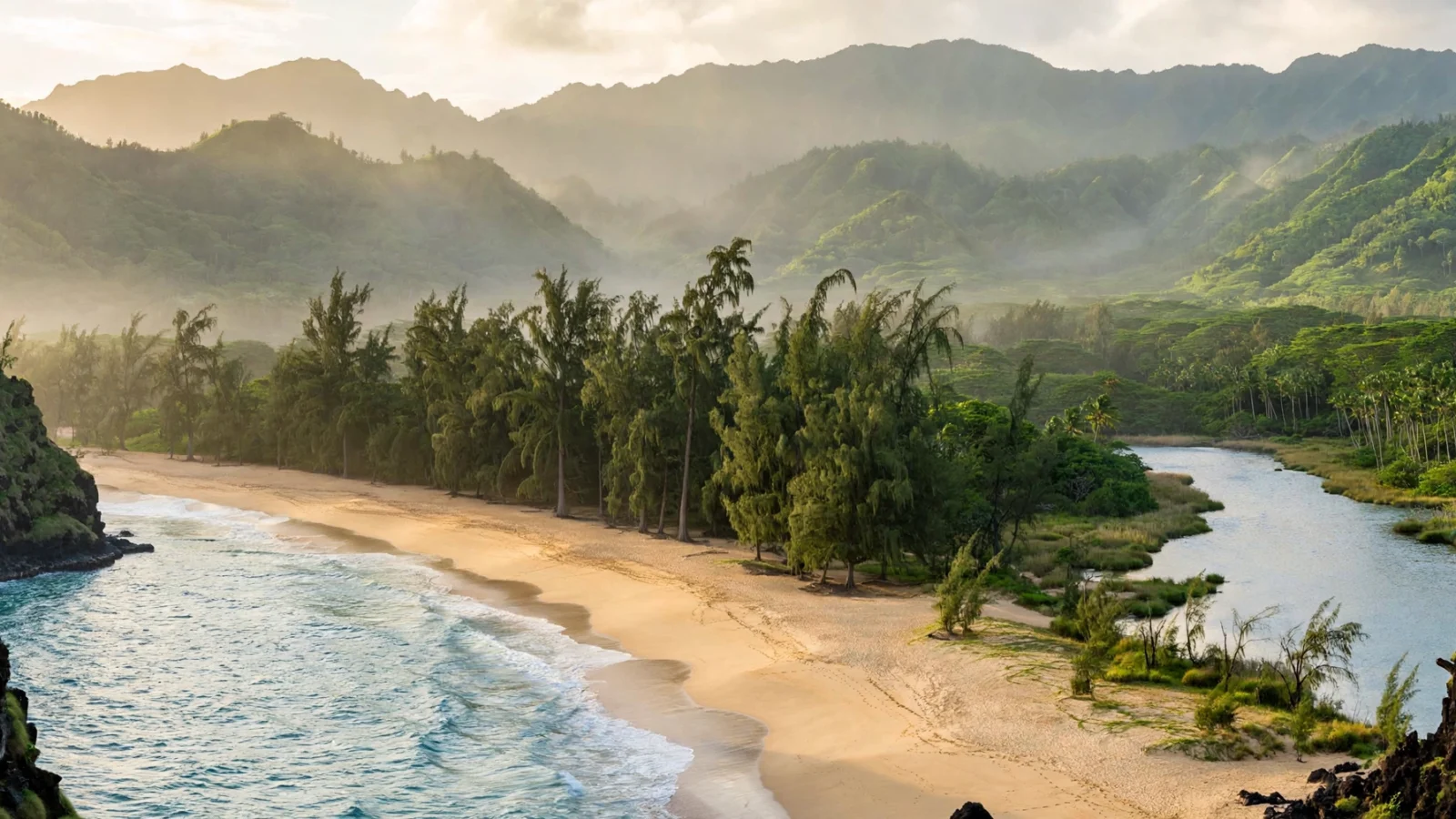
Kalihiwai Beach is one of the prettiest bays on Kauai’s north shore — a golden crescent of sand between lava cliffs, backed by a wall of ironwood trees, with a river sliding into the ocean at its west end. It is also, by the structure of the bay itself, a poor snorkeling beach. This guide will not pretend otherwise, because every honest source on this beach says the same thing in different words: the Kauai Travel Blog sums it up as a beach that “has it all, except snorkeling and the crowds,” Kauai.com quietly leaves snorkeling off its activities list and advises visitors to choose a lifeguarded beach for it, and visitor review after visitor review lands on the same two words — bad snorkeling.
The reason is not bad luck or bad timing. Kalihiwai Bay has no offshore reef. Nothing stands between this beach and the open Pacific to break the surf, shelter a lagoon, or give coral — and the fish that live on coral — a place to exist. What lies under the surface here is mostly sand, moving water, and a river mouth. Snorkeling needs structure and shelter; Kalihiwai offers neither, and no change of season fully fixes that.
So why does this beach get its own snorkeling guide on a snorkeling site? Because people keep driving down Kalihiwai Road with masks in the trunk, and the pages that rank for this beach either skip the snorkeling question entirely or answer it in a single clause. Our Kauai snorkeling hub has never given Kalihiwai its own page. It earns one now — as the honest guide: why the snorkeling fails here, the one narrow window in which a careful swimmer can still enjoy the water, the river rule that matters more than any other safety point on this beach, and the genuinely excellent snorkeling that waits ten minutes down the road at Anini Beach.
Kalihiwai’s zones: the snorkel verdict, zone by zone
“Kalihiwai Beach” is really three different waters sharing one bay, and they are not interchangeable. Judging the whole beach by any one of them is how visitors get into trouble here.
| Zone | Snorkel verdict | Why | Best for |
|---|---|---|---|
| The main bay (centre and east) | Poor — not a snorkel spot | No reef, sandy bottom, surf breaks close to shore; little structure means little reef life and surf-stirred visibility | Summer swimming and bodyboarding on calm days, expert surfing in winter |
| The river mouth (west end) | Never — do not snorkel here | The strongest currents on the beach run at the river mouth, the outflow clouds the water, and river mouths are exactly where Hawaii ocean-safety guidance says never to swim | Nothing in the water — watch it from the sand |
| The river pool (behind the west end of the beach) | No — wading water, not snorkeling water | A shallow freshwater pool formed where the river meets the beach; fine for a paddle or a careful wade, but it is river water, with the leptospirosis caution that applies to all Hawaii freshwater — and it holds no reef life to look at | Kayaking and stand-up paddling upriver, a cautious rinse-off dip away from the mouth itself |
| The whole bay in winter | No — for everyone | North-shore winter swell turns Kalihiwai into an expert surf break with powerful, hollow waves; even strong summer swells arrive here with nothing to stop them | Watching expert surfers from the ironwood shade |
Read that table as the whole review if you read nothing else: there is no zone at Kalihiwai where snorkeling is the right plan. There is only a bay that is wonderful for other things, in the right season, and a short drive to beaches where snorkeling is the right plan.
Why the snorkeling fails here: reef, sand, surf and river
Four facts about this bay stack up against a snorkeler, and understanding them will help you judge any north-shore beach, not just this one.
1. There is no reef
Every great shore-snorkeling beach in Hawaii shares the same architecture: a fringing reef that shelters calm water inside it and hosts the coral, turtles and reef fish outside and along its edges. Kalihiwai has no such reef — local guides describe a bay “with no reef to break up the waves,” and the bottom off the sand is described plainly as sandy. No reef means no shelter, no coral community, and very little for a snorkeler to look at. This single fact explains almost everything else in this guide.
2. The bottom is sand, and sand moves
Over a sandy bottom, even a modest shorebreak keeps the water stirred and the visibility milky. The fish that do cross open sand are transients, not residents. Reviewers who have tried it here use the word “bad” with unusual consistency — not “average,” not “okay on a good day.” Bad. When dozens of independent visitors agree with the local blogs and the county-facing directories, believe them.
3. The surf arrives unbroken
With nothing offshore to trip the swell, waves break right at the shoreline. In summer that makes Kalihiwai a genuinely good bodyboarding beach — the medium, near-shore break is exactly what bodyboarders want. In winter, the same openness delivers large, perfectly formed but dangerous surf that draws experienced local surfers and should keep everyone else on the sand. Even in summer, larger swells arrive here on occasion, because there is nothing to stop them.
4. The river works against you at the west end
The Kalihiwai River enters the bay at the west end of the beach. River mouths concentrate currents — sources single out “strong undercurrents, especially near the mouth of the river” — and after rain the river runs high and muddy, clouding the bay’s west side. Fresh water meeting the ocean is also where leptospirosis risk lives, which is why Hawaii safety guidance is blunt about river mouths: never swim in them, and never swim in murky water. More on this below, because it is the most important safety section in this guide.
The one narrow exception: a flat summer morning
Honesty cuts both ways. On a genuinely flat summer morning — light winds, no swell running, clear water you can see into from the sand — a confident swimmer can put a mask on at Kalihiwai and have a pleasant swim. What you should expect from it matters: you will mostly see sand, light patterns and open water, with any fish life occasional rather than organised around structure. No source documents a reef community here, and this guide will not invent one for you. Treat it as a swim with a mask, in a beautiful bay, on the calmest mornings of the year — not as a snorkeling destination you plan a day around.
If you do go in, the checklist in the next section is not optional decoration. It is the difference between that pleasant swim and the incidents that unguarded, reef-less bays produce every year.
The go / no-go checklist for Kalihiwai
Run all five checks before your feet leave the sand. Any single “no” ends the swim — the picnic, the shade and the scenery are the consolation prize, and they are a good one.
- Season check. Is it summer, or a verified flat spell? Winter north-shore swell makes this bay an expert surf break. If surfers are out riding real waves, the water is not for snorkeling — full stop.
- Surface check. Stand and watch a full set of waves. If white water is breaking across the bay rather than rolling in gently at one shorebreak line, stay out. Remember there is no reef: what you see arriving is what reaches the beach undiminished.
- Clarity check. Can you see the bottom from knee-depth? If the water is milky, brown or greenish — especially after rain, when the river runs muddy — do not enter. Murky water at a river-fed bay is a health warning, not just a visibility problem.
- Distance-from-the-river check. Stay well away from the west end and the river mouth, where the undercurrents are strongest. Never swim in the river mouth itself, on any day, in any conditions.
- People check. There is no lifeguard at Kalihiwai — none, ever. Swim only with a buddy, tell someone on shore where you are going in, and keep children within arm’s reach in the shallows. If nobody else is in the water and the locals are all on the sand, take the hint the ocean is giving you.
Our broader Hawaii snorkeling safety guide covers the universal rules — buddy system, entry and exit planning, when to walk away — that apply at every unguarded beach on the island.
The river rule: leptospirosis and the freshwater trap
Kalihiwai’s river is genuinely lovely — a slow, green, paddleable stretch of water that draws kayakers and stand-up paddlers roughly a mile upstream, with a shallow pool behind the beach where families let kids splash on calm days. It is also the part of this beach that deserves the most respect, for a reason most beach guides mention in one line or not at all.
Leptospirosis is a bacterial infection present in Hawaii’s freshwater, carried into streams and rivers by animal urine, and it is a standing factor in every freshwater encounter in the islands — local coverage of this exact beach names it directly. The practical rules are simple and they are not negotiable: never swallow river water; never get in with open cuts or wounds; never swim in the river or the bay near its mouth after heavy rain, when the water runs high, muddy and loaded with runoff; and shower and rinse well afterwards. The ocean side after rain deserves the same caution anywhere the plume spreads.
And to be direct about the snorkeling question one more time: the river is not a snorkeling alternative when the ocean is rough. It holds no reef, no coral and no reef fish, its mouth concentrates the beach’s strongest currents, and its water carries the one health risk the ocean here does not. Paddle it, photograph it, wade its edges carefully on a dry-weather day — but keep your mask for Anini’s reef lagoon, ten minutes away.
Best time to visit Kalihiwai (and the worst)
| Season | Ocean character | Snorkeling | The beach is best for |
|---|---|---|---|
| Summer (roughly May–September) | Mellowest of the year; medium shorebreak, calmer mornings | The narrow exception only — flat mornings, sandy-bottom swim, low expectations | Swimming, bodyboarding (locals rate summer here among Kauai’s best), picnics, river paddling |
| Winter (roughly November–March) | Large north-shore swell; hollow, expert-grade surf breaks at the bay | No — for everyone, at every skill level | Watching expert surfers and bodyboarders from the sand |
| After heavy rain (any season) | River runs high and muddy; bay clouds near the mouth | No — murky river-fed water is a leptospirosis risk, not a visibility inconvenience | A scenic stop and a walk, with all swimming skipped |
For how seasons and swell windows work across the islands, see our guide to the best time to snorkel in Hawaii — Kalihiwai is the north-shore pattern in its purest form: summer beach, winter surf break, and no reef to soften the switch between the two.
Getting there, parking and facilities
Kalihiwai sits on Kauai’s north shore between Kilauea and Princeville, roughly eight miles east of Hanalei. From Kuhio Highway (Highway 56), turn onto Kalihiwai Road just before mile marker 24 and follow it down to where the road ends at the beach. Local drivers note there are two road approaches down the valley — one that runs along the beach side, and a second, on the river side, reached by taking the fork after the Kalihiwai Bridge (turn left at that fork and you are headed to Anini instead). The bridge that once connected the two sides across the river was destroyed in the 1946 tsunami and never rebuilt, so pick your side before you descend — you cannot cross by car at the beach.
Parking is a dirt area at the end of the road and pull-offs in the shade under the ironwood trees that line the back of the beach — cars simply park up in the trees, which is part of this beach’s unpolished charm. Arrive in the morning for the calmest water and the easiest parking, and drive the descent slowly: it is a residential valley, and the beach sits in a local community’s backyard.
Facilities are, in the word every source uses, none. There is no lifeguard, no restroom block, no showers and no food anywhere near the sand — an occasional portable toilet is the most any visitor report promises. No reservation is required. Bring everything: water, food, shade if you want it beyond the ironwoods, and your full snorkel kit from our Hawaii snorkeling gear checklist if you are still hoping for that flat morning. The nearest proper facilities are at Anini Beach Park, about a ten-minute drive, which has restrooms and showers. Pack out everything you pack in — the undeveloped state of this bay is the whole point of it.
What Kalihiwai is actually great for
None of the above makes Kalihiwai a bad beach — it makes it a badly labelled one in snorkel searches. Judged on what it does well, it is one of the north shore’s best local-feeling days out:
- Bodyboarding and summer swimming. The sandy bottom and medium near-shore break are close to ideal, and summer Kalihiwai is rated by Kauai beach writers as possibly the island’s best bodyboarding beach.
- Winter surf watching. When the north shore lights up, the breaks here draw experienced surfers onto hollow, photogenic waves — a spectator sport from the safety of the sand.
- The river. Kayak or paddleboard from the mouth upstream through green valley scenery, or let kids play in the shallow pool behind the beach — with the freshwater rules above kept firmly in mind.
- Shade, space and a picnic. A long crescent of sand, a forest of ironwoods behind it, and a fraction of the crowds of Hanalei or Poipu. As a picnic-and-a-book beach, Kalihiwai is hard to beat on this coast.
- The setting itself. Lava cliffs at both ends, golden sand, a river, a waterfall visible along the access road in wet weather — this is the north shore looking the way people imagine it.
Come for those things and Kalihiwai will likely become one of your favourite beaches on Kauai. Come only for snorkeling and it will disappoint you — which is precisely the expectation this guide exists to reset before you make the drive. If you are building a north-shore day, our guides to Secret Beach (Kauapea) next door and Hanalei Bay cover the neighbours honestly too — Secret Beach with the same no-reef candour, Hanalei as a scenic bay whose snorkeling sits at its reef edges.
Kalihiwai vs Anini: the ten-minute decision
Almost every visitor who finds Kalihiwai is choosing, knowingly or not, between it and Anini Beach — they share a road, a valley and an exit off the highway, and they are opposites in the water.
| Kalihiwai Beach | Anini Beach | |
|---|---|---|
| Reef | None — open sandy bay | One of Kauai’s longest fringing reefs, sheltering a lagoon |
| Snorkeling | Poor; flat-summer swims only, little to see | The north shore’s most reliable shore snorkeling — reef fish and turtles in sheltered water |
| Water character | Surf-exposed; expert break in winter | Calm lagoon inside the reef most of the year |
| Lifeguard / facilities | No lifeguard; no facilities | Beach park facilities including restrooms and showers |
| Crowds | Quiet, local feel | Popular, but a long beach that absorbs people well |
| Choose it for | Scenery, shade, bodyboarding, the river, solitude | Snorkeling, calm swimming, families in the water |
The verdict writes itself: if snorkeling is the point of your day, drive the extra minutes to Anini. If you have already snorkeled Anini and want a second, quieter stop for lunch and a swim, Kalihiwai is the perfect pairing — the two beaches together make one excellent north-shore day. Beginners in particular should start at Anini; our beginners’ guide to snorkeling in Hawaii explains what makes a learning beach safe, and Kalihiwai ticks almost none of those boxes, while Anini ticks nearly all of them.
Where to snorkel instead, nearby
- Anini Beach — ten minutes away, reef-sheltered lagoon, the correct answer for almost everyone who was considering Kalihiwai.
- Tunnels Beach (Makua) — the north shore’s premier reef snorkeling in summer, with a big fringing reef system; winter closes it down just as firmly as Kalihiwai.
- Ke’e Beach — the reef lagoon at the end of the road in Ha’ena State Park, sheltered and fishy in calm summer conditions (park entry rules apply — see the guide).
- Poipu Beach — on the south shore, the year-round fallback when the whole north shore is blown out: lifeguarded, beginner-friendly, and the place to snorkel with turtles in Hawaii reliably.
And whichever beach you choose, wear reef-safe sunscreen — Hawaii law requires it, and on a reef-less beach like Kalihiwai it is easy to forget that what washes off you still washes into the bay.
Frequently asked questions
Is Kalihiwai Beach good for snorkeling?
No. Kalihiwai Bay has no offshore reef, a mostly sandy bottom and surf that breaks close to shore, so there is little structure, little reef life and frequently stirred-up visibility. Local guides, directories and visitor reviews agree — one Kauai blog puts it as a beach that “has it all, except snorkeling.” On a flat summer morning a confident swimmer can enjoy a swim with a mask, but plan your actual snorkeling at Anini Beach, about ten minutes away.
Can you swim at Kalihiwai Beach?
Yes, in summer and in calm conditions — it is a popular local swimming and bodyboarding beach on mellow days. But there is no lifeguard, currents can be strong (especially near the river mouth at the west end), and winter brings large, expert-only surf. Watch the water first, swim with a buddy, and stay out entirely when the surf is up or the water looks murky.
Is there a lifeguard at Kalihiwai Beach?
No. Kalihiwai is unguarded year-round, and it also has no restrooms, showers or other facilities — the most visitors report is an occasional portable toilet. The nearest facilities are at Anini Beach Park, about a ten-minute drive away.
Where do you park for Kalihiwai Beach?
Take Kalihiwai Road off Kuhio Highway (Highway 56) just before mile marker 24 and follow it to the end of the road, where there is a dirt parking area and pull-offs in the shade under the ironwood trees. There is also a second, river-side approach via the fork after the Kalihiwai Bridge. No reservation is required; mornings are easiest.
What is the best time of year to visit Kalihiwai Beach?
Summer. From roughly May to September the bay is at its calmest, swimming and bodyboarding are at their best, and the rare flat mornings that make a masked swim possible happen. Winter (roughly November to March) turns the bay into an expert surf break — visit then to watch from the sand, not to get in.
Is the Kalihiwai River safe to swim and snorkel in?
The river is popular for kayaking, paddleboarding and careful wading, but it is not a snorkeling spot — it has no reef life, and its mouth concentrates the strongest currents on the beach. Treat all Hawaii freshwater with leptospirosis caution: never swallow the water, keep out with open cuts, and avoid the river and the river mouth completely after heavy rain, when it runs high and muddy.
Is Kalihiwai Beach good for kids?
For sand, shade and a picnic, yes — the ironwood shade and long beach are family favourites, and the shallow river pool behind the west end is popular with children on calm days. For ocean swimming, judge it strictly: no lifeguard, a real shorebreak and strong currents mean children belong in the shallows within arm’s reach on calm summer days only, and in the water not at all in winter. For a family snorkeling day, choose Anini instead.
Will I see turtles at Kalihiwai Beach?
Do not count on it. Turtles gather where reef and feeding grounds are, and Kalihiwai’s sandy, reef-less bay gives them little reason to stay. You may occasionally spot one passing through Hawaiian waters almost anywhere, but for reliable turtle snorkeling, Anini’s lagoon and Poipu Beach on the south shore are far better bets.