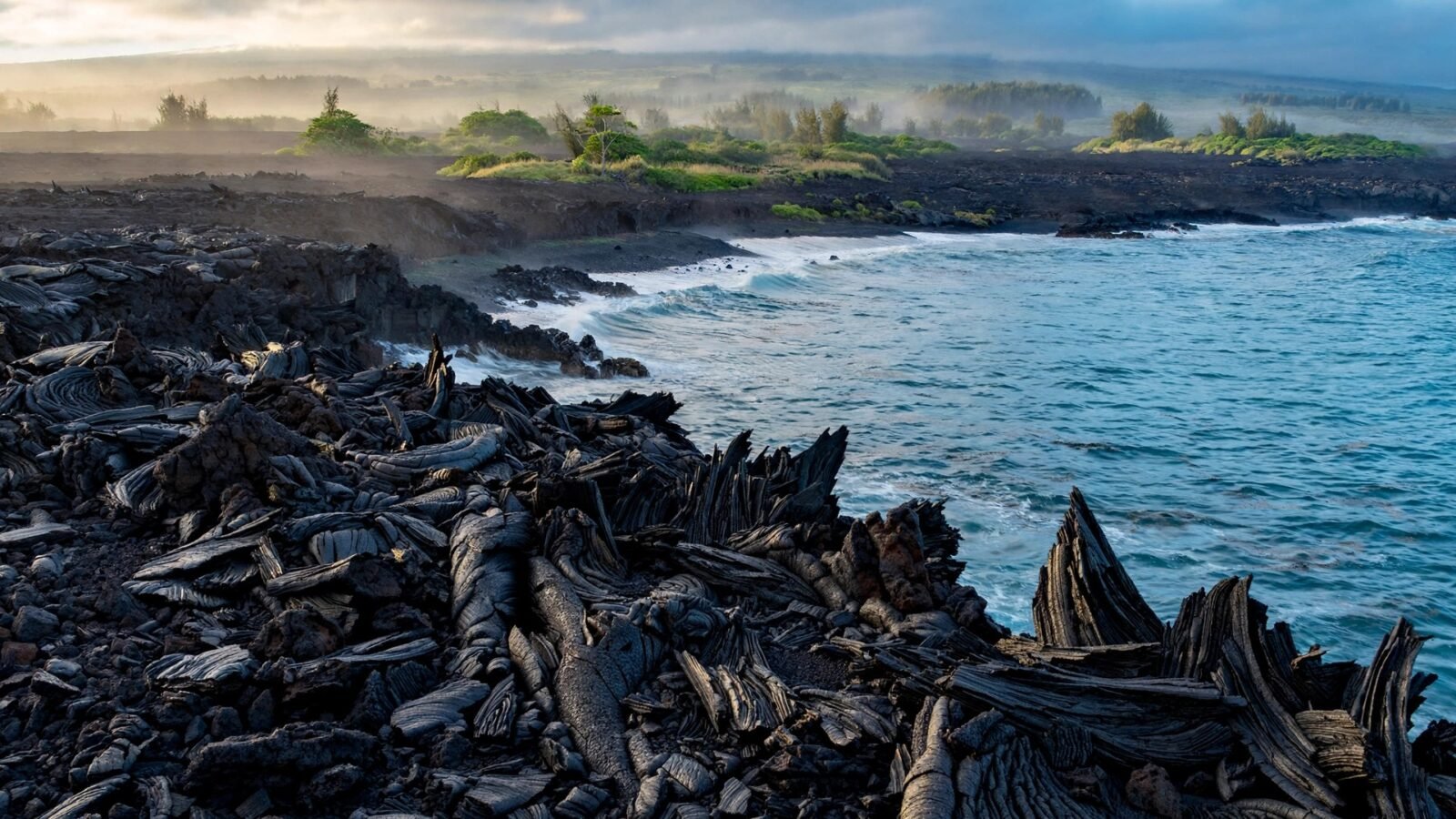
If you are reading old guidebooks or older blog posts, Kapoho Tide Pools sound like the best snorkeling on the Big Island’s east side: warm, shallow, crystal-clear pools loaded with coral and fish, calm enough for beginners. Here is the honest answer first, because it changes everything: the Kapoho Tide Pools no longer exist. They were buried under roughly 50–60 feet of lava during the 2018 Kīlauea eruption. Tripadvisor lists the attraction as permanently closed, and local reviewers who went back report the same thing — the roads are gone, the homes are gone, the pools are gone.
This guide tells you what happened, why you should not try to visit the old site, and where to snorkel instead — including the “new” pools the 2018 lava flow created nearby. For the island-wide picture, start with our Big Island snorkeling hub.
Quick facts
- Location: Lower Puna, east side of the Big Island, near Pāhoa (the old Waiʻōpae tide pools were in the Kapoho Beach Lots area).
- The snorkeling, honestly: Not possible. The pools were destroyed by the 2018 Kīlauea eruption and are buried under dozens of feet of new lava.
- Can you visit the old site? No — reviewers and local guides advise against it: roads are gone, the new coastline is unstable and extremely sharp, and there is nothing to see.
- Closest “new” alternative: The geothermal tide pools at Isaac Hale Beach Park (Pohoiki) — created by the same 2018 lava flow, warm water, but a very different experience with its own cautions.
- Best east-side snorkeling now: Richardson Ocean Park and Carlsmith Beach Park near Hilo — see our Hilo snorkeling guide.
What the Kapoho Tide Pools were
Before 2018, the Waiʻōpae tide pools were a geological and ecological wonder: a labyrinth of shallow basins formed by ancient lava flows, filled with warm brackish water, sitting right on the Puna coast. Snorkelers remember a living aquarium — coral gardens in pink, orange and emerald green, butterflyfish, Moorish idols, colorful triggerfish and the occasional sea turtle, in water that rarely got deeper than about 8 feet.
It was one of the best beginner snorkeling spots on the Big Island: exceptional visibility, calm conditions, no waves to fight, and free to enter. Families, nature lovers and budget travelers made the pilgrimage to lower Puna for exactly this. Locals recall their first snorkeling experiences there — curious triggerfish swimming right up to the mask.
What happened: the 2018 Kīlauea eruption
In May 2018, the Kīlauea lower east rift zone erupted, and Fissure 8 poured lava through lower Puna for months. The flow devastated entire communities — Kapoho Beach Lots, Vacationland Hawaii, hundreds of homes — and it buried the Waiʻōpae tide pools under roughly 50–60 feet of fresh lava. The heat boiled the surrounding reef before the rock crushed it.
By 2019–2021, returning reviewers wrote the same epitaph: “Buried by lava.” “Doesn’t exist, but…” “All buried now under several feet of new lava.” Tripadvisor eventually flagged the listing as permanently closed. Years later, the County of Hawaii has still not restored general access to the area — the legal and physical hurdles of rebuilding roads across the new lava field are, as one local put it, a nightmare. Most of the old land is now kipuka (islands of older land surrounded by lava) or entirely new, unstable coastline.
Can you still visit Kapoho Tide Pools?
No — and you should not try. This is the single most important thing on this page, because outdated guidebooks and old blog posts from 2016 still sit in search results telling people to go.
- The pools do not exist. They are under dozens of feet of solidified lava.
- The old access roads are gone. Reviewers describe driving through gloomy lava fields to dead ends.
- The new coastline is unstable and extremely sharp. Fresh ʻaʻā lava shreds footwear and skin; some areas remain kipuka surrounded by lava with no safe routes.
- There are no facilities, no signage worth following, and no lifeguard — because there is no longer an attraction to guard.
A few people drive out to look at the lava fields from a distance. As a snorkeling or swimming destination, it is done.
The “new” pools: Isaac Hale Beach Park (Pohoiki)
The same 2018 eruption that buried Kapoho also created something new nearby: at Isaac Hale Beach Park in Pohoiki, the lava flow stopped just short of the park — and in doing so it created a brand-new black sand beach and a series of geothermal tide pools. These are among Hawaii’s newest natural swimming spots, and they are the closest thing to a modern successor of the Kapoho pools.
But go in with clear eyes — they are not a 1:1 replacement:
- The water is warm, sometimes very warm: geothermal heat mixes with ocean water, and the pools commonly sit around 89–100°F (32–38°C), shifting with tides and weather. It feels like a blend of hot spring and ocean pool.
- Entry is free, no permits or reservations — and no facilities either: no changing rooms, showers or restrooms, so bring everything with you.
- The surroundings are sharp and slippery: the new lava rocks around the pools are razor-edged and slick. Sturdy footwear is essential.
- Safety depends on the ocean: at high surf or strong swell the pools can turn rough and dangerous. Calm seas and low tide are the safest window.
- The health caveat: unlike the old Kapoho pools, which had great circulation, the new Pohoiki ponds can be stagnant at times and may harbor bacteria. Check the Department of Health signs posted on site before getting in.
If what you loved about Kapoho was the warm-water soak rather than the coral, Pohoiki is your closest match. If you wanted snorkeling over coral — keep reading, because that part is gone, and the east side’s best snorkeling now lives in Hilo.
Where to snorkel instead on the east side
Kapoho’s loss pushed east-side snorkelers toward Hilo — which, honestly, was always the deeper bench. These are the spots to aim for instead:
| Alternative | From old Kapoho area | Why it works |
|---|---|---|
| Richardson Ocean Park | ~45 min (Hilo) | The local favorite — black sand, calm entry points, and freshwater springs bubbling through the rocks; the same protected, rocky feel Kapoho had |
| Carlsmith Beach Park | ~45 min (Hilo) | A brackish lagoon fed by cool freshwater springs — turtles everywhere, drift-around calm, no waves to fight |
| Hilo snorkeling roundup | ~45 min | The full east-side playbook: Richardson, Carlsmith, Leleiwi, Onekahakaha ranked with conditions and safety |
Our Hilo snorkeling guide is the natural pairing for this page: it covers the east side’s surviving spots with the honest verdicts Kapoho’s old write-ups never needed. For matching spots to your comfort level, see our beginners guide and best-time guide.
Getting to the Puna coast (what’s actually there)
If you still want to see the landscape the eruption made, Puna itself is worth the drive for what it is: fresh black lava fields, the new black sand beach at Pohoiki, steaming ground in places, and the stark new coastline. Drive the Red Road (Highway 137) and the roads around Pāhoa and Pohoiki. Stay on marked roads and paths, wear real shoes, and treat every fresh lava surface as sharp and unstable — because it is.
What you will not find: the old Kapoho tide pools, the old beach access, or a snorkeling site. Do not follow pre-2018 directions to Kapoho Beach Lots expecting pools — they describe a coastline that no longer exists. Read our Hawaii snorkeling safety guide before any ocean day on this side of the island.
Frequently asked questions
Can you snorkel at Kapoho Tide Pools?
No. The pools were buried under roughly 50–60 feet of lava during the 2018 Kīlauea eruption and no longer exist. Do not plan a snorkeling trip there.
What happened to the Kapoho Tide Pools?
The May 2018 Kīlauea lower east rift zone eruption (Fissure 8) sent lava through lower Puna, destroying Kapoho Beach Lots and Vacationland and burying the Waiʻōpae tide pools. Tripadvisor lists the attraction as permanently closed.
Is it safe to visit Kapoho now?
Visiting the old site is not advised: roads are gone, the new coastline is unstable and extremely sharp, and there is nothing to see. If you want to see the new landscape, stick to marked roads and paths around Pāhoa and Pohoiki.
Are there new tide pools at Kapoho?
Not snorkeling pools. The 2018 lava flow created geothermal tide pools at Isaac Hale Beach Park (Pohoiki) — warm, free to enter, but with sharp surroundings, no facilities, and possible bacteria in stagnant water. Check Department of Health signs before getting in.
Where is the best snorkeling on the east side of the Big Island now?
Near Hilo: Richardson Ocean Park for the protected black-sand cove, and Carlsmith Beach Park for the calm turtle-filled lagoon. See our Hilo snorkeling guide for the full ranking.
Why do old guidebooks still list Kapoho Tide Pools?
Because the pools were famous for decades, and pre-2018 content still ranks. Treat anything written before the 2018 eruption as describing a place that no longer exists.
Was Kapoho really as good as people say?
Yes — by every account it was a living aquarium: warm, shallow, crystal-clear pools with coral gardens, butterflyfish, Moorish idols and turtles, calm enough for beginners. That’s exactly why its loss still stings.
Can the pools ever come back?
The old pools are under dozens of feet of solidified lava — they will not return. Over geological time the new coastline will change, but not on any human timescale worth planning around.