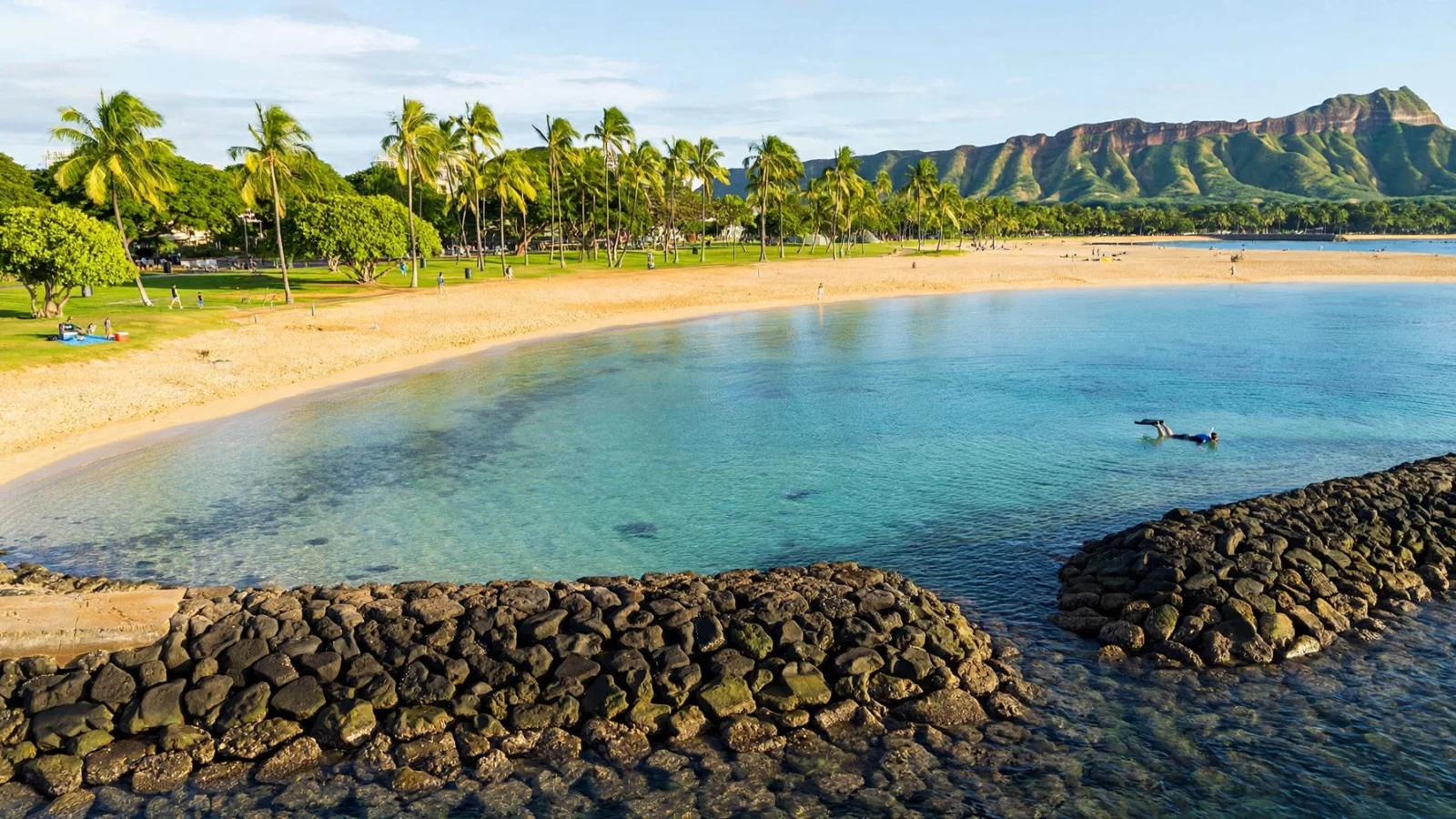
Ala Moana is the snorkeling spot most visitors drive straight past. It sits between Waikiki and downtown Honolulu, inside a 119-acre city park, and it offers two completely different snorkels in one place: a calm, breakwater-protected lagoon at Magic Island that suits first-timers and kids, and an offshore reef running the length of Ala Moana Beach where confident swimmers find more fish — and a drop-off they need to respect.
This guide treats Ala Moana as what it actually is: an urban beach park snorkel, not a wilderness reef. Expect convenience, lifeguards, free parking and easy fish on a good morning. Do not expect Hanauma Bay’s density of marine life, and do not go the day after heavy rain. Here is how to get the best out of it.
Ala Moana snorkeling at a glance
| Question | Answer |
|---|---|
| Where is it? | Ala Moana Regional Park, Honolulu, Oahu — between Waikiki and downtown, across from Ala Moana Center |
| The two zones | Magic Island lagoon (protected, beginners/kids) and the Ala Moana Beach outer reef (confident swimmers) |
| Entry fee / reservation | None for shore snorkeling — no fee and no reservation (unlike Hanauma Bay) |
| Park hours | 4:00 AM–10:00 PM daily; gates are locked overnight |
| Parking | Parking in the park lots has been free and first-come first-served — check posted signs on the day, as city rules can change; popular lots fill early on weekends |
| Lifeguards | Yes — lifeguards are on duty 8am-6:30pm at Ala Moana Beach and at Magic Island |
| Facilities | Restrooms, showers, picnic areas and grills, wide grass parkland |
| Best window | Calm mornings, before wind and crowds; avoid brown-water days after rain |
| Who it suits | Beginners and families in the lagoon; experienced snorkelers on the outer reef |
If you are choosing a first-ever snorkel in Honolulu, start in the lagoon. If you already snorkel confidently and Waikiki felt too sandy, the outer reef is your zone. Our beginner’s guide to snorkeling in Hawaii covers the skills to build before you move from one zone to the other.
The two zones, honestly compared
| Magic Island Lagoon | Ala Moana Beach Outer Reef | |
|---|---|---|
| Protection | Enclosed by a rock breakwater — the calmest water in the park | Open ocean reef, protected only by the reef itself |
| Depth feel | Shallow lagoon water | Reef flat, then a sharp drop-off into deeper water beyond the reef |
| Best for | First snorkels, kids with an adult, nervous swimmers with flotation | Strong, confident swimmers; go with a buddy and flotation |
| What you see | Small reef fish around rocks and coral patches | More fish along the reef, turtles reported more often out here |
| Main risk | Slippery rocks at the edges; murky water after rain | The drop-off, boat and surf activity further out, changing conditions |
| Verdict | The default Ala Moana snorkel | Only on calm days, only if you are honest about your swimming |
That drop-off is the single most important fact in this guide. Travel guides and tour operators say the same thing: beyond the reef the bottom falls away sharply, so the outer reef is not a place to drift casually. Stay over the reef flat, keep flotation on, and turn back early.
Zone 1: Magic Island Lagoon — the beginner snorkel
Magic Island is not really an island. It is ‘Aina Moana, a man-made peninsula built in 1962 for a resort that was never completed, and later turned into parkland. At its tip, a curved rock breakwater shelters a lagoon — and that lagoon is why Ala Moana works for beginners at all.
How to snorkel the lagoon
Enter from the sandy lagoon beach rather than climbing over the breakwater rocks, which are uneven and can be slippery. Work slowly along the inside edges of the lagoon and around any rock and coral patches rather than across the open sandy middle — the fish hold on structure, not on bare sand. Go at your own pace, stay where you can stand up or hold flotation comfortably, and keep children within arm’s reach even though the water is protected.
Beginner snorkel tours run in this lagoon for a reason: it is one of the few Honolulu spots where a first-timer can practise breathing through a snorkel in genuinely calm water and still see real reef fish. If you would rather build skills first, read how to snorkel in Hawaii before you go, and take the snorkel gear checklist seriously — a mask that fits matters more in a practice lagoon than anywhere.
What you will see in the lagoon
So what can you see at Ala Moana and Magic Island? Expect small, approachable reef life rather than a spectacle: tangs and other common reef fish around the rocks, with better sightings on clear, calm mornings before the lagoon gets busy and the bottom is stirred up. Visibility here is conditions-dependent — it can be pleasant early and noticeably murkier by afternoon or after rain. Set expectations at “a real first snorkel with real fish,” not “an aquarium,” and the lagoon delivers.
Zone 2: Ala Moana Beach and the outer reef
Ala Moana Beach is a half-mile stretch of man-made golden sand along the park’s oceanfront. An offshore reef runs roughly parallel to the beach, and that reef — not the sandy shallows in front of the beach — is where the snorkeling is.
How to snorkel the outer reef
On a calm morning, enter from the sand, swim out to the reef flat, and work along the reef rather than straight out to sea. This is a zone for confident swimmers only: the water deepens, and beyond the reef the bottom drops off sharply. Use flotation, snorkel with a buddy, watch for boats and other ocean users further out, and come in if the wind, chop or current picks up. If that description sounds like a stretch for your group, stay in the lagoon — or choose a boat trip to a reef that is managed for snorkelers, such as Turtle Canyon off Waikiki.
What you will see on the outer reef
Guides and visitors commonly report yellow tangs, convict tangs, goatfish and several butterflyfish on the reef, with green sea turtles reported more often out here than in the lagoon. Treat every named species as “commonly reported, never guaranteed” — reef life moves, and an honest guide does not promise animals. If turtles are your priority, read our guide to snorkeling with turtles in Hawaii and keep the legal distance: look, photograph from afar, and never touch or follow a turtle.
Best time to snorkel Ala Moana
Mornings win, for three reasons. The water is usually calmest before the day’s wind builds, visibility is best before swimmers stir up the lagoon, and the free parking lots are emptiest. Weekdays are quieter than weekends, when the park fills with local families, picnics and events.
Season matters less here than conditions on the day, because both zones are on Honolulu’s sheltered south shore. What matters most is recent weather — see the rain warning below. For the island-wide picture, see our guide to the best time to snorkel in Hawaii.
The rain rule: Ala Wai runoff and brown water
This is the section most Ala Moana guides skip, and it is the one that can ruin — or save — your snorkel.
The Ala Wai Canal, which drains a large part of Honolulu, empties into the harbour near the west end of the park. After heavy rain, runoff can turn the water around Ala Moana brown and murky, and the Hawaii Department of Health issues brown-water advisories for exactly this situation. Brown water means poor visibility at best and contaminated water at worst.
The rule is simple: if the water looks brown or murky, do not snorkel in it. Check current Department of Health and City advisories before you go, especially in the day or two after heavy rain, and pick a different day or a different coast. No fish sighting is worth snorkeling in runoff. Our Hawaii snorkeling safety guide covers the wider version of this rule across all islands.
Parking, hours and facilities
Ala Moana Regional Park is run by the City and County of Honolulu and is open daily from 4:00 AM to 10:00 PM, with gates locked overnight. There is no entry fee and no reservation for shore snorkeling in the park — a real contrast with Hanauma Bay, where booking and fees apply.
Parking in the park’s lots, including the lot serving Magic Island, has been free and first-come first-served — check posted signs on the day, as city rules can change. On weekends and holidays the popular lots fill early, so a morning snorkel plan helps twice: better water and an easier park. Inside the park you will find restrooms, showers, picnic areas and barbecue grills, plus the wide lawns and paths that make this as much a local park as a visitor beach. Ala Moana Center, the large open-air mall, is directly across Ala Moana Boulevard for food and supplies.
Lifeguards are on duty at Ala Moana Beach and at Magic Island. Choose your entry near a guarded area, check any posted warning signs or flags before you enter, and ask the lifeguard about conditions if you are unsure — they would rather answer a question than make a rescue.
Safety notes specific to Ala Moana
- Respect the drop-off. Beyond the outer reef the bottom falls away sharply. Stay over the reef flat, wear flotation, and never let a non-confident swimmer follow you out.
- Breakwater rocks are not a shortcut. Enter the lagoon from the sand; rocks can be slippery and uneven, especially when wet.
- Brown water means no snorkeling. See the rain rule above, and check advisories.
- Watch boat traffic. The park sits beside a busy harbour area; stay out of channels and be visible if you are on the outer reef.
- Standard reef rules apply. Reef-safe sunscreen, no standing on or touching coral, no feeding fish, and keep your distance from turtles and any other marine life.
- Ala Moana is not a conservation district. Unlike Hanauma Bay or the Waikiki MLCD covered in our Waikiki snorkeling guide, this is a general-use park beach — normal state rules apply, and snorkelers should still leave everything exactly as they found it.
Ala Moana vs Waikiki vs Ko Olina: which Honolulu snorkel?
| Spot | Best for | The trade-off |
|---|---|---|
| Ala Moana / Magic Island | Beginners in the lagoon; a free, easy city snorkel | Urban setting; visibility falls after rain; outer reef has a drop-off |
| Waikiki | Shore snorkeling inside the Waikiki MLCD at Queen’s / Sans Souci | Busier; parking is paid and tight |
| Ko Olina | Calm man-made lagoons on the west side | A drive from Honolulu; lagoons are sandy with patchy fish |
| Hanauma Bay | The richest fish life on Oahu | Reservation, fee, and a set visitor system |
For a free first snorkel without leaving Honolulu, Ala Moana’s lagoon is the simplest answer on this list. For a full day built around snorkeling, Hanauma still wins on marine life — plan it separately rather than treating Ala Moana as a substitute.
Where Ala Moana fits in an Oahu snorkel trip
Use Ala Moana as your warm-up or your flexible option: the morning you arrive, the afternoon you do not want to drive, or the practice session before a bigger snorkel later in the trip. Pair it with the other south-shore spots in our Oahu snorkeling hub, and if you prefer a guided reef with turtles, compare the boat options in our Hawaii snorkeling tours guide.
A simple morning plan that works
Arrive before the lots fill and walk the park first: check the lagoon from the breakwater, look at the outer reef from the beach, and read the water before you commit to a zone. If the lagoon is clear and calm, start there for twenty minutes even if you plan to try the reef afterwards — it is a free skills check in protected water. Move to the outer reef only if the ocean beyond the beach looks flat, you have a buddy and flotation, and you have energy in reserve for the swim back, not just the swim out.
Finish while the morning is still young, rinse at the showers, and use the park properly: shade, a picnic, and a slow look back at Diamond Head from Magic Island. That unhurried finish is part of Ala Moana’s appeal — it is a local park that happens to hold a snorkel, not a ticketed attraction with a clock running. If the water was brown, the wind was already up, or the reef looked rough, call it honestly, enjoy the park, and snorkel on a better day. Knowing when not to get in is a snorkeling skill, and Ala Moana — with a safe lagoon, lifeguards and easy exits — is a good place to learn it.
What to bring
Bring your own mask, snorkel and fins if you have them, plus flotation for anyone heading to the outer reef and for children in the lagoon. Add reef-safe sunscreen applied before you arrive, a towel, water, and a dry bag or a plan for valuables — as at any busy city beach park, do not leave valuables visible in the car. There is no on-site snorkel rental promise in this guide: if you need to rent, arrange it in Waikiki or at a Honolulu snorkel shop before you come, and check the mask fit in the lagoon shallows before you swim anywhere else.
FAQs
Is Ala Moana Beach good for snorkeling?
Yes — in the right zone and on the right day. The Magic Island lagoon is a genuinely good beginner snorkel in protected water, and the outer reef off Ala Moana Beach offers more fish for confident swimmers. It is not Oahu’s richest reef, and visibility drops quickly after rain, so pick a calm, clear morning.
Can beginners and kids snorkel at Magic Island?
Yes, the lagoon is the part of Ala Moana built for them: it is sheltered by a rock breakwater, shallow, and lifeguarded, and beginner tours operate there. Children should snorkel with an adult within reach and use flotation, and first-timers should practise in the shallows before working along the lagoon edges.
Is parking free at Ala Moana Beach Park?
Yes. Parking in the park lots, including the lot serving Magic Island, has been free and first-come first-served — check posted signs on the day, as city rules can change. The trade-off is demand: on weekends and holidays the popular lots fill early, so arrive in the morning.
Are there lifeguards at Ala Moana and Magic Island?
Yes, lifeguards are on duty at Ala Moana Beach and at Magic Island. Snorkel near the guarded areas, read any posted warnings, and ask the lifeguard about conditions if you are new to the spot.
Do I need a reservation or pay a fee to snorkel at Ala Moana?
No. There is no entry fee and no reservation for shore snorkeling at Ala Moana Beach Park or Magic Island. That is one of its biggest advantages over Hanauma Bay, which does require booking and charges entry.
What fish and turtles will I see at Ala Moana?
Commonly reported sightings include yellow tangs, convict tangs, goatfish and butterflyfish, mostly on the outer reef, with green sea turtles reported more often out there than in the lagoon. Sightings are never guaranteed — go for a good snorkel, and treat turtles as a bonus you observe from a respectful distance.
When is the best time to snorkel at Ala Moana?
Calm mornings, ideally on weekdays: the water is clearest and calmest early, the lagoon is less stirred up, and free parking is easiest. Avoid the day or two after heavy rain, when Ala Wai runoff can turn the water brown.
Is it safe to snorkel at Ala Moana after rain?
Often, no. After heavy rain, runoff from the Ala Wai Canal can create brown-water conditions near the park, and the Hawaii Department of Health issues advisories against entering brown water. If the water looks murky or an advisory is in place, stay out and choose another day.
Bottom line
Ala Moana is Honolulu’s most convenient snorkel: free, lifeguarded, reservation-free, and split into a lagoon that welcomes beginners and an outer reef that rewards confident swimmers who respect its drop-off. Go early, go after dry weather, start in the lagoon if you are new, and it earns its place in any Oahu snorkel trip — not as a Hanauma replacement, but as the easy, honest city snorkel it is.