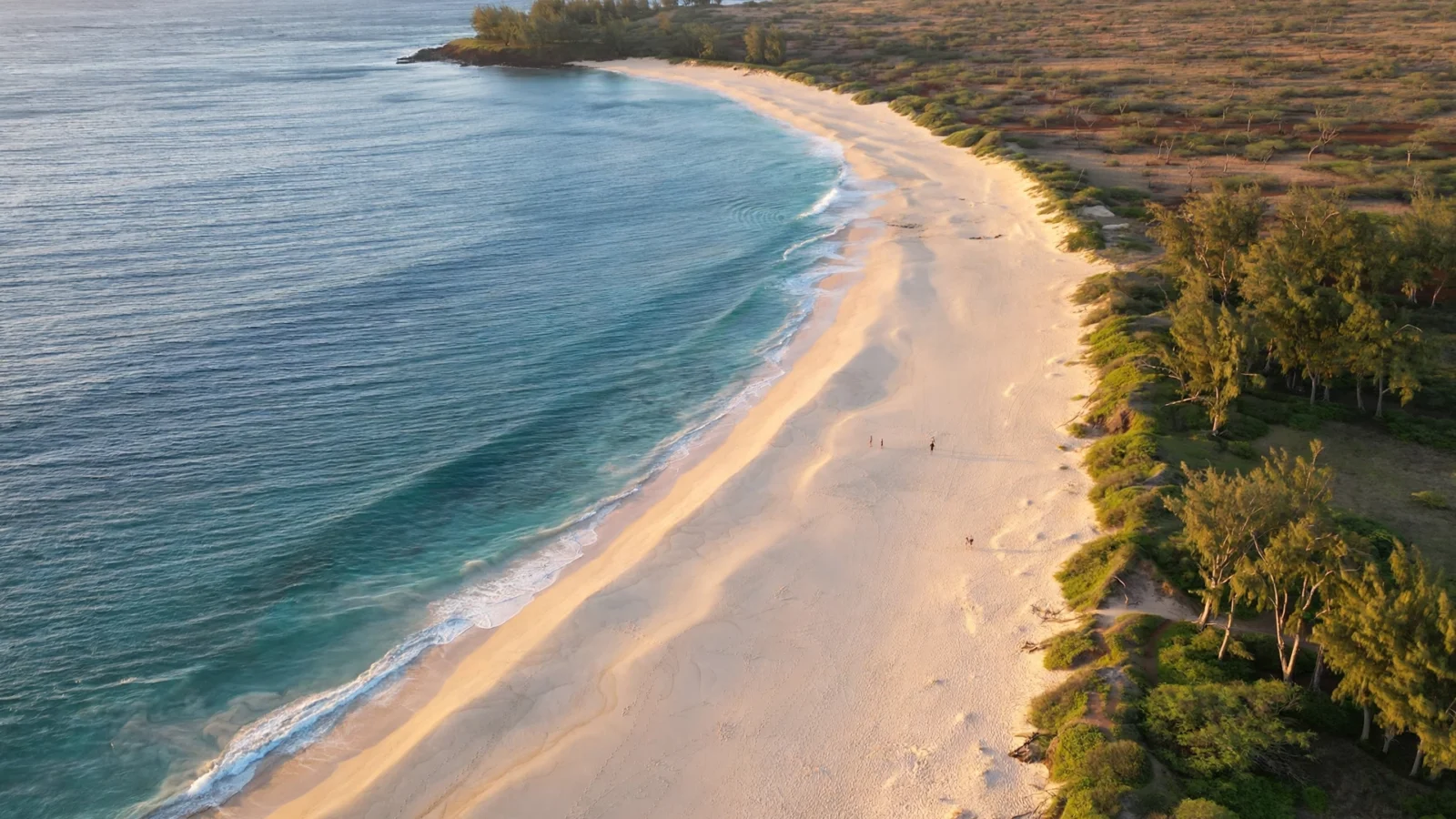
Molokai is the Hawaii most visitors never see — and the island is fine with that. There are no traffic lights, no high-rise resorts, no luaus with a hundred strangers. What there is: a 3-mile empty beach, a valley you can only enter with a guide, a leprosy settlement you can only visit with a permit, and the longest fringing reef in Hawaii sitting off a beach most people drive past. This guide ranks the 15 best things to do in Molokai honestly — what is genuinely worth your time, what needs a booking made weeks ahead, and what to skip. If you want polished Hawaii, go to Maui. If you want slow, rural, old Hawaii, keep reading.
Who Molokai is for: travellers who like empty beaches, hiking, history and quiet — and who are happy to plan around limited services. Who should skip it: anyone who wants nightlife, shopping, resort pools or a packed itinerary. One more honest note before the list: Molokai rewards an overnight stay, not a rushed day trip. Most of the best things here take half a day each.
The 15 best things to do in Molokai at a glance
| # | Thing to do | Best for | Time needed |
|---|---|---|---|
| 1 | Kalaupapa National Historical Park tour | History, the island’s defining story | Full day |
| 2 | Halawa Valley & Moa’ula Falls | Hiking, waterfalls, culture | Half day |
| 3 | Snorkel Kumimi Beach (Murphy’s Beach) | Snorkeling — the one reliable spot | Half day |
| 4 | Papohaku Beach Park at sunset | Empty sand, sunsets, photos | 1–2 hours |
| 5 | Pala’au State Park: Kalaupapa Lookout & Phallic Rock | Views, no tour needed | 1–2 hours |
| 6 | Wander Kaunakakai town & harbor | Food, local life, supplies | Half day |
| 7 | Coffees of Hawaii plantation tour | Coffee, families, a slow morning | 1–2 hours |
| 8 | Pepe’opae Bog boardwalk, Kamakou Preserve | Native plants, a strange landscape | Half day |
| 9 | Mo’omomi Beach & the west-end dunes | Solitude, long walks | Half day |
| 10 | Swim Dixie Maru Cove (calm summer days) | Swimming, snorkeling when flat | Half day |
| 11 | Halawa Beach Park at the east end | Scenery, the valley mouth | 1 hour |
| 12 | Whale watch from shore or by boat (Dec–May) | Winter visitors | Half day |
| 13 | Kepuhi & Make Horse beaches | Quiet west-end beaches | 1–2 hours |
| 14 | Molokai Museum & Cultural Center | Island history, rain plan | 1 hour |
| 15 | Purdy’s Macadamia Nut Farm | Tasting, a short stop | 1 hour |
1. Visit Kalaupapa National Historical Park
The single most important thing to do in Molokai — and the one that needs the most planning. Kalaupapa is the isolated peninsula on Molokai’s north shore where, from 1866, people with Hansen’s disease (leprosy) were forcibly exiled. Father Damien and Mother Marianne Cope served here. It is now a National Historical Park, and it is still home to a small number of elderly former patients. That is why access is strict: you can only visit on a guided tour, with a permit, and visitors must be 16 or older. There is no independent access — you cannot hike down on your own, and you cannot drive in.
The classic way in is the guided hike down the Kalaupapa Trail: 26 switchbacks dropping about 1,600 feet to the peninsula, run by Damien Tours. Book well ahead — tours are small and sell out, especially in winter. The other way in is to fly into Kalaupapa’s small airstrip. Either way, the tour includes the settlement, St. Philomena Church, Father Damien’s grave and the bay. Go with the right attitude: this is a place of suffering and of remarkable community, not a photo stop. Dress respectfully, listen more than you talk, and do not photograph residents. If you can only do one thing on Molokai, do this — but if you cannot get a tour booking, the Kalaupapa Lookout at Pala’au State Park (No. 5 below) is the free alternative, and it is genuinely spectacular.
2. Hike Halawa Valley to Moa’ula Falls
Halawa Valley, at Molokai’s far east end, is one of the oldest continuously inhabited valleys in Hawaii — and one of the most beautiful: a deep green valley with two waterfalls, Moa’ula and Hipuapua, dropping into pools. The catch, and it matters: the valley is private land, and the sanctioned way in is a licensed guided tour. Do not hike in on your own. The valley is sacred to the families who live there, and unaccompanied hiking is trespassing — several travel writers have learned this the awkward way.
Book a Halawa Valley tour in advance (they run on limited days and small groups). The hike to Moa’ula Falls is roughly 5–6 miles round trip through taro fields, stream crossings and mud — wear shoes you do not mind ruining, bring water, and expect to get wet. The falls themselves are the payoff: a tall cascade into a swimmable pool, with the valley walls closing in around you. Go after a dry spell if you can; after heavy rain the stream runs high and brown, and tours may cancel. This is the best hike on Molokai, and the one most visitors miss because they never knew they had to book it.
3. Snorkel Kumimi Beach (Murphy’s Beach)
Molokai has Hawaii’s longest continuous fringing reef — and almost nowhere to snorkel it from shore. Kumimi Beach, also called Murphy’s Beach, is the exception, and it is the only genuinely reliable shore snorkel on the island. It sits at about Mile Marker 20 on the east end, a narrow white-sand crescent under coconut palms, with the reef close to shore. Go on a calm morning at mid-to-high tide, enter over the sand, and stay inside the reef — the current outside it is real. Expect green sea turtles, reef fish and, on a good day, 40-plus feet of visibility. There are no facilities and no lifeguard, so bring everything and snorkel with a buddy. Our full Molokai snorkeling guide covers Kumimi in depth — entry, reef layout, conditions and the spots that look inviting but are not. If you only snorkel once on Molokai, this is the place. For the wider picture, see our best time to snorkel in Hawaii guide — Molokai follows the same summer-calm, winter-swell pattern as the rest of the state.
4. Walk Papohaku Beach Park at sunset
Papohaku is one of the longest beaches in Hawaii — about 3 miles of wide white sand on the island’s west end — and on most days you will share it with almost nobody. That emptiness is the point: walk the hard-packed sand at sunset, watch the sun drop into the Pacific with no buildings in the way, and you will understand why people who love Molokai love it. But read the warning before you go in the water: Papohaku is a look-don’t-swim beach. The shorebreak is strong, rip currents run along it, and there is no lifeguard. Play at the water’s edge, build sandcastles, take the photos — and do not swim, and do not snorkel here. The park has restrooms, picnic tables and camping permits, and it is one of the few west-end beaches with easy paved access. Come for sunset; leave the swimming for Kumimi or Dixie Maru.
5. Pala’au State Park: Kalaupapa Lookout & Phallic Rock
If you cannot get a Kalaupapa tour booking, this is how you still see the peninsula — and it costs nothing. Pala’au State Park, on the north shore above Kalaupapa, holds the Kalaupapa Lookout: a viewpoint over the highest sea cliffs on the island, dropping to the flat green peninsula and the blue Pacific beyond, with the settlement’s white church just visible below. Come in the morning, before the clouds build over the cliffs — on a cloudy afternoon the whole peninsula can disappear. The same park holds the Phallic Rock (Kauleonanahoa), a natural rock formation sacred in Hawaiian tradition, a short walk from the parking area through ironwood trees. Treat it with respect: it is a cultural site, not a novelty photo. The park is small, quiet and free, and the drive up through the pine forest is half the pleasure.
6. Wander Kaunakakai town & harbor
Kaunakakai is Molokai’s main town — one main street, a harbor, a handful of shops and restaurants, and the island’s only real concentration of services. It is worth half a day, not as a destination in itself but as the place where Molokai’s daily life happens. Eat at Molokai Burger, pick up hot bread from Kanemitsu’s Bakery, browse the shops on Ala Malama Avenue, and walk the wharf at sunset — the longest pier in Hawaii, and a good place to watch local fishermen. Practical notes: stock up here before heading to the east or west ends, because there is almost nothing out there. Many shops and restaurants keep short hours or close on Sundays, so do not assume you can eat out on a Sunday evening — plan food ahead. And fill the tank here: gas stations are few on Molokai, and the east end has none at all.
7. Tour Coffees of Hawaii plantation
In Kualapu’u, in the island’s center, Coffees of Hawaii grows and roasts coffee on a working plantation — one of the few farm tours on Molokai, and an easy, pleasant morning. The tour walks you through the orchard and the roasting process, with tastings at the end, and the farm shop sells beans you will not find on the mainland. It is a good family stop: flat ground, short, shaded, and genuinely interesting even if you are not a coffee person. Combine it with the Molokai Museum nearby (No. 14) — the two sit close together in the island’s old plantation country, and together they make a half day out of central Molokai.
8. Walk the Pepe’opae Bog boardwalk, Kamakou Preserve
The strangest landscape on Molokai is also one of the least visited. The Kamakou Preserve, run by The Nature Conservancy in the island’s high interior, protects native rainforest and the Pepe’opae Bog — a high-elevation bog threaded with a boardwalk, about 2 miles round trip, through stunted native plants, mosses and sedges that look nothing like the Hawaii of the postcards. It is wet, misty and muddy — wear boots, bring a rain layer, and expect the weather to change in minutes. Guided hikes run on a schedule and are the best way in; check current availability before driving up, because the preserve is not a walk-in park and the road is rough. This is not a beach day. It is a look at the Hawaii that existed before people arrived, and it is worth the effort.
9. Mo’omomi Beach & the west-end dunes
Mo’omomi, on the far northwest coast, is Molokai at its most remote: a wild beach backed by sand dunes, reached by a rough dirt road and a hike of about 5 miles round trip. There are no facilities, no shade and no other people — just sand, wind, and the open Pacific. The dunes hold fossils and ancient bird bones, and the beach is a nesting area, so stay on the marked paths and do not disturb the sand. This is a hike for fit walkers with water, sun protection and a full tank of gas, not a casual stop. If the road looks too rough for your rental car, turn around — getting stuck out here is a long, expensive problem. For most visitors, Papohaku (No. 4) gives you the same empty-beach feeling with paved access. Mo’omomi is for the ones who want to earn it.
10. Swim Dixie Maru Cove on a calm summer day
Dixie Maru — also called Kaunala — is the west end’s calm-day cove, and the only other shore spot on Molokai that earns a cautious recommendation. On a flat summer day it is a pretty little cove with clear water and decent snorkeling close to shore; on any other day it is not. That conditional is the whole story: check the surf forecast, go in the morning, and if the water is moving, do not get in. The cove is named for a Japanese ship that wrecked here in the 1920s, and you reach it by walking the shoreline west from the end of the road — there is no big parking lot and no facilities. Read our Molokai snorkeling guide for the full conditions breakdown before you go. Dixie Maru is a good second swim after Kumimi, not a backup if Kumimi is rough — if Kumimi is rough, the whole island usually is.
11. Halawa Beach Park at the east end
Halawa Beach Park sits at the mouth of Halawa Valley, where the valley meets the sea — and it is worth the drive for the scenery alone, even though you will almost certainly not swim here. The beach is a dark-sand cove at the foot of towering green cliffs, with the valley opening behind it. Snorkeling is almost never good here: runoff from the valley clouds the water after rain, and the shorebreak is rough. Treat it as a viewpoint and a picnic stop on the way to — or back from — a Halawa Valley tour, not as a beach day. The east-end drive itself is part of the experience: the road narrows past Kumimi, the coast gets wilder, and by the time you reach Halawa you feel a long way from anywhere, which is exactly the point.
12. Whale watch from shore or by boat (December–May)
From roughly December to May, humpback whales work the channels between Molokai, Maui and Lanai — and Molokai’s west end, facing the channel, is one of the best shore-watching spots in Hawaii. Bring binoculars to Papohaku or the Kaunakakai wharf on a calm winter morning and scan the horizon: spouts, tail slaps and full breaches are all visible from land. Boat tours run from Kaunakakai in season and get you closer, with the bonus of hearing whale song through the hull. Book whale tours ahead in peak season (February is the busiest month) and remember that boats are small and trips are weather-dependent — a windy day means a bumpy ride or a cancellation. If you are visiting in winter and want to know which island gives you the best whale season overall, our best Hawaiian island for snorkeling guide covers the seasonal trade-offs island by island.
13. Kepuhi & Make Horse beaches
The west end’s other quiet beaches sit along the road past Papohaku: Kepuhi Beach, in front of the old Kaluakoi resort area, and Make Horse Beach a little further on. Both are wide, pale and almost always empty, and both share Papohaku’s rule — admire them from the sand, and be very cautious about going in. Kepuhi has a rougher shorebreak than it looks from the road; Make Horse is prettier and calmer on a good day, but there is no lifeguard at either. Come for a walk, a picnic and the feeling of having a Hawaiian beach to yourself. If you are staying on the west end, these are your local beaches — and the sunset from any of them is as good as Papohaku’s, with fewer people in the frame.
14. Molokai Museum & Cultural Center
In Kala’e, in the old plantation town of central Molokai, the Molokai Museum & Cultural Center tells the island’s story in a former sugar plantation building: the sugar and pineapple eras, the ranching years, the leprosy settlement, and the families who stayed. It is small, quiet and personal — the opposite of a big museum — and it is the best rainy-day stop on the island, as well as the best context for everything else you will see. Go before your Kalaupapa tour if you can: the settlement’s history makes much more sense with this background first. Combine it with the Coffees of Hawaii plantation (No. 7) for a central-Molokai half day.
15. Taste Purdy’s Macadamia Nut Farm
Purdy’s Natural Macadamia Nut Farm, near Ho’olehua on the island’s central plateau, is a small family farm offering short tours and tastings of macadamia nuts in flavors you will not find in a supermarket — honey-roasted, coffee-glazed, plain and salted. It is a one-hour stop, not a half-day outing, and it works best as a break on the drive between Kaunakakai and the west end. Call ahead: it is a small operation and hours can vary. It is also a good place to buy gifts that are actually from Molokai, which is rarer than it should be.
Getting to Molokai: the 2026 logistics
Start with the fact that surprises first-time visitors: there is no ferry to Molokai. The ferry ended in October 2016, and it has not come back. You fly in — Mokulele Airlines runs the Honolulu–Molokai route into Ho’olehua Airport (MKK), a flight of about half an hour. Book flights and rental cars together, as early as you can: rental supply on the island is small, and a car is not optional — there is no reliable rideshare, no bus system worth planning around, and the island’s best places are 20–40 miles apart. A standard car is fine for most of the island, but the roads to Mo’omomi and parts of the west end are rough dirt — do not take a rental where the contract forbids it. Fill up in Kaunakakai; the east end has no gas station. And keep your plans loose: Molokai runs on island time, and the best days here are the unplanned ones.
Where to stay on Molokai
There are no big resorts on Molokai, and that is a feature, not a gap. Hotel Molokai, on the shore near Kaunakakai, is the island’s main hotel — low-rise, oceanfront, and the closest thing to a resort the island has. Vacation rentals (houses and condos, including Molokai Shores) are the other main option and often the better one for families, since they come with kitchens — and you will want a kitchen, because restaurant options are thin and close early. Book well ahead in winter and around holidays; the island’s total room count is small, and when it is full, it is full. For the wider question of where to base yourself across Hawaii for snorkeling, see our where to stay in Hawaii for snorkeling guide.
The best time to visit Molokai
Molokai is a year-round island, but the seasons change what you can do. Summer (May–September) brings the calmest water on the west and south shores — the best window for Kumimi and Dixie Maru, and for boat tours. Winter (December–April) brings whale season and bigger north and west swells, which can shut down the snorkeling for days at a time. Rain falls most in the interior and the east end; the west end stays dry. If snorkeling is your priority, aim for summer mornings; if whales are your priority, aim for February. Our best time to snorkel in Hawaii guide has the month-by-month breakdown. Whatever month you pick, book the Kalaupapa and Halawa tours first — they are the two things on this list that can sell out, and everything else can be decided on the day.
Things to do in Molokai with kids
Molokai works well with kids who like the outdoors and badly with kids who need entertainment. The best family picks: Kumimi Beach (calm, shallow, turtles — the island’s best kid snorkel, with a buddy and a float), Papohaku’s sand at the water’s edge (not swimming), the Coffees of Hawaii tour, the Molokai Museum, and whale watching in winter. Skip the Kalaupapa hike with children — visitors must be 16 or older, and the trail is a hard climb back up. Skip Mo’omomi and the Kamakou bog with small children too. Bring reef-safe sunscreen, hats and more water than you think you need: there is little shade and few shops outside Kaunakakai, and our reef-safe sunscreen guide explains what is actually legal in Hawaii. If your family is still deciding between islands, our things to do in Kauai with kids guide is the better pick for younger children — Kauai has more lifeguarded beaches and more to do on a rainy day.
What NOT to do on Molokai
Molokai punishes the same mistakes every year, so here they are plainly. Do not hike into Halawa Valley on your own — it is private land, and the guided tour is the way in. Do not swim at Papohaku — the shorebreak and rip currents are stronger than they look, and there is no lifeguard. Do not trespass anywhere: much of Molokai is private land, and kapu (keep out) signs mean it. Do not expect nightlife, shopping or a resort scene — the island closes early, and on Sundays much of it closes altogether. Do not drive the west-end dirt roads in a car that cannot handle them, and do not count on cell service or a gas station at the far ends of the island. Do not touch turtles or stand on the reef — the rules are the same as everywhere in Hawaii, and our is snorkeling in Hawaii safe guide and turtles guide cover the etiquette. And do not treat Kalaupapa as a tourist attraction — it is a community and a memorial, and the respect you bring matters more than the photos you take.
Molokai vs Maui: day trip or overnight?
The question every planner asks: can you do Molokai as a day trip from Maui? Technically, yes — there are flights and boat tours from Maui — but you will see almost nothing of the list above. A day trip gets you Kaunakakai and maybe one beach. Kalaupapa alone takes a full day; Halawa takes half a day; Kumimi deserves a slow morning. If you are choosing between islands for a whole trip, read our best Hawaiian island for snorkeling guide — Maui wins on variety and infrastructure, Molokai wins on emptiness and authenticity. The best compromise for most people is 2–3 nights on Molokai as part of a longer Hawaii trip, or a Maui base with a single overnight on Molokai. And if you are island-hopping, our things to do in Lanai, things to do in Maui and things to do in Kauai guides cover the same slow-island approach for the other islands. For snorkeling specifically, Hawaii snorkeling tours and the Molokini Crater guide are the natural next reads — and bring the snorkeling gear checklist if you are packing your own kit.
Frequently asked questions
Is Molokai worth visiting?
Yes — if you want the Hawaii that existed before mass tourism: empty beaches, real small-town life, extraordinary history and the best shore snorkeling you will have almost to yourself. No — if you want resorts, nightlife, shopping or a packed schedule. Molokai is the slowest of the main Hawaiian islands, and that is either the reason to go or the reason to skip it. Most people who love it say the same thing: come for 2–3 nights, not a day trip.
Can you visit Kalaupapa without a tour?
No. Kalaupapa National Historical Park can only be visited on a guided tour with a permit, and visitors must be 16 or older. There is no independent hiking or driving in. Book through Damien Tours well ahead — tours are small and sell out. The free alternative is the Kalaupapa Lookout at Pala’au State Park, which needs no booking.
Can you take a ferry to Molokai?
No. The Molokai ferry ended in October 2016 and has not returned. The only way in is to fly — Mokulele Airlines from Honolulu to Ho’olehua Airport (MKK), about a 30-minute flight. Book your rental car at the same time as your flight, because supply on the island is limited.
How many days do you need on Molokai?
Two to three nights is the sweet spot: one full day for Kalaupapa, one day for Halawa Valley and the east end, and a morning for Kumimi and Papohaku. One night is rushed; a day trip sees almost nothing. Five nights is plenty unless you are hiking the interior or working remotely.
Is Molokai good for snorkeling?
Honestly: it has one great shore spot, not ten. Kumimi Beach is genuinely good snorkeling — calm mornings, reef close to shore, turtles — and Dixie Maru works on flat summer days. But Papohaku, Halawa and most of the coast are not snorkel spots at all, and there is no lifeguard anywhere. Read our full Molokai snorkeling guide before you plan around snorkeling, and bring your own gear — rentals are scarce. For first-timers, our beginners’ snorkeling guide and the coral reef guide are worth a read first.
Where do you stay on Molokai?
Hotel Molokai near Kaunakakai is the island’s main hotel; vacation rentals (houses and condos, including Molokai Shores) are the main alternative and often better for families because they have kitchens. There are no big resorts. Book well ahead in winter — the island’s total room count is small, and it sells out.
Last updated: November 12, 2026. Tour availability, access rules and conditions change — check the operator or the park before you go, especially for Kalaupapa and Halawa Valley, which both require advance booking.