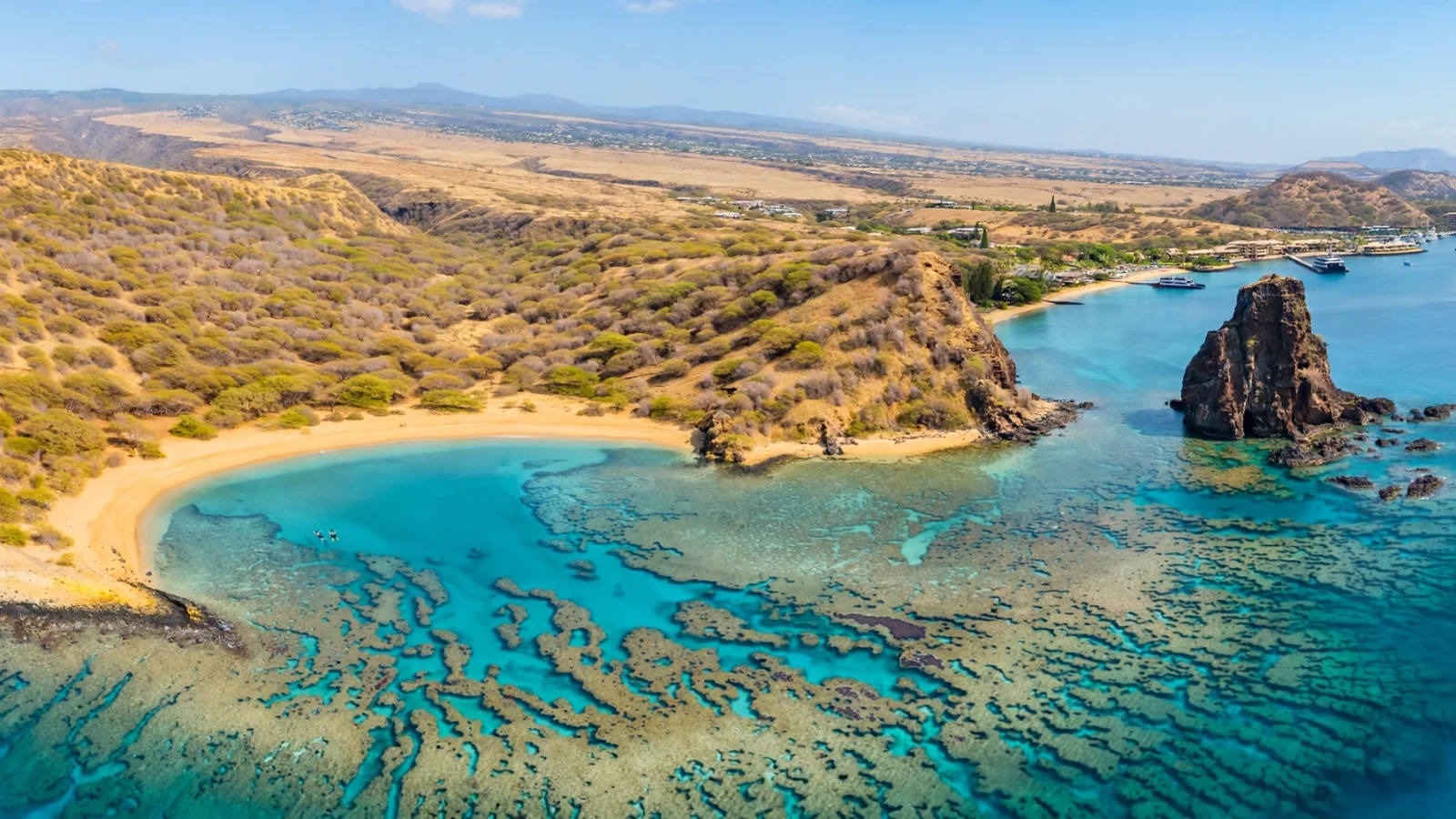
The short answer: Lanai rewards travelers who come for the water first. Start with a morning snorkel at Hulopoe Beach, Lanai’s only great shore-snorkeling beach, then let the island’s emptiness do the rest: a boat trip to the sea caves called the Cathedrals, a walk out to Sweetheart Rock, and a 4WD afternoon among the red rocks of the Garden of the Gods. Everything below is ranked by what actually delivers on a day trip or a short stay, with the snorkeling detail most guides skip. For the island-wide snorkeling picture, start with our Lanai snorkeling hub.
Lanai is Hawaii’s smallest inhabited island, with no traffic lights, one small plantation town, and only a few thousand residents. That is the whole appeal, and the whole planning problem. There are no snorkel rental shops on the island, no lifeguards at any beach, and only a handful of places to eat, so a little preparation goes a long way. Most visitors arrive on the ferry from Maui, which takes about an hour from Maalaea to Manele Harbor. If you are building a Maui trip around it, see our best things to do in Maui and the Maui snorkeling hub.
Lanai quick picks
| Activity | Best for | Time needed | What to know |
|---|---|---|---|
| Snorkel Hulopoe Beach | First-time Lanai visitors | 2-3 hours | Free; no lifeguard; mornings are calmest |
| Boat-snorkel the Cathedrals | Confident swimmers | Half day | Boat-only; book ahead |
| Sweetheart Rock walk | Photos and sunset | 1 hour | Short trail from Hulopoe |
| Garden of the Gods | Sunset and stargazing | Half day | 4WD only; no facilities |
| Shipwreck Beach | Solitude and photos | Half day | Look, do not swim |
| Lanai City walk | Lunch and local life | 1-2 hours | Small town; few shops |
| Munro Trail | Hikers | Half to full day | 12.8 miles; start early |
| Lanai Cat Sanctuary | Families and cat lovers | 1-2 hours | Check visiting hours first |
1. Snorkel Hulopoe Beach, Lanai’s one great shore reef
Hulopoe Beach is the reason most snorkelers come to Lanai, and it is the only beach on the island where you can walk in from the sand onto a protected reef. The bay sits inside the Manele-Hulopoe Marine Life Conservation District, a 309-acre reserve protected since 1976, and the reef runs about 6 to 22 feet deep just offshore. Enter from the sand, swim out, then work the reef along the left, eastern side, where the coral and fish are thickest. Expect reef fish, sea turtles, and on calm mornings, spinner dolphins cruising the bay. The tide pools at the eastern end are worth a slow look before you get in.
Go in the morning, before the trade winds pick up and chop the surface. There is no lifeguard, no fee, and no gear rental here, so bring your mask, fins, and snorkel with you, or rent on Maui before the ferry. Do not stand on coral, do not take shells or coral, and keep the 50-yard distance from dolphins and 10 feet from turtles. This is a summary: our full Hulopoe Beach snorkeling guide covers entry, the reef layout, conditions, and the ferry in detail, and our shore snorkeling guide and best time to snorkel in Hawaii help you pick your hour. Read our snorkeling safety guide for Hawaii before your first swim here.
Skip if: the surf is up or the wind is already blowing hard; Hulopoe is a fair-weather beach, and a rough day here is a good day for Lanai City instead.
2. Boat-snorkel the Cathedrals and Shark Fin
Everything else worth snorkeling on Lanai is boat-only, and the Cathedrals are the headliner. Cathedral I and Cathedral II are lava sea caves off Lanai’s south coast where sunlight pours through the rock in beams; the Shark Fin is a jagged rock formation rising out of the water nearby. Boats stop here for snorkeling and diving, and the water is deeper, clearer, and wilder than Hulopoe, with strong currents in places. This is a trip for confident swimmers, not a first snorkel.
Book a morning boat, when the sea is usually calmest, and confirm what the trip includes: some boats add a second stop, such as the Pu’u Pehe sea caves or a drift along Manele Bay. Compare your options in our Lanai vs Molokini snorkeling guide and our Molokini Crater snorkeling guide, and see our Hawaii snorkeling tours guide for how to judge an operator. Our Lanai snorkeling hub maps the boat-only spots against the one shore option so you can see the split before you book.
Skip if: you get seasick or you are a nervous swimmer; the caves are beautiful from the boat, but the snorkeling here is not gentle.
3. Walk to Sweetheart Rock (Pu’u Pehe)
From the tide pools at the eastern end of Hulopoe, a short trail climbs the low cliffs to Sweetheart Rock, an 80-foot sea stack standing just off the point. The walk takes about 15 to 20 minutes each way and is the best short hike on the island: the whole of Manele Bay opens up below you, and on a clear day you can see Maui across the channel. Local legend says the rock is named for Pehe, a maiden whose story ends in tragedy here, which is why the place feels quieter than a viewpoint has any right to feel.
Go in the morning for the snorkel, stay for the walk, or come back at sunset, when the rock turns gold. Wear shoes with grip, not beach sandals, and keep back from the cliff edges. The tide pools below are best at low tide; watch your footing on wet rock. Our Hulopoe Beach snorkeling guide covers the trail from the beach end, and the Lanai snorkeling hub puts the rock in the context of the whole bay.
Skip if: it is raining or the cliffs are wet; the trail is short, but the rock is slick and the drop is real.
4. See the Garden of the Gods (Keahiakawelo)
Keahiakawelo, the Garden of the Gods, is a field of red, orange, and purple boulders scattered across a dry plateau on Lanai’s northwest side, and it looks like nowhere else in Hawaii. The colors shift all day and peak at sunset, when the whole place glows. There is no shade, no water, and no facilities, so bring both, and stay on the paths: the formations are fragile and the ground is uneven.
You need a 4WD vehicle to get here; the drive takes about 45 minutes from Lanai City over unpaved roads. Plan it as a half-day trip, paired with Shipwreck Beach or Polihua, and check conditions before you set out. Our Lanai snorkeling hub explains how the island’s dry northwest side fits with the snorkeling coast, so you can plan the driving day and the water day separately.
Skip if: you do not have a 4WD vehicle; rental cars are not allowed on these roads, and the walk in is not realistic.
5. Visit Shipwreck Beach (Kaiolohia)
Shipwreck Beach is an eight-mile stretch of wild north-shore sand named for the rusting wreck of a World War II-era ship that sits just offshore, visible at low tide. It is one of the most photographed places on Lanai and one of the least swimmable: the currents are strong and the shore break is rough, so this is a beach for walking, looking, and beachcombing, not for getting in the water. Driftwood piles along the high-tide line, and on a weekday you may have miles of it to yourself.
Reach it by 4WD from Lanai City, and treat it as a half-day outing with the Garden of the Gods. Bring water, sun protection, and a camera, and check the surf before you go. Our Lanai snorkeling hub explains why this beach is on the no-swim list, and our snorkeling safety guide for Hawaii covers the currents that make some Lanai beaches look calmer than they are.
Skip if: you are looking for a swim beach; Shipwreck Beach is for looking, and the swimming is at Hulopoe.
6. Find solitude at Polihua Beach
Polihua is a two-mile white-sand beach on Lanai’s far northwest coast, and it may be the most remote beach you can reach by car in Hawaii. There are no facilities, no lifeguard, and usually no one else there. Sea turtles sometimes haul out on the sand, which is one more reason to keep your distance and give them room. The water here is rough and the beach is exposed, so do not plan on swimming.
You need a 4WD vehicle, and the road is rough enough that the trip is the adventure. Go with a full tank, water, and snacks, and plan to be back before dark. Our Lanai snorkeling hub lists Polihua among the island’s no-swim beaches, and our guide to snorkeling with turtles in Hawaii explains the 10-foot rule that applies whenever turtles are on the beach or in the water.
Skip if: you are short on time or driving a regular rental car; Polihua is a half-day commitment, not a quick stop.
7. Wander Lanai City, the plantation town
Lanai City is the island’s only town: a grid of plantation-era storefronts around Dole Park, up in the cool pine-forested uplands about a 20-minute drive from the harbor. It is small enough to walk in an hour, and that is the point. Browse the shops, have lunch at a cafe, and look at the island’s history in the storefronts: this was a company town built for pineapple workers, and it still feels like one.
Come here for lunch after a morning at Hulopoe, or as a cool-down after a dusty drive to the Garden of the Gods. Shops and restaurants keep limited hours, so do not assume everything is open, and do not expect nightlife. For the return leg, our Maui snorkeling hub and best things to do in Maui guide pick up where Lanai City leaves off.
Skip if: you are on a tight day-trip schedule and would rather spend the hour in the water; Lanai City is charming, but Hulopoe is why you came.
8. Visit the Lanai Cat Sanctuary
The Lanai Cat Sanctuary is a hillside rescue home to hundreds of cats, and it is one of the island’s most loved stops. Visitors can walk among the cats, sit with them, and play with them; the sanctuary runs on donations and visits. It is an easy, gentle stop for families and a good break from the sun, and it is unlike any other attraction in Hawaii.
Check the current visiting hours before you go, as they change, and consider a donation or a gift from the shop. Pair it with a Lanai City lunch, since the sanctuary is a short drive from town. If you love quiet islands generally, our Molokai snorkeling hub covers Hawaii’s other slow-paced island.
Skip if: you have allergies or you are short on time; the cats will still be there on your next trip.
9. Hike the Munro Trail
The Munro Trail runs 12.8 miles along Lanai’s central ridge, through pine forest and open grassland, with views to Maui, Molokai, and on clear days the Big Island. It is the island’s big hike, and it is best done as a long morning with an early start, plenty of water, and a plan for getting back. The trail can be muddy after rain, and the weather up on the ridge changes fast.
Many visitors drive part of it in a 4WD and walk the best sections rather than hiking the whole thing. Either way, tell someone your plan, carry more water than you think you need, and watch the weather. Our best time to snorkel in Hawaii guide doubles as a seasons guide for planning a hike around the calmest mornings.
Skip if: you are not a strong hiker or the trail is wet; the ridge is exposed and there is no quick exit.
10. Hike Koloiki Ridge
Koloiki Ridge is the shorter, friendlier ridge hike: about four miles out and back from near Lanai City, with panoramic views over the island and across to Molokai and Maui. It gives you most of what the Munro Trail offers in half the time, and the morning light here is some of the best on the island.
Start early, bring water, and wear shoes with grip. This is a good second hike if you have two days on Lanai, or a morning walk before an afternoon at Hulopoe. For the water side of the same day, our Maui snorkeling map shows how Lanai sits in the channel between Maui and Molokini, which is why the views from the ridge are so wide.
Skip if: the wind is up on the ridge; the trail is exposed and the gusts are no joke.
11. Watch spinner dolphins from shore at Hulopoe and Manele Bay
Spinner dolphins rest in Manele Bay on calm mornings, and you can often watch them from the beach at Hulopoe without getting in the water at all. They travel in pods, leap and spin, and then move on; the best viewing is early, from the sand or the rocks above the tide pools, with binoculars if you have them. It is one of the best free wildlife shows in Hawaii, and it costs nothing but an early alarm.
Keep the legal distance: stay at least 50 yards from dolphins, and never swim after them or try to get close. If they come to you while you are snorkeling, stay still and let them pass. Our Lanai snorkeling hub explains the dolphin rules for the bay, and our guide to snorkeling with turtles in Hawaii covers the wildlife rules that apply across the islands.
Skip if: the bay is rough; the dolphins do not rest here on windy days, and neither should you be in the water.
12. Go whale watching in winter (December to April)
From December to April, humpback whales fill the channel between Maui and Lanai, and Lanai is one of the best places in Hawaii to see them. Boat tours run from Maui and from Manele, and on a good day you can also spot blows and breaches from the shore at Hulopoe. The Auau Channel is a whale nursery, so the animals here are often mothers with calves, and the boats keep a careful distance.
Book a morning tour, bring layers and sun protection, and expect to spend a few hours on the water. Our best time to snorkel in Hawaii guide covers the winter season, and the Maui snorkeling hub lists the Maui-side tours that pair a whale watch with a snorkel stop.
Skip if: you are visiting outside whale season; the channel is still beautiful, but the whales are not there.
13. Stargaze in one of Hawaii’s darkest skies
Lanai has almost no light pollution, and on a clear night the sky over the island is as dark as anywhere in Hawaii. The Milky Way is visible from Hulopoe and from the Garden of the Gods on moonless nights, and the stars here feel close enough to touch. It is the cheapest evening activity on the island and one of the most memorable.
Bring a blanket, a red-light torch if you have one, and a layer: it cools down fast after sunset, especially up in Lanai City. Check the moon phase before you plan around it. Our guide to the best Hawaiian island for snorkeling ranks the islands for water, but Lanai wins the night sky by a wide margin.
Skip if: it is cloudy or a full moon; the stars need a dark, clear sky to show off.
14. Compare Lanai and Molokini before booking a boat day
Many Maui boat tours pair a Lanai stop with Molokini Crater, and the two are very different snorkels. Molokini is a flooded crater with famously clear water and a crowded, boat-only reef; Lanai’s Cathedrals are wilder sea caves with stronger currents and fewer people. Which one you prefer depends on how confident a swimmer you are and whether you want a calm, clear swim or an adventure.
Read our Lanai vs Molokini snorkeling guide before you book, then see the Molokini Crater snorkeling guide for tour prices and times. Our Hawaii snorkeling tours guide explains what to check in a booking: departure point, cancellation terms, and whether a second stop is included.
Skip if: you only have one boat day and you already know which experience you want; book that one and enjoy it.
15. Watch the sunset from Manele Harbor and Hulopoe
End the day where you started it. The sun sets over the water from Hulopoe Beach and from the harbor at Manele, lighting up Sweetheart Rock and the cliffs behind the bay. It is a short walk from the beach to the harbor, and the light here is warm and low for a long time. Bring a layer; the breeze off the water cools fast once the sun is down.
Day-trippers should watch the time: catch the sunset only if your ferry is a later one, and confirm the last boat before you settle in. Our Hulopoe Beach snorkeling guide covers the walk from the beach to the harbor, and our best things to do in Maui guide picks up the evening back on Maui.
Skip if: you are on an early ferry home; the sunset is lovely, but missing the boat is not.
Planning your Lanai trip: ferry, getting around, where to stay
Getting there. The Expeditions ferry runs from Maalaea on Maui to Manele Harbor on Lanai in about an hour, with several sailings a day. Book ahead, take an early boat, and confirm the last boat back before you leave Maui; day-trippers who miss it are staying the night. Our Hulopoe Beach snorkeling guide covers the ferry in detail, and our best things to do in Maui guide helps you plan the Maui side. Small planes also fly to Lanai’s airport from Honolulu and Maui.
Getting around. Hulopoe Beach and Sweetheart Rock are a short walk from Manele Harbor, and Lanai City is a 20-minute drive away. Everything else needs a vehicle, and the north-shore beaches need a 4WD: book a Jeep well ahead, as the island’s fleet is small. There is no rideshare on Lanai, and taxis are few, so do not plan on hailing a ride.
Where to stay and eat. Lanai has two resorts, one on the beach at Manele Bay and one in the pine forest near Lanai City, plus a small hotel in town. Rooms are few, so book early. Eating is concentrated in Lanai City, with a handful of cafes and restaurants; stock up on water and snacks before a driving day, as there are no shops at the beaches.
What to pack. Bring your own snorkel gear, or rent it on Maui before the ferry, because there are no snorkel rental shops on Lanai. Pack reef-safe sunscreen, water, a hat, and layers for the cool uplands and the windy north shore. Our Hawaii snorkeling gear checklist and shore snorkeling guide cover the rest.
Safety first. There are no lifeguards anywhere on Lanai, so swim within your ability and never snorkel alone. In the Manele-Hulopoe Marine Life Conservation District, fishing is not allowed and you must not take coral or shells; use reef-safe sunscreen and do not stand on the reef. Check the surf and wind every morning before you get in, and read our snorkeling safety guide for Hawaii before your trip.
Frequently asked questions
Is Lanai worth visiting?
Yes, if you want quiet beaches, great snorkeling, and an island without crowds. Lanai is best for snorkelers, hikers, and travelers who like slow days. It is not the island for nightlife, shopping, or resort-hopping; if that is your trip, stay on Maui and visit Lanai for a day instead. Our Lanai snorkeling hub will help you decide.
Can you do Lanai as a day trip from Maui?
Yes. The ferry from Maalaea takes about an hour, and a day trip comfortably fits a morning snorkel at Hulopoe, the walk to Sweetheart Rock, and lunch in Lanai City. Take an early ferry, book ahead, and confirm the last boat back. The full ferry and timing details are in our Hulopoe Beach snorkeling guide.
Is there good snorkeling on Lanai?
Yes, and it is some of the best shore snorkeling in Hawaii. Hulopoe Beach is the island’s one great shore reef, inside a marine reserve protected since 1976, and the Cathedrals and Shark Fin are excellent boat-only spots. See our Lanai snorkeling hub and our Lanai vs Molokini snorkeling guide to compare.
Do you need a car on Lanai?
For Hulopoe Beach and Sweetheart Rock, no: both are a short walk from Manele Harbor. For Lanai City, the Garden of the Gods, Shipwreck Beach, and Polihua, yes, you need a vehicle, and a 4WD for the unpaved north-shore roads. Book ahead, as the island’s rental fleet is small.
Are there lifeguards on Lanai beaches?
No. There are no lifeguards at any beach on Lanai, including Hulopoe. Swim within your ability, check conditions each morning, never snorkel alone, and read our snorkeling safety guide for Hawaii before you go.
What is the best time to visit Lanai?
For snorkeling, mornings are best, before the trade winds pick up, and summer usually brings the calmest water on the south shore. Winter brings humpback whales from December to April and bigger surf on the north shore. Our best time to snorkel in Hawaii guide breaks the seasons down.
More Lanai and Maui snorkeling: start with our Lanai snorkeling hub and Hulopoe Beach snorkeling guide, compare Lanai vs Molokini, then plan the Maui side with our Maui snorkeling hub, best things to do in Maui, and Molokini Crater snorkeling guide. For Hawaii’s other quiet island, see the Molokai snorkeling hub.
Researched by Umar Attique · Updated November 12, 2026