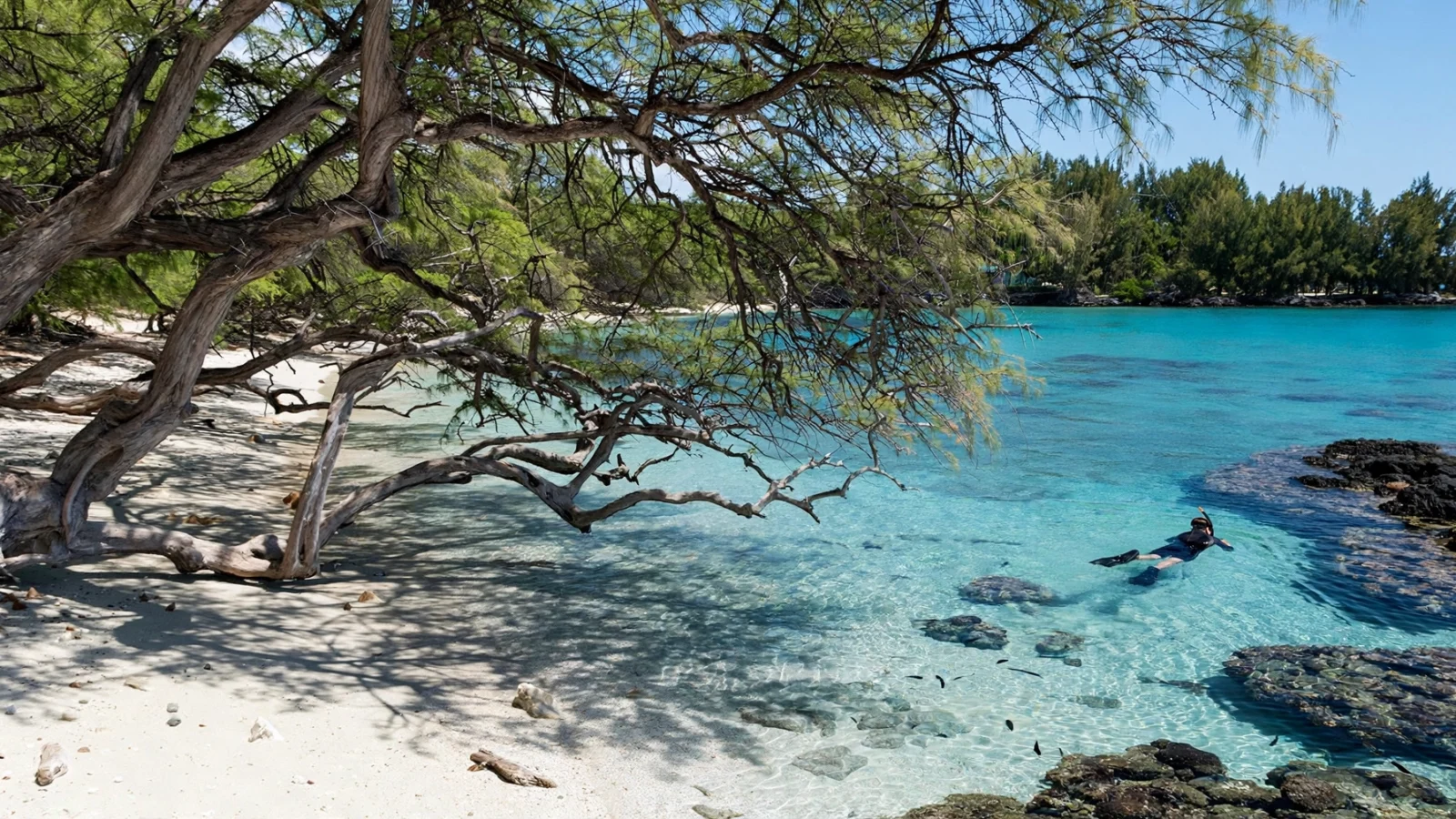
Every Kohala Coast beach has a trade-off. Hapuna has the famous sand but no shade and a shorebreak that shuts snorkeling down. Waikoloa’s A-Bay has the facilities but not the clearest water. Waialea Beach — the bay everyone calls Beach 69 — splits the difference: a protected Marine Life Conservation District reef, real snorkeling at three distinct zones, and something almost no other Kohala beach offers, trees growing right down to the sand so you can spend the whole day in the shade.
It also has the quirks nobody warns you about: a parking lot that fills early, a beach that physically shrinks in winter, and a name that comes from a utility pole. This guide covers Waialea purely as a snorkeling spot — where the reef actually is, what the MLCD rules mean for your swim, what it costs, and when to pick Beach 69 over its neighbours.
Quick verdict
Yes — Waialea is one of the best shore snorkels on the Kohala Coast when conditions are calm, and the best shaded one. The bay has been a Marine Life Conservation District since 1985, so fish densities are noticeably higher than at unprotected resort beaches nearby. The honest catches: there is no lifeguard, the small lot fills early on weekends, and in winter the surf can wash much of the sand away and roughen the entry. Summer mornings are the sweet spot.
| At a glance | |
|---|---|
| Protected status | Waialea Bay Marine Life Conservation District (est. 1985) — nothing may be taken from the water |
| Best zones | South end rocks (easiest), centre rocky point, north point (deepest) |
| Entry | Sandy in summer; rockier in winter when the sand washes out |
| Facilities | Restrooms and showers by the lot; no lifeguard; no rentals or food |
| Parking | Small state-park lot; non-resident fee applies (see below) |
| Shade | Excellent — kiawe trees reach the sand, unique on this coast |
Why “Beach 69”?
The bay’s real name is Waialea. Locals named it for the number 69 utility pole that marked the turn-off on Old Puakō Road — drive in and you still pass the numbered poles, turning left between 69 and 70. The nickname stuck so completely that most visitors never learn the Hawaiian name. Both names mean the same beach: the shaded bay just south of Hapuna Beach, off Highway 19 between the Waikoloa resorts and Kawaihae.
The reef: three zones, three different swims
Waialea’s snorkeling spreads across the bay rather than sitting in one spot, and the zones suit different swimmers.
The south end — start here. The best-known reef runs along the southern side of the bay, around the large rocks rising out of the water. This is the easiest entry and the most forgiving water, with reef fish holding in the shallows around the rocks — the right first swim for newer snorkelers and families on a calm day.
The centre point. A rocky point inside the bay carries bigger coral heads, in roughly 7–10 feet of water as you circle it. This is where the reef feels most like a proper coral garden, and where turtles are most often reported cruising the edges.
The north point. Following the rocky point at the north end of the beach takes you into deeper water, around 15 feet, with more coral around the rocks. It is the most exposed of the three zones — save it for genuinely calm mornings and confident swimmers.
Depths and layout are condition-dependent: Waialea’s sand moves. In summer the beach is at its widest and entries are sandy; in winter, surf pulls sand offshore, the beach narrows, and rocky patches that were buried all summer appear in the entry zones. Water shoes earn their place in your bag here year-round.
What you will see
MLCD protection shows. Expect the standard Kohala reef cast in better-than-average numbers: Hawaiian sergeants and butterflyfish over the rocks, parrotfish working the coral, turtles as regular visitors rather than lucky sightings, and eels tucked into the rocky structure if you look slowly. The centre point’s coral heads hold the densest fish life. Nothing in the bay may be taken, touched or fed — the density you are enjoying exists precisely because the rules have held since 1985. Keep the standard 10 feet (3 m) from turtles, and let monk seals — rare visitors here — rest undisturbed if one hauls out.
The MLCD rules, in plain English
Waialea Bay’s Marine Life Conservation District status (Hawaiʻi DLNR) means: no taking, injuring or possessing any marine life; no fishing gear for taking marine life in the water; no feeding fish; and no removing sand, rock or coral. Snorkeling, swimming and diving are all welcome — the district exists to protect the reef, not to keep people out. It is the same style of protection as Pupukea on Oahu and Honolua on Maui, and it is a large part of why this bay out-snorkels the unprotected beaches either side of it.
Best time to snorkel Waialea
Season: late spring through early autumn (roughly May–October) for the widest sand, calmest entries and best visibility. Winter (November–April) brings north-west swell: the sand washes out, entries get rocky and surge-y, and some days are simply not snorkelable — though calm winter mornings do happen, and humpback whales pass outside the bay in season.
Time of day: morning, before the trade winds build and before the lot fills. Afternoon wind chop is the normal pattern on this coast.
The day-of check: if Hapuna — minutes away — is showing shorebreak, Waialea’s entries will be rougher than they look from the lot. Check conditions before you commit; our best time to snorkel in Hawaii guide explains the seasonal pattern island by island.
Getting there, parking and fees
Beach 69 — Waialea Bay beach in Hawaii — sits on Highway 19 between the Waikoloa resorts and Kawaihae, about 23 miles north of Kona International Airport (KOA). The beach most visitors mean by “Beach 69” is Waialea Bay itself, a sheltered cove inside the Hapuna Beach State Recreation Area.
Beach 69 directions from Kona
The Beach 69 directions are the same whether you are coming from the airport or from Kailua-Kona town: take Highway 19 north and watch for the Puako turn-off.
- From Kona International Airport (KOA) or Kailua-Kona, take Highway 19 (Queen Kaahumanu Highway) north.
- Drive past the Waikoloa resort area and the Mauna Lani Resort on your left.
- Turn left (makai, toward the sea) onto Puako Beach Drive — the turn is just south of the Hapuna Beach turn-off.
- Take the first right onto Old Puako Road.
- About half a mile along, turn left between utility poles 69 and 70 into the signed, gated paved parking lot.
- Walk west from the lot to the sand — about 400 feet.
Get directions: Google Maps directions to Waialea Bay (Beach 69)
Coming from the north, or if you miss the turn
If you are driving south from Kawaihae or the Kohala towns, follow the signs to Hapuna Beach and continue past the Hapuna lot — Beach 69 sits just south of it. If you miss the Puako Beach Drive turn, take the Hapuna Beach exit instead and drive back south on Old Puako Road; or park at Hapuna and walk south along the sand to Waialea.
Waialea Beach parking: hours, fees and what to do when the lot is full
Waialea is managed as part of the Hapuna Beach State Recreation Area. As of 2026, non-residents pay a state-park fee of $10 per vehicle plus $5 per person (Hawaii residents are exempt) — rates change, so check the signs at the lot.
The park is open daily from 7:00 a.m. to 7:30 p.m., and the gates close at 8:00 p.m. (Hawaii State Parks, Hapuna Beach State Recreation Area). Plan to be out before the gates close — there is no overnight parking.
The lot is small and fills early on weekends and holidays; when it is full, the day is usually better spent at Hapuna, which has the large state-park lot a few minutes north.
Restrooms and outdoor showers are by the lot. There is no lifeguard, no rental stand and no food at Waialea — bring gear, water and lunch. The Ala Kahakai National Historic Trail crosses the beach if you want a shaded coastal walk between swims.
Safety, honestly
- No lifeguard. Waialea is a self-rescue spot: snorkel with a buddy, stay inside the bay, and be conservative — see our Hawaii snorkeling safety guide before any unguarded spot.
- Winter surf. If waves are breaking across the bay mouth or the entry looks like a washing machine, it is a watch-from-the-shade day, not a swim day.
- Rocky winter entries. When the sand has washed out, enter slowly, fins in hand, and exit at the same spot you scouted.
- Sun and shade. The trees are a gift, but the walk and the swim are full-sun — reef-safe sunscreen and a rash guard (see the gear checklist).
Newer snorkelers: the south end on a calm summer morning is a kind Beach 69 introduction; if you are still building confidence, read the beginners’ guide and consider a lifeguarded beach for your very first swim.
Waialea vs Hapuna vs A-Bay
| Waialea (Beach 69) | Hapuna | Waikoloa (A-Bay) | |
|---|---|---|---|
| Reef quality | Best of the three — MLCD-protected coral and fish | Rocky edges only; sandy centre | Patch reefs; turtle-heavy |
| Shade | Excellent — trees on the sand | Almost none | Palm lawn, some shade |
| Lifeguard | No | Yes | No |
| Parking | Small lot, fills early | Large state-park lot | Resort-area parking |
| Best for | Snorkelers who want reef + shade + quiet | Beach days, boogie boarding, first swims | Turtles and easy resort access |
Pick Waialea for the reef and the shade, Hapuna for a classic big-beach day with lifeguards, A-Bay for turtles straight off a resort lawn. The full comparison map is in our Big Island hub; for a second shaded swim, Mauna Kea Beach is the next bay north.
FAQ
Can you snorkel at Waialea Beach?
Yes — it is one of the Kohala Coast’s best shore snorkels. The MLCD-protected bay has three reef zones: easy rocks at the south end, a coral-head point in the centre, and a deeper north point. Entry is sandy in summer and rockier in winter.
Why is it called Beach 69?
The nickname comes from the number 69 utility pole that marked the turn-off on Old Puakō Road — you still turn left between poles 69 and 70 to reach the lot.
Is Waialea Beach good for beginners?
On a calm summer morning, yes — the south end is an easy, forgiving swim. In winter, or when any surf is running, it is not a beginner spot, and there is no lifeguard at any time of year.
How much does Waialea Beach cost?
As of 2026, non-residents pay the Hāpuna Beach State Recreation Area fee: $10 per vehicle plus $5 per person. Hawaiʻi residents are exempt. Rates can change — check the lot signage.
Is there a lifeguard at Beach 69?
No. Waialea has restrooms and showers by the lot but no lifeguard, no rentals and no food. Snorkel with a buddy and stay inside the bay.
When is the best time to snorkel Waialea?
Summer mornings (roughly May–October), before the trade winds build. Winter north-west swell washes the sand out and can make entries rough or unsafe.
What fish and animals will I see?
Sergeants, butterflyfish, parrotfish and other reef fish in better numbers than unprotected beaches, plus turtles regularly and eels in the rocks. Keep 10 feet (3 m) from turtles.
Can I fish or take shells at Waialea?
No. The bay is a Marine Life Conservation District: no taking, injuring or possessing marine life, no fishing gear for taking marine life, no feeding fish, and no removing sand, rock or coral.
How do I get to Beach 69?
Take Highway 19 north from Kona International Airport, turn left onto Puako Beach Drive just south of the Hapuna Beach turn-off, take the first right onto Old Puako Road, then turn left between utility poles 69 and 70 into the gated lot. It is about 23 miles from the airport, and the walk from the lot to the sand is about 400 feet.
What time does the Beach 69 parking lot open and close?
The park is open daily from 7:00 a.m. to 7:30 p.m., and the gates close at 8:00 p.m., per Hawaii State Parks (Hapuna Beach State Recreation Area). Arrive early on weekends and holidays — the small lot fills fast.
The bottom line
Waialea Beach (Beach 69) is the Kohala Coast snorkel for people who value reef quality and shade over lifeguards and facilities. Go on a summer morning, park before the lot fills, start at the south end, work toward the centre point as your confidence settles, and give the bay the respect its MLCD status asks for — take photos, leave everything else. For the rest of the island’s snorkeling, start with our Big Island snorkeling hub.
Staying a few more days on this coast? The next bay south, Puako Bay, fronts the little village along Puakō Beach Drive and offers a quieter, local-feeling reef swim.