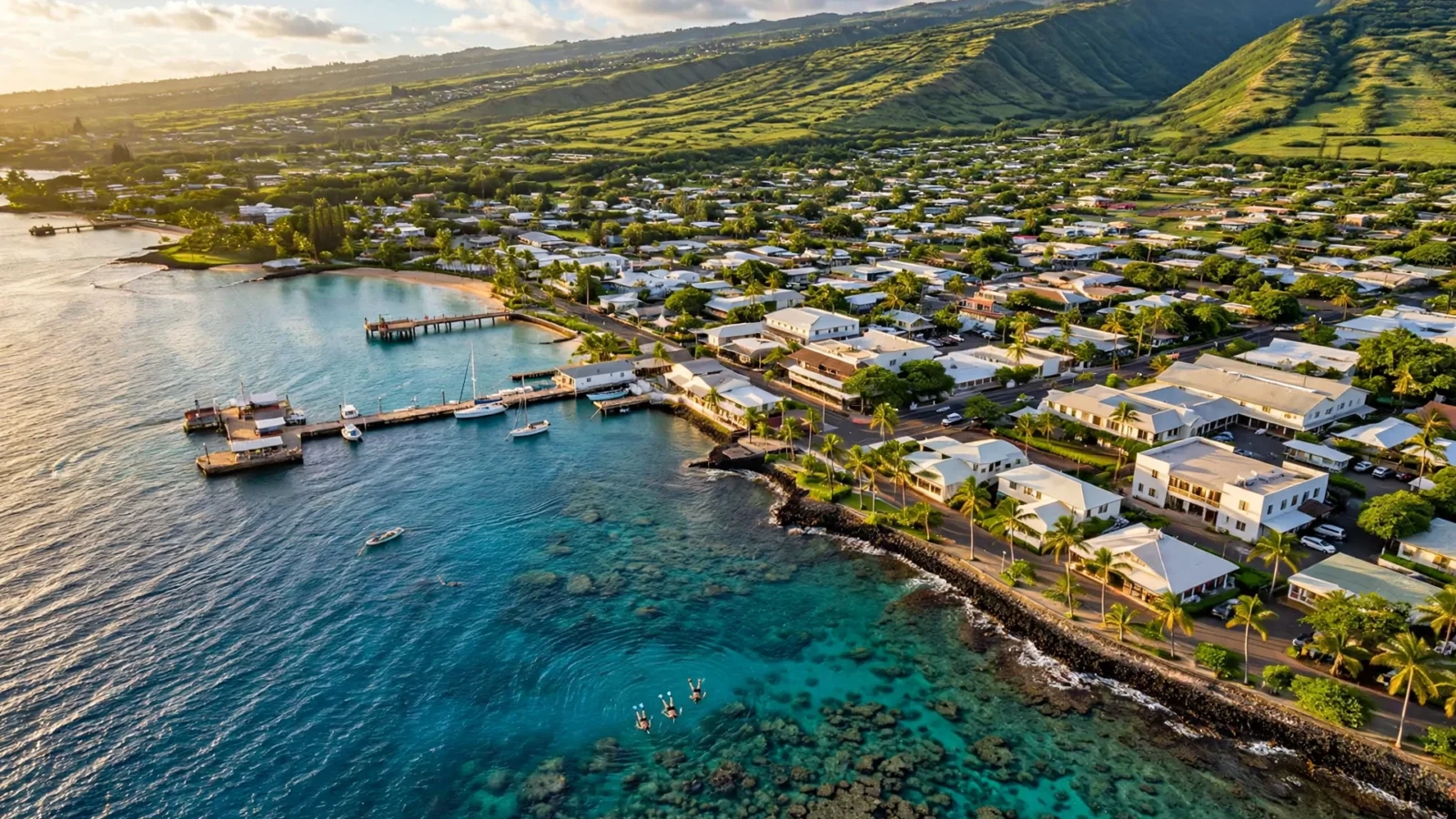
Kailua-Kona is the sunny, dry side of the Big Island — a small walkable town on Kailua Bay where the best things to do are all close together: world-class snorkeling, a manta ray night swim, Kona coffee farms, Hawaiian history, and beaches that change character with the swell. This guide ranks the 15 best things to do in Kailua-Kona for 2026, snorkeling first, with the practical detail the big listicles skip: where to enter the water, where to park, what it costs, and when to go.
Short on time? The three things you should not miss are the manta ray night snorkel, a morning snorkel at Kamakahonu Beach or Two Step, and a Kona coffee farm tour on the slopes of Hualalai. Everything else below is ranked by how good it actually is, not by how often it appears on other lists.
The 15 best things to do in Kailua-Kona at a glance
| # | Activity | Type | Cost | Best for |
|---|---|---|---|---|
| 1 | Snorkel Kamakahonu Beach | Snorkeling | Free | Beginners, families, turtles |
| 2 | Manta ray night snorkel | Snorkeling / tour | Paid tour (free viewing deck option) | Everyone — Kona’s signature experience |
| 3 | Snorkel Two Step at Honaunau Bay | Snorkeling | Free | Confident swimmers, reef fish, dolphins |
| 4 | Kahalu’u Beach Park | Snorkeling | Free | Beginners, turtles, lifeguarded swimming |
| 5 | Kealakekua Bay (Captain Cook) | Snorkeling | Boat/kayak tour or free hike | Clear water, coral, history |
| 6 | Kua Bay and Magic Sands | Beach day | Free | Swimming, sunsets, body surfing |
| 7 | Kona coffee farm tour | Food / culture | Free tastings at several farms | Coffee lovers, rainy mornings |
| 8 | Pu’uhonua O Honaunau (Place of Refuge) | History | Small per-vehicle fee | Culture, photography |
| 9 | Kaloko-Honokohau National Historical Park | History / wildlife | Free | Petroglyphs, basking honu |
| 10 | Walk downtown Ali’i Drive | Town / history | Free | An evening stroll, shops, food |
| 11 | Kona farmers markets | Food / shopping | Free to browse | Local food, souvenirs |
| 12 | Sunset (and the green flash) | Free | Free | Everyone — end of every day |
| 13 | Whale watching (Dec–Apr) | Wildlife / tour | Paid tour | Winter visitors |
| 14 | Stargaze on Mauna Kea | Night / tour | Paid tour or free visitor center | Clear winter nights |
| 15 | Day trip south: Painted Church, Ho’okena, Punalu’u | Drive | Free (fuel only) | A full spare day |
1. Snorkel Kamakahonu Beach (King Kam) — the calmest water in town
Kamakahonu Beach is the small protected cove right in downtown Kailua-Kona, in front of King Kamehameha’s Kona Beach Hotel — and it is the easiest snorkeling in town. A lava-rock breakwater keeps the water calm, the sandy entry is gentle, and green sea turtles (honu) rest on the sand and graze in the shallows most mornings. If you only snorkel once in Kailua-Kona and you want it easy, start here.
Go in the morning, before the afternoon wind picks up and before the small parking lot fills. The reef is shallow and close to shore, so this is a genuine beginner spot — good for kids, first-timers, and anyone who wants a relaxed swim rather than a deep reef. Our full Kamakahonu Beach snorkeling guide covers the entry, the two zones of the cove, and the King Kamehameha history behind the name.
2. Manta ray night snorkel — Kona’s signature experience
The manta ray night snorkel is the single best thing to do in Kailua-Kona, and the reason many people plan their whole trip around one evening. After dark, tour boats anchor off the Kona coast and shine lights into the water. The lights attract plankton, the plankton attract manta rays, and the rays — some with wingspans wider than a car — barrel-roll inches below you while you float on the surface holding a light board. No diving experience is needed: you float, you watch, the mantas do the show.
Boats leave from Honokohau Harbor, just north of town, and from Keauhou Bay to the south. Book ahead, especially in summer and around the holidays, and pick a tour that states its manta-sighting policy clearly — sightings are very reliable here, but they are wild animals and no honest operator guarantees them. If a boat tour is not for you, there is a free option: the viewing deck at the Outrigger Kona Resort & Spa in Keauhou, where mantas often come to the lights and you can watch them from above the water without getting wet.
Read our full manta ray night snorkel guide before you book — it covers what to expect, which harbor to choose, and what to do if you are prone to seasickness.
3. Snorkel Two Step at Honaunau Bay
Two Step is the snorkel spot Kona locals recommend when you ask where the good reef is. It sits in Honaunau Bay, about 20 minutes south of downtown, next to Pu’uhonua O Honaunau National Historical Park. The entry is exactly what the name says: two natural steps in the lava rock that drop you into deep, clear water right over the reef. There is no sandy beach here — this is a shore-entry reef dive for confident swimmers, not a wading spot.
The payoff is the best shore-accessible reef in the Kona area: dense coral, clouds of reef fish, and spinner dolphins that sometimes rest in the bay in the morning. Go early, when the water is calmest and the light is best, and bring reef-safe sunscreen and water shoes for the lava rock. Our Two Step snorkeling guide covers the entry in detail, the parking situation, and how to pair it with the Place of Refuge next door.
4. Kahalu’u Beach Park — turtles and an easy reef
Kahalu’u Beach Park, about 10 minutes south of downtown, is the most forgiving snorkel beach in Kona. A shallow reef sits just offshore in calm, protected water, a county lifeguard is on duty, and honu are almost always grazing in the shallows. The entry is over rock rather than sand, so water shoes help, and the parking lot fills by mid-morning — arrive before 9 a.m. if you want a space and the calmest water.
This is the best pick for families and anyone who wants lifeguarded water with real marine life. The reef is shallow enough that kids can see fish and turtles without swimming far. See our Kahalu’u Beach Park snorkeling guide for the entry point, the turtle etiquette, and what the reef looks like in winter swell.
5. Kealakekua Bay (Captain Cook) — boat, kayak or hike
Kealakekua Bay, about 30 minutes south of Kailua-Kona, holds the clearest water in Hawaii — a marine life conservation district with coral gardens, tropical fish, and the Captain Cook Monument on the far shore. You cannot drive to the monument side: you get there by boat tour, by kayak (with a landing permit), or on foot via the Ka’awaloa Trail, a steep 3.8-mile round-trip hike with no shade and no water on the trail.
The boat is the easy option and the best one for snorkeling, since the boats anchor right over the reef. The hike is free and rewarding if you are fit and start early, but it is a serious climb back up in the heat. Whichever way you go, morning is the time: the bay is calmest and clearest before the wind, and spinner dolphins rest in the bay in the early hours. Our Kealakekua Bay / Captain Cook snorkeling guide compares the three ways in, with costs, effort, and what you will actually see.
6. Kua Bay and Magic Sands — Kona’s best beach days
Not every Kona day has to be a snorkel day. Kua Bay (Manini’owali), about 20 minutes north of town, is the classic Kona beach: a wide crescent of white sand, turquoise water, and a lava-rock backdrop. It is a swimming and body-surfing beach more than a snorkel spot — the surf can be strong, especially in winter, so watch the conditions and stay inside your comfort zone.
Magic Sands (La’aloa), just south of downtown, is the town’s sunset beach — a small white-sand cove that sometimes loses its sand entirely to high surf in winter and then gets it back. When the sand is in and the surf is down, it is a lovely swim spot; when the surf is up, it is a bodysurfing beach for strong swimmers only. Both beaches are free, with parking lots that fill on weekends. Our guides to Kua Bay and Magic Sands cover conditions and parking for each.
7. Tour a Kona coffee farm
Real Kona coffee grows in only one place on earth: a narrow belt on the slopes of Hualalai and Mauna Loa above Kailua-Kona. A farm tour is the best non-water thing to do in Kona, and several farms offer free tours and tastings — Greenwell Farms and Mountain Thunder are the well-known free options, with others offering paid tastings and roasting demonstrations.
Go in the morning, when the farms are cool and the tours are running, and ask about the harvest season (roughly August to January) — if you visit during harvest you may see picking and processing in action. Buy beans at the farm rather than at the airport: the farm price is usually better and the roast is fresher. A coffee farm also makes a perfect rainy-morning plan, since most of the tour is under cover.
8. Pu’uhonua O Honaunau — the Place of Refuge
Right next to Two Step, Pu’uhonua O Honaunau National Historical Park is one of the most important Hawaiian cultural sites you can visit — a place of refuge where, in ancient Hawaii, those who broke kapu (sacred law) could seek sanctuary and be absolved. The park holds a reconstructed temple (heiau), carved wooden images (ki’i), a royal fishpond, and a black-lava shoreline with coconut palms that photographs beautifully at golden hour.
Allow an hour, pair it with a Two Step snorkel the same morning, and read the signs — the place makes far more sense when you know what the refuge was for. A small per-vehicle entrance fee applies. Respect the site: stay on the paths, do not climb on the structures, and remember this is a sacred place, not a photo backdrop.
9. Kaloko-Honokohau — petroglyphs, fishponds and basking honu
Just north of town, Kaloko-Honokohau National Historical Park protects one of the oldest Hawaiian settlements on the island: ancient fishponds, petroglyph fields, and a long stretch of wild coastline where honu haul out to bask on the sand. Entry is free, and the walk from the visitor area to the beach is an easy flat trail.
This is a quiet, uncrowded contrast to downtown Kona — good for a morning walk, birdwatching, and seeing honu up close (from the required distance). The ancient fishponds themselves are protected and off-limits for swimming, so treat the park as a history and wildlife walk rather than a snorkel stop. Combine it with a stop at Honokohau Harbor, where the manta boats and fishing charters tie up.
10. Walk downtown: Ali’i Drive, Kailua Pier, Hulihe’e Palace and Mokuaikaua Church
Downtown Kailua-Kona is small enough to walk end to end in half an hour, and the Ali’i Drive strip is worth an unhurried evening. Start at Kailua Pier — the start and finish of the Ironman World Championship each October — and walk south past the shops and restaurants to Hulihe’e Palace, the former summer residence of Hawaiian royalty, and Mokuaikaua Church, built in 1820 and the oldest Christian church in Hawaii.
The palace charges a small admission fee and is worth it for the royal-era furniture and the oceanfront grounds. The church is free to visit when open. Come back at sunset: the whole waterfront faces west, the light is golden, and the restaurants along Ali’i Drive fill with people watching the sun drop into the Pacific.
11. Eat and shop at the Kona farmers markets
Kona’s farmers markets are the best place to eat like a local. The Kona Farmers Market on Ali’i Drive runs several days a week with tropical fruit, macadamia nuts, Kona coffee, fresh flowers, and prepared food — go hungry and try the fruit you cannot get at home. The Keauhou Farmers Market, on Saturday mornings south of town, is smaller and more local, with crafts, baked goods, and live music.
Markets are also the cheapest souvenir stop in Kona: coffee, honey, and macadamia nuts bought here cost less than the same things at the resort shops. Bring cash for the smaller stalls, and go early for the best selection.
12. Watch the sunset (and the green flash)
Kailua-Kona faces due west, so the sunset is a daily event — and it costs nothing. Magic Sands is the classic viewing spot, with the sun dropping straight into the ocean, but anywhere along Ali’i Drive works. On a clear evening, watch the exact moment the sun touches the horizon: if the air is clear enough you may catch the green flash, a brief emerald blink as the last sliver of sun disappears. It is rare, it lasts a second, and it is worth standing still for.
For a different take on the same sunset, book an evening catamaran or dinner cruise out of Honokohau Harbor — the coastline looks completely different from the water, and the boats often pass dolphins on the way out.
13. Whale watching in winter (December–April)
From December through April, humpback whales migrate to Hawaiian waters to breed and calve, and the Kona coast is one of the best places to see them — the deep water comes close to shore here, so whales are often visible from land as well as from boats. Whale-watching tours run from Honokohau Harbor and Keauhou Bay, and the boats usually find whales quickly in season.
If you would rather not pay for a tour, scan the horizon from any west-facing beach in the morning — whale blows are visible from a long way off on a calm day. February and March are the peak months. Outside the season, the same boats run dolphin and snorkel trips instead.
14. Stargaze on Mauna Kea
Mauna Kea has some of the clearest night skies on the planet, and the drive from Kona to the visitor information station takes about an hour and a half to two hours. The station sits at 9,200 feet, runs free stargazing programs on clear evenings, and is the safe acclimatisation stop before anyone goes higher — the summit is above 13,000 feet and the thin air is a real consideration.
Do not drive to the summit in a rental car unless it is a true 4WD and you have checked the current road conditions; the standard advice is to take a guided summit tour from Kona instead. Dress warmly — it is cold at altitude even when Kona is 80 degrees — and check the cloud forecast before you go, since a cloudy summit night is a wasted drive.
15. Day trip south: Painted Church, Ho’okena and Punalu’u
If you have a spare day and a rental car, drive south. St. Benedict’s Painted Church in Honaunau is a small 19th-century church whose interior walls are covered in hand-painted scenes — one of the most photographed churches in Hawaii. Continue to Ho’okena Beach Park, a quiet black-sand cove with good snorkeling on calm days (see our Ho’okena guide), and on to Punalu’u Black Sand Beach, where honu bask on the black sand and the contrast with the green palms is unmistakable (our Punalu’u guide covers the turtles and the swimming conditions).
It is a full day — Punalu’u is roughly 90 minutes south of Kailua-Kona — so leave early, fill the tank, and plan the drive back before dark, since the south Kona roads are winding and unlit in places.
Free things to do in Kailua-Kona
Kona is an easy town to enjoy without spending much. The best free things to do in Kailua-Kona are: snorkel Kamakahonu Beach, Kahalu’u Beach Park or Two Step; swim at Kua Bay or Magic Sands; watch the sunset from Ali’i Drive; walk the Kaloko-Honokohau trails and see basking honu; watch mantas for free from the Outrigger Kona viewing deck in Keauhou; tour a coffee farm with free tastings; browse the farmers markets; and ride the Kona Trolley, the free hop-on hop-off trolley that runs along Ali’i Drive. A full day of the best of Kona can genuinely cost nothing but parking.
Things to do in Kailua-Kona with kids
Kona is a good family base because the easy stuff is also the best stuff. Kids do best at Kamakahonu Beach (calm, shallow, turtles on the sand), Kahalu’u Beach Park (lifeguarded, shallow reef), and the manta ray night snorkel — most operators take children, and the mantas are the thing kids talk about for years. The coffee farms work for older kids, the farmers markets work for all ages, and the Kona Trolley turns getting around into an activity in itself. Skip Two Step and Kealakekua with small children: both need confident swimming and have no lifeguard.
Things to do in Kailua-Kona at night
Kona after dark is quieter than Waikiki but far from empty. The manta ray night snorkel is the headline evening activity. After that: live music and hula at the restaurants along Ali’i Drive, the Keauhou farmers market’s evening events, stargazing from the Mauna Kea visitor station, and — on clear nights — the free manta viewing deck at the Outrigger in Keauhou. The town itself winds down early, so plan your evening around one activity rather than a bar crawl.
Rainy-day things to do in Kailua-Kona
Kona is the dry side of the island, so a rainy day here is usually a passing shower rather than a washout — but when the rain settles in, the best options are indoors or under cover: a coffee farm tour, Hulihe’e Palace, the shops and galleries along Ali’i Drive, the Kona Historical Society’s coffee living-history farm, and the small museums in town. If the rain is coming from the south, the north Kohala coast is often dry — Kua Bay, Hapuna and Mauna Kea Beach are a 30–45 minute drive and frequently sunny when Kona is wet. Check the radar before you drive: Kona showers are local and short-lived.
Best time to visit Kailua-Kona
The best time to visit Kailua-Kona is April through June and September through November: warm water, calmer mornings, and fewer crowds than the summer peak or the winter holidays. For snorkeling specifically, mornings are always best — the wind picks up most afternoons and the water clouds up. Winter (November to March) brings bigger swells to west-facing beaches like Kua Bay and Magic Sands, while summer is the calmest season for swimming. October is Ironman month: the town is electric but hotels book out early and prices rise. November and December are good months to visit — warm, quieter, and the humpback whales start arriving in December.
Where to stay in Kailua-Kona
Stay on or near Ali’i Drive if you want to walk to the beach, the restaurants, and the pier — the hotels and condos along the waterfront put you in the middle of everything, and the Kona Trolley covers the rest. Keauhou, about 15 minutes south, is quieter, with resort condos and the manta viewing deck. Waikoloa, about 30 minutes north, is the resort alternative with bigger beaches and more pools, but you will drive to Kona for the snorkeling and the town. Wherever you stay, a rental car is worth it: the best snorkeling, coffee farms, and day trips are all a drive away.
Getting around and parking
Fly into Kona International Airport (KOA), about 15 minutes north of downtown — and rent a car. Downtown Kailua-Kona itself is walkable, and the free Kona Trolley runs along Ali’i Drive, but everything in this guide beyond the town centre needs a car: Two Step, Kealakekua, Kua Bay, the coffee farms, and the south-coast day trip are all drives. Parking near Kailua Pier fills early — use the lots off Kuakini Highway as a fallback and walk down to the waterfront. At the beach parks, arrive before 9 a.m. for a space and the calmest water.
Frequently asked questions about Kailua-Kona
Is Kailua-Kona worth visiting?
Yes — it is the best base on the Big Island for snorkeling and ocean activities. The town is small and walkable, the water is calm most mornings, and the manta ray night snorkel, the Kona coffee farms, and the historic sites are all within a short drive. If you want nightlife and shopping, Honolulu has more of it; if you want the ocean, Kona is the better choice.
What island is Kona on?
Kona is on the Big Island of Hawaii (Hawaii Island). Kailua-Kona is the town on the west (leeward) coast; “Kona” is the district, and the airport code is KOA. Hilo is the other main town, on the wet east side, about two hours’ drive away.
How many days do you need in Kailua-Kona?
Three days covers the best of it: one day for snorkeling (Kamakahonu or Kahalu’u in the morning, manta rays at night), one day for a coffee farm and the historic sites, and one day for a boat trip to Kealakekua or a drive south. Five days lets you add Mauna Kea, whale watching in season, and the north Kohala beaches without rushing. Our things to do in Hawaii hub and our Big Island hub help with the wider planning.
What is the best snorkeling in Kailua-Kona?
For easy snorkeling: Kamakahonu Beach and Kahalu’u Beach Park. For the best reef: Two Step at Honaunau Bay and Kealakekua Bay. For the most memorable experience: the manta ray night snorkel. Our Kona snorkeling guide ranks every Kona spot side by side, and our best Hawaiian island for snorkeling guide puts Kona in context against Maui, Oahu, and Kauai.
Is Kailua-Kona good for families?
Yes. Kamakahonu and Kahalu’u are calm, shallow, and lifeguarded (Kahalu’u), the manta snorkel takes children on most tours, and the coffee farms, farmers markets, and trolley all work with kids. The one thing to plan around is the sun: Kona is hot and the UV is strong, so shade, hats, and reef-safe sunscreen matter more here than at home.
Can you see manta rays in Kona without a boat?
Yes. The viewing deck at the Outrigger Kona Resort & Spa in Keauhou lets you watch mantas from above the water for free when they come to the lights — the same lights the snorkel boats use. It is not the same as being in the water with them, but on a good night the view is excellent and it costs nothing.
Planning more of the Big Island? Start with our Big Island snorkeling hub, and if you are choosing between islands, our best Hawaiian island for snorkeling guide compares all four.